Witness Statement of Nasim
Name: Nasim*
Interviewing Organization: Iran Human Rights Documentation Center (IHRDC)
Date of Interview: March 14, 2024
Interviewer: IHRDC Staff
This statement was prepared pursuant to an audio interview with Ms. Nasim. There are 30 paragraphs in the statement.
The views and opinions of the witness expressed herein do not necessarily reflect those of the Iran Human Rights Documentation Center.
*Pseudonym assigned to protect the witness’s identity.
Statement
- My name is Nasim, and I hold a bachelor’s degree in engineering.
- In the 1990s, with the aim of creating jobs and contributing to the productive economy of my beloved country, Iran, I researched and examined two important factors relevant to any manufacturing venture: how to obtain the raw material—timber—without dependence on foreign imports, and how to avoid damaging the environment. My findings were encouraging. Under Iranian law, for every tree that is cut down, a sapling must be planted. Therefore, I decided to proceed with establishing a woodworking workshop, financed with my own capital, initially to produce parquet flooring and later, as the business expanded, for manufacturing furniture.
- I started a manufacturing workshop with four workers and a foreman in a development on the outskirts of Tehran. The business expanded into two workshops in the same area, and the total number of employees reached fourteen before the business went bankrupt. Recruitment and supervision of the workers were entrusted to a foreman who was experienced in woodworking. One of the skilled workers, despite having little formal education, possessed a natural talent and flair for furniture design. At the outset, part of the operational work, supervision of the workshops, and management of the finances was handled by a family friend. At the outset, I had as much trust and confidence in him as I would have had in a younger brother. For that reason, after I took over responsibility for the finances myself, I gave him a signed blank cheque to be used for emergency purchases.
- Having heard that some employers terminated workers’ employment before the end of the first three months in order to avoid having them insured, I instructed the foreman from the very beginning to ensure that all workers were insured from their first day of employment and that health and safety requirements were observed in the workshop. Fortunately, throughout the entire period of the business’s operation (approximately five years), there was only one minor accident involving a newly recruited worker. I personally visited him in hospital and covered the related expenses. The young worker was treated with care and consideration, and the matter was resolved to his satisfaction.
- I was also particularly careful to ensure that workers’ wages were never paid late. The guiding principle behind this was a saying of the Prophet: “Pay the worker his wages before his sweat has dried.” Fortunately, despite going bankrupt, throughout the entire period of my manufacturing activities, and despite all the financial difficulties I faced, not a single wage payment was delayed, even by one day. Nor did I ever have a worker or the owner of any of my rented premises bring a claim against me in court over unpaid debts.
- The reasons behind the partnership debts, high-interest loans, and other liabilities that eventually led to my arrest and imprisonment can be set out in chronological order as follows, so that we may gain a better understanding of the roots of the crisis facing production in Iran:
(6-1) One of the causes was the dishonesty of certain timber suppliers in northern Iran, who were not what they appeared to be. When taking our cheques, they would show us high-quality timber with very little waste. But when loading the trucks, they would fill the lower layers with rotten, unusable wood and place only a layer of good-quality timber on the top. This was despite the fact that, under the contract, the entire truckload was supposed to consist of the same grade of quality timber. Returning the shipment was not really an option. The cost of sending a truck back was extremely high, and once the cheques had been handed over, there was virtually no way to recover them.
(6-2) The retailer, who had a shop in Tehran, was taking a very large share of the profit. His profit margin was so high that only a small profit remained for a small manufacturer like us, and at times it was even less than our workshop expenses and wage costs. Nevertheless, I hoped that, we could gradually improve our efficiency through better management and eventually earn a reasonable profit.
(6-3) Another problem was that the shop owners who bought our products usually paid us not in cash, but with their customers’ cheques, which were always at risk of bouncing. I should explain that I was never willing to pursue the imprisonment of those whose cheques were dishonoured. First, I considered the law that allowed the imprisonment of the issuer of a bounced cheque to be unjust. Second, imprisoning that person did nothing to help us honour our own cheques on time. Moreover, if we asked shop owners to deal with us on a cash basis, they would effectively boycott us. Given the resources available to us, renting or purchasing premises for direct sales was beyond our means.
(6-4) After exhausting our initial funds, and even selling my own gold, we first approached individuals who, after visiting the workshops, were willing to invest under mozarebeh (a profit-sharing investment arrangement under which investors provide capital in return for an agreed share of profits) agreements. By offering reasonable monthly returns, we were able to attract additional investment through these arrangements.
(6-5) Whenever one of the cheques we had received from shop owners in place of cash bounced, our own cheques were put at risk of bouncing as well. Once our initial capital had been exhausted on investment and workshop expenses, we often had very little time to raise the money needed to honour our own cheques. As a result, we were sometimes forced to turn to local usurers, as well as lenders from Tehran and elsewhere. Worse still, the more desperate and anxious we became about the possibility of a cheque bouncing and the risk of imprisonment that could follow, the more the usurers increased their interest rates. The first time I was forced to borrow from a usurer was to prevent that family friend from being imprisoned after one of his cheques was dishonoured. In those years, during the so-called Reform era under President Mohammad Khatami (1997–2004), when inflation was below 15%, these loans—taken out purely out of necessity—carried compound interest rates ranging from 70 to 96%. On one occasion, simply to prevent one of my own cheques from bouncing, I had no choice but to accept a loan carrying an interest rate of as much as 200%.
(6-6) At the same time, we repeatedly approached banks to make up for our cash-flow shortages. Because of bureaucratic obstacles and corruption within the banking system, however, I succeeded only once. After a year of running from pillar to post and, as the saying goes, greasing the palms of a few officials at the local bank, I managed to secure a loan of just five million Tomans at a 20 percent interest rate, repayable within six months. Before I was imprisoned, an application for a fifteen-million-Toman loan was also in progress, but given all the difficulties I have described, there was very little hope that it would be approved in time.
(6-7) In the end, that family friend—whom I had trusted and treated like a brother—betrayed me. He joined forces with a professional usurer who had his eye on taking over the workshops. As a result of this betrayal, the usurer took the undated cheque that had originally been given in connection with the investment, filled in the current date without any prior warning, presented it to the bank, had it bounced, and obtained my arrest warrant. That family friend then lured me to a meeting with the usurer on a false pretext. The usurer, who was waiting there with a police officer and the arrest warrant, had me arrested and handed over to the local police station.
- I was so shocked by what had happened that I even fainted once at the police station. Without a lawyer present, I was eventually transferred to a detention centre and, later that same day, to the local prison. Between the day of my arrest and the court hearing, the number of complainants rose to fourteen. The bounced cheques ranged from one million to ten million Tomans and related to mozarebeh investments or high-interest loans carrying compound interest rates of between 70 and 96%.
- I had entered into mozarebeh agreements with all of the complainants, including the professional usurer who had been responsible for my arrest, and in each case the principal investment had been guaranteed. However, because all of the cheques were undated, without exception, they were regarded as civil matters under the cheque law, even at that time. As a result, none of the bounced cheques had any criminal aspect and none could legally result in imprisonment.
- Unfortunately, after the first complaint, the other creditors who learnt that I was in prison, also wrote the current date on their cheques, had them bounced, and obtained warrants for my arrest on the basis that they were dated cheques. Because I had gone bankrupt through no fault of my own and had no other financial resources available, I was unable to hire a lawyer. Nor was I eligible for court-appointed counsel. The only legal assistance I received was through a highly experienced lawyer whom I had known personally before these events; through my family, I was able to receive advice from him on the telephone on several occasions.
- Following this advice, in my very first written defence submitted from prison, I wrote to the judge in my case—who was not a cleric and appeared to be reasonably fair—that even under the cheque law in force at the time, an undated cheque was a civil matter and not a criminal one. I therefore argued that I should be immediately cleared of any criminal liability and released unconditionally. To prove that the cheques had originally been issued without dates, I requested a forensic handwriting examination to determine when the dates had been added to them—dates that had been added months, or perhaps even years, after the cheques themselves had been written and signed. Nevertheless, this request was never considered during the initial trial.
- As a result, the trial court sentenced me to eighteen months’ imprisonment and imposed a fine payable to the State equal to one quarter of the amount of the highest-value cheque.
- One of my other arguments in my defence was that neither the law nor the judge appeared to distinguish, when imposing imprisonment, between a bounced cheque resulting from the bankruptcy of a producer and a bounced cheque due to fraud. Both seemed to be punished in the same way, even though intent is one of the most important elements of any criminal offence.
- In short, while in prison I repeatedly wrote to both the judge handling my case and the prison director, pointing out the flaws in the cheque law, and specifically stressing that the cheques in my case had been issued without dates. I repeatedly requested a handwriting and forensic examination to determine when the dates had actually been added, and based on that I sought my acquittal and release. I also wrote several letters to the Head of the Judiciary and even to the Islamic Consultative Assembly (Parliament), pointing out the flaws in the cheque law and urging that the law be amended. Documents proving my ownership of manufacturing workshops and my entrepreneurial activities were always attached to these letters. Unfortunately, none of these letters was ever acted upon.
- During my imprisonment, several of the complainants filed fresh claims to recover the amounts of their cheques, resulting in judgments ordering immediate payment in full—effectively a “pay or stay” In other words, even after serving my eighteen-month prison sentence and paying the fine imposed by the state, I would have remained in prison until the full amounts due under those judgments had been paid.
- At this stage, I requested an official valuation of the assets remaining in the workshops—assets that, after the looting, consisted of little more than the heavy machinery that had been left behind. That request went unanswered for several months. Eventually, after bribing officials in the enforcement office, I was granted permission to have the remaining equipment in the workshops appraised.
- Once the remaining machinery had been appraised and found to be worth more than the total amount owed under the pay-or-stay judgments, as well as the government fine, the pay-or-stay orders were lifted, and I was released as expected.
- After my release, I applied for a declaration of inability to pay and proved my case in court. Following the sworn testimony of four witnesses, my debts were divided into instalments and gradually paid to the complainants.
- While I was in prison, one of the complainants enforced not only the original cheque but also the security cheque. However, this had no impact on the judgment.
- The same treacherous associate had also filled in a current date and an amount of fifty million Tomans on the blank security cheque that was in his care. He then presented the cheque, had it bounced, and obtained an arrest warrant against me. Fortunately, after I proved that the cheque had been signed in blank, and thanks to the fairness of the judge handling the case, who was not a cleric, I was acquitted at the very first hearing.
- After my release, I again petitioned the Iran’s Supreme Court, arguing that the cheques had been undated and asking to be acquitted of all the cheque-related charges. However, my petition was dismissed.
- I then brought a separate court case against the first complainant for usury, based on the 96 percent interest rate he had charged. However, even though he was widely known in his own area as a usurer, that claim was dismissed as well.
- Finally, after my conviction became final and I lost hope of an early release, I spent my days listening to the stories and grievances of fellow prisoners. In return for their promise not to reoffend, I would help those who sought assistance by drafting their legal defences and petitions. Some of these stories—most of them deeply tragic—have the potential to be turned into short stories or films.
- As for prison conditions, between 2000 and 2002 (1379–1381), despite the prison director being highly respected by inmates and genuinely committed to improving prison conditions and the welfare of prisoners, because of bureaucracy and corruption among some other officials, significant problems either remained unresolved or improved only marginally. These included:
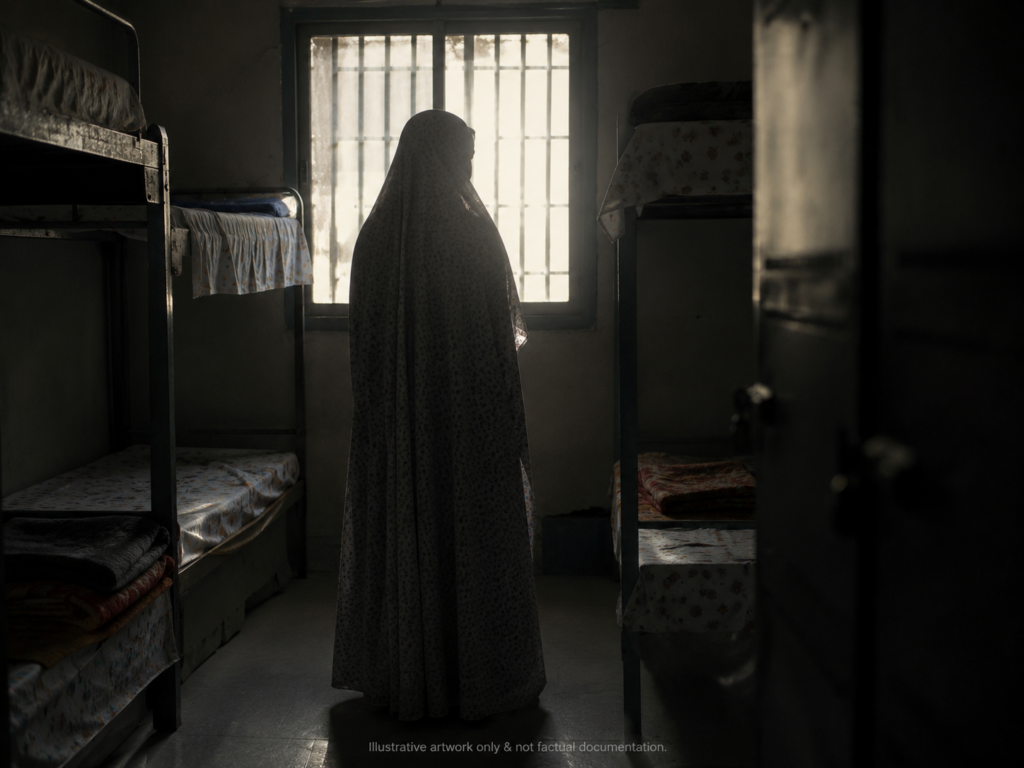
(23-1) There were only two sections in the women’s ward: one large hall containing around sixty beds arranged in three tiers, and a separate room for mothers, with about twenty beds in three tiers, where women were imprisoned with their children under the age of two and, in some cases, with children up to the age of seven.
(23-2) The standard prison meals were adequate, but nutritionally deficient. In particular, they appeared to be lacking in fruit, vegetables, and meat. Prisoners who received visitors and had money could buy additional food from the prison shop. There were also limited cooking facilities available, allowing those who could afford to purchase raw ingredients from the [prison] shop to prepare their own meals.
(23-3) The drug traffickers, most of whom had regular visitors, always enjoyed lavish spreads of food. They would often target young and inexperienced girls who had ended up in prison for offences such as extramarital relationships or running away from home, attempting to entice them into drug addiction or petty drug dealing once they were released. On several occasions, the major drug traffickers confronted me verbally because I tried to stop them from preying on young girls in prison, or because I would counsel those girls and try to undermine their efforts. On one occasion, they even threatened me with assault or death by placing a piece of broken glass beside my pillow.
(23-4) With regard to healthcare, the theft of medication by the prison clinic nurse was commonplace. Prisoners suffering from heart disease, epilepsy, and other conditions requiring costly medication would tell me that the drugs they received seemed ineffective. They believed that they were being given counterfeit medicines or placebos, while the genuine medications were being diverted and sold on the black market.
(23-5) Cleaning the rooms was the prisoners’ responsibility and was carried out on a rota basis. However, inmates who did not receive visitors could earn a small amount of money by carrying out the cleaning duties of those who had visitors and could afford to pay them.
(23-6) The hot-water plumbing system serving the four showers, which were shared by around eighty inmates, was poorly designed. As a result, the water in the first shower was scalding hot, while the water in all the remaining showers was completely cold.
(23-7) On one occasion, a pest-control treatment was carried out, and thousands of cockroaches emerged from the drains and died. As I watched them scurrying away in horror and disbelief, I was wondering how so many cockroaches could possibly be living in the sewage system. Rats could also be seen beneath the beds, but rat poison could not be used because of the risk that prisoners might use it to commit suicide. Rat traps were not that effective either. The exercise yard, in particular, was plagued with flies and mosquitoes, sometimes in such numbers that they would fly into prisoners’ mouths while they were talking.
(23-8) After I repeatedly complained about the problems described above, some prison officials threatened me with solitary confinement, the suspension of family visits, and transfer to prisons far from home. On one occasion, they did cancel my weekly family visit. On one occasion, after the prison clinic nurse realized that I had been relaying sick prisoners’ complaints about their medications to the head of the ward and the prison director, the nurse mockingly referred me to a psychotherapy session with the prison psychiatrist, who worked in the men’s ward, as a means of humiliating and punishing me. Fortunately, not only was the outcome not negative, but the prison psychiatrist, an understanding and highly skilled professional, encouraged me to do more to help the women in the ward. To ease my distress, he said: “Don’t be so upset. Perhaps God has sent you here to help these helpless women.”
(23-9) The officer in charge of face-to-face visits was a vile and corrupt man who routinely took bribes. On one occasion, because of his malice and his refusal to allow me to meet my husband, who had travelled a long distance in the summer heat to visit me, I threatened the women’s ward guards that I would smash my head against the bars and split my forehead open unless the visit took place. Faced with this, that vile and corrupt man finally relented, and the visit was allowed to go ahead after a delay of several hours.
(23-10) In this local prison, there was no classification of inmates whatsoever. Everyone was housed together in the same two wards: defendants and convicted prisoners ranging from women accused or convicted of killing their husbands to those accused or convicted of theft; major drug traffickers sentenced to death alongside petty dealers and addicts; women who coerced younger women into prostitution and profited from it, alongside women who had been driven into prostitution by extreme poverty or to finance the drug habits of themselves, their husbands, or their parents; and financial offenders ranging in age from fourteen to well over eighty. Of course, there were no political prisoners in the women’s ward during my time there. Around my bed were piles of books, some brought by my family at my request from a private library, and others borrowed from the small library in the prison prayer room. One day, noticing all those books, one of the inmates said to me, “Your bed looks like a political prisoner’s bed.” I was pleased by the remark and thanked her.
(23-11) Fortunately, none of the prisoners sentenced to death were executed during the year and a half that I was held in that prison. One woman, who had spent several years under a death sentence on drug-related charges, was granted clemency during a religious holiday, and her sentence was commuted to life imprisonment.
- The other financial prisoners during that period included:
(24-1) A female engineer who ran a food manufacturing business in the same jurisdiction and had been imprisoned because of a bounced cheque.
(24-2) A female teacher who had been imprisoned for violating the compulsory hijab laws and refusing to pay the financial penalty imposed on her in protest against her prison sentence.
(24-3) A respectable housewife who had been imprisoned because she was unable to pay a small debt owed to her landlord.
(24-4) One particularly tragic case involved a pay-or-stay judgment. A young woman, who was approximately sixteen years old at the time of her arrest, had stolen property from a neighbour’s home after growing up in conditions of neglect, being forced into an early marriage, and developing a drug addiction. After overcoming her addiction, she was ordered to return the stolen property or its cash equivalent—400,000 Tomans—under a pay-or-stay judgment, meaning that she would not be released until the amount had been paid. At the exchange rate at that time, when one US dollar was worth approximately 1,000 Tomans, the amount was equivalent to about US$400. Having been rejected by her family and with no hope of ever raising the money, she remained in prison even though nearly three years had passed since she had completed her custodial sentence, solely because she was being held under this pay-or-stay order. Driven by despair, she attempted suicide on one occasion by swallowing depilatory powder, a hair-removal product, while in the prison bathhouse. Fortunately, she was rescued in time and survived. Sadly, however, her treating physician reportedly said that she would suffer permanent damage to her internal organs and the resulting complications for the rest of her life. After my release, we tried to obtain a declaration of inability to pay (eʿsar) on her behalf so that she could be freed. I was one of the four witnesses who swore under oath that she was unable to pay the debt. Unfortunately, because I was unable to contact the relevant social worker, I never found out whether she was eventually released or remained in prison.
- It is necessary to mention a few examples of the appalling conditions faced by prisoners that I personally witnessed:
(25-1) There was a fourteen-year-old girl who, after the death of her mother, had been thrown out of her home by her stepmother, with her father’s consent. She spent a night in a cemetery and was unable to sleep for fear of stray dogs. The police arrested her on a charge of vagrancy. At my encouragement, she pleaded with the judge to transfer her to the Welfare Organisation. Fortunately, the judge granted her request, bringing indescribable joy to her, to me, and to many of the other inmates.
(25-2) Unfortunately, there was another similar case. In this instance, however, the judge refused to approve her transfer to the Welfare Organisation. After learning of the decision, the young woman told me that, once released, she intended to engage in small-scale drug trafficking solely to be imprisoned again, as prison was the only place where she could count on having a roof over her head.
(25-3) The most heartbreaking case was that of a sixteen-year-old girl who had run away from home at the age of thirteen because she did not feel physically or sexually safe with her father. After fleeing, she was imprisoned three or four times on charges of vagrancy and dressing like a boy. Following her latest arrest, the charge against her was elevated to “spreading corruption on earth” (efsad-e fel-arz) because of her repeated offences. Fortunately, after she told me the tragic story of her life, I helped her prepare an effective defence, and she was acquitted. Luckily, with the assistance of the prison social worker, she was able, after her release, to obtain support from the Aftercare Office and purchase a sewing machine on instalments, enabling her to get back on her feet. Tragically, she was wrongfully and unjustly killed by her elder brother, a morally corrupt man, under the false pretext of defending the family’s honor.
- Once, a group of psychology students came to visit the women’s ward, but in my view, the visit achieved very little. First, the prison authorities had not allowed them to bring pens or paper into the ward, so they were unable to take notes. Second, many of the women inmates had conspired among themselves to tease the students by telling fabricated stories about their offences, portraying themselves either as heroes or as victims. After the students left, they laughed at their gullibility and treated the whole exercise as a form of entertainment. I had not been aware of this beforehand, and after the students left, I felt deeply saddened. I explained to some of the inmates who had lied that what they had done was wrong and that it would ultimately harm not only themselves but also society as a whole.
- Despite all these problems, there were also a few people in the prison who sympathised with the inmates and did what they could to help them with their problems. These included: a female social worker assigned to the women’s ward; a psychiatrist who was assigned to the men’s ward, but whom female inmates could also access with the assistance and recommendation of the prison clinic supervisor; and a psychologist who, after I repeatedly pressed for it, was no longer restricted to the men’s ward and was permitted to spend one day a week at the women’s ward clinic, where he could also attend to the mental and emotional needs of female inmates.
- There was also a cleric who served as the prayer leader for the women’s ward and conducted the congregational noon and afternoon prayers each day after lunch. Despite the women’s mockery, he was a kind-hearted man. After a few Qur’an-reading sessions before prayers, and having noticed my interest in Qur’anic studies, he asked me to help prepare the defence of a woman who was facing a possible death sentence by stoning. Fortunately, our assistance in drafting her defence helped save her from that sentence. Had the prayer leader not informed me of her situation, I would have been unable to help her, as she herself had never told me about her case.
- And finally, there was the prison director, whose kindness I have already mentioned. He always tried to deal personally with letters sent to him by prisoners. Every few months, he would also visit the women’s ward in person to hear complaints and follow up on matters that had already been raised. One of the most significant reforms introduced during his tenure was the installation of a complaints box. It was opened by a trusted individual acting on his behalf, and the letters were delivered directly to him. Other improvements included the installation of public telephones for making calls outside the prison, something that had not previously been available; the replacement of the clinic nurse who had been accused of stealing medication; and the provision of travel allowances by the social worker to help newly released prisoners return to their place of residence. Children over the age of two whose mothers were serving prison sentences were transferred to a nursery established for the women’s ward, while their mothers retained the right to visit them.
- Finally, I would like to make some suggestions for reforming Iran’s cheque laws and improving prison conditions:
(30-1) Above all, imprisonment for bounced cheques should be abolished, especially in cases involving manufacturers and business owners. Doing so would help production enterprises thrive, while making the business of usurers less profitable and less influential. At the same time, the bureaucratic process for obtaining production and business loans should be simplified, with banks providing both financial support and expert guidance. By accepting workshops and factories as collateral, the waiting time for obtaining a loan should be reduced to a matter of days, or at most one month. The practice of imprisoning debtors under so-called “pay-or-stay” judgments should also be abolished. In reality, for someone who is unable to pay and cannot produce the four witnesses required by the court to prove their inability [to pay], such a sentence will amount to life imprisonment.
(30-2) Instead of laws that lead to the imprisonment of owners of production enterprises, alternative measures should be adopted, such as restricting credit for those whose bankruptcy resulted from their own fault. By contrast, those who become bankrupt through no fault of their own should be offered assistance in the form of interest-free or low-interest loans and, where appropriate, a share of charitable funds, including zakat, alms, and religious donations, to help rebuild and restart their workshops or factories. Such support should be provided under the supervision of both governmental and non-governmental experts. It is worth noting that at the time, i.e. between 2000 and 2002 (1379–1381), prison officials claimed that the cost of keeping a single prisoner was approximately 400,000 Tomans per month. In other words, rather than imprisoning the owner of a production enterprise, the state would be far better off, both materially and morally, by providing low-interest loans to reduce their debts and help them become economically productive once again.
(30-3) Wherever possible, responsibility for guaranteeing cheques should rest with the banks themselves, so that they are compelled to establish mechanisms preventing the issuance of cheque books to individuals whose creditworthiness has not been properly assessed.
(30-4) The cheque law should distinguish between those who become bankrupt through no fault of their own, those whose bankruptcy results from their own fault, and professional fraudsters.
(30-5) Legal scholars should conduct a comparative study of debt and cheque laws in various countries with successful manufacturing sectors and draw from them the most effective legal practices. In general, it would be far better if businesspeople could replace cheques with promissory notes.
(30-6) It is also worth drawing the attention of Muslim countries to the fact that, according to verse 280 of Surah Al-Baqarah, debtors should be given time until they are able to pay. Charitable donations may also be used to settle a debtor’s debt.
(30-7) I also have a number of suggestions for improving the situation of prisoners, both during their imprisonment and after their release, and for reducing the rate of recidivism. Greater funding should be allocated to establishing vocational workshops where prisoners can work and become financially self-sufficient. Opportunities for prisoners to pursue higher education while in prison should also be expanded. To ensure the continuation of this empowerment, all former prisoners should, from the moment of their release, receive support from the government or non-governmental organisations, such as the After-Care Office. This support—including social-work services, further vocational or academic education, and assistance with finding employment—should continue until they have achieved self-sufficiency, so that these funds can be used more effectively to ensure the successful rehabilitation of former prisoners.