


Executive Summary
On December 28, 2017, sporadic protests erupted in Mashhad, Iran’s second largest city. These protests, initially aimed at expressing dissatisfaction with increasing inflation and worsening economic conditions, rapidly spread across the country within a span of ten days. Alongside major urban centers, smaller towns—largely quiet since the 1979 Iranian Revolution—also became sites of significant protests against the Islamic Republic. The protests of December 2017-January 2018 were significant because protesters across the country expressed their desire to overthrow the Islamic Republic. Unlike the 2009 protests, which took place in the context of a disputed presidential election, the December 2017-January 2018 protests demonstrated the protesters’ fundamental opposition to the Islamic Republic in its entirety. Therefore, the December 2017-January 2018 protests could be seen as the beginning of a new chapter in modern Iranian history.
Within a few days, hundreds of protesters were detained, and dozens of fatalities were reported, with the exact figures unknown to this day.[1] The Iran Human Rights Documentation Center (IHRDC) has obtained reliable information confirming the deaths of 41 individuals linked to the protests. Among these casualties, 27 were fatally shot with live ammunition, nine lost their lives under suspicious circumstances while in custody, two passed away under questionable conditions after their release from prison, and two were struck by a fire truck. It is important to note that at least five adolescents also were killed in connection to the protests. The deadliest period occurred from December 30, 2017, to January 2, 2018, during which 29 persons lost their lives. Isfahan Province bore the brunt of these losses with 15 fatalities, followed by Lorestan Province with nine deaths, and Khuzestan Province with five. Moreover, there have been reports of an additional 11 individuals who died in connection to the protests, with nearly half of them succumbing to death while in custody. IHRDC cannot independently verify these reports at this time.
IHRDC has conducted multiple interviews with eyewitnesses both in Iran and in exile and examined government records, media reports, and social media accounts that documented the protests. Furthermore, IHRDC has geolocated dozens of video evidence and images, subjecting their content to analysis through open-source intelligence (OSINT). This analysis has been further corroborated with testimonies and other publicly available accounts of the events.
IHRDC has identified a pattern of systemic opacity and a lack of accountability concerning the fatalities associated with the December 2017-January 2018 protests. In cases involving the killing of unarmed civilians, including the deaths of six individuals in the small town of Qahdarijan in Isfahan Province, Islamic Republic officials have attributed these fatalities to alleged attacks on government facilities, using this as a basis to justify the use of lethal force.[2] They have not presented any substantiating evidence, and they have subjected the families of the killed citizens to intimidation and harassment. Similarly, they have disavowed any responsibility for suspicious deaths occurring while in custody or shortly after release. Instead, the authorities have attributed them to drug overdose or suicide. They have employed pressure tactics on grieving families and their attorneys, coercing them to abandon their efforts to pursue justice through legal means.
IHRDC has also uncovered that, notwithstanding government officials’ attempts to downplay the Islamic Revolutionary Guard Corps (IRGC)’s involvement in suppressing the protests, this military organization was, in fact, directly responsible for the repression, particularly in Isfahan and Lorestan provinces, where the highest number of casualties occurred. On numerous occasions, the most aggressive actions were carried out by Basij forces that operate under the supervision of the IRGC in each province.[3]
Witnesses who spoke with IHRDC consistently highlighted the extreme level of brutality displayed by the Basij militia and other security forces, demonstrating utter disregard for human life. One witness recounted an incident in which a security forces’ vehicle collided with an innocent bystander, pinned her against a wall, and subsequently departed the scene.[4]
Another recurring theme reported by witnesses was the systematic violation of due process rights. In two different cases, several individuals were tried for capital offenses linked to protests even though there was no evidence against them, except for confessions extracted under torture. These trials concluded with multiple death sentences, one of which led to an execution.
IHRDC has also found that the Islamic Republic has resorted to several repressive strategies both during and following the protests, which include (1) utilizing less-lethal crowd control equipment, such as paintball and pellet bullets, on a significant scale and in a manner that results in fatal consequences for those targeted; (2) deploying undercover agents with trendy appearances who can infiltrate protesters, incite them, identify specific individuals, and make arrests; (3) employing mosques and religious sites as places of detention; (4) dispensing pills, the ingredients of which are either unidentified or potent narcotics, among incarcerated individuals on a large scale; and (5) exploiting emerging technologies and engaging in cyber warfare.
Introduction
Islamic Republic officials have admitted that the protests that took place from late December 2017 to early January 2018 were not orchestrated by any political organization. These protests were most geographically-spread protests since the 1979 Iranian Revolution.[5] Demonstrators expressed their dissatisfaction with the entire government and called for fundamental change. For instance, protesters called on Supreme Leader Ali Khamenei to leave his position.[6] Notably, for the first time since the 1979 Iranian Revolution, many protesters voiced support for the Pahlavi dynasty.[7] These incidents underscored the prevailing disillusionment with the prospects for reform within the Islamic Republic, a vision promoted by reformists over two decades preceding the protests.[8]
The protests were particularly intense in economically disadvantaged neighborhoods and impoverished suburban areas, where they faced a harsh government crackdown resulting in dozens of casualties.[9] Iranian officials, however, never acknowledged any responsibility for the actions of government forces. Gholam-Hossein Mohseni-Eje’i, the speaker of the judiciary at the time, claimed that there were 25 casualties, including both civilians and security forces. He maintained that none of these individuals had died from gunshot wounds inflicted by security forces. He also asserted that security forces had been instructed to avoid using firearms, and some of them “were not even armed.”[10]
1. The Year Marked by Protest Gatherings
In the months preceding the protests of December 2017-January 2018, numerous protests took place in various parts of the country.[11] Different cities had witnessed a series of labor protests. Additionally, protests were organized by pensioners who had not received any cost-of-living adjustments and individuals who had lost their savings in multiple financial institutions.[12] All of them were met with violent repression. The situation escalated further following the April 2017 earthquake in Kermanshah Province in western Iran. While government corruption had been widely acknowledged for years, the mishandling of aid to those in need in the aftermath of the earthquake served to reveal the depth of corruption in the Islamic Republic.[13]


2. Violent Suppression of Protests
Principles of international law maintain that law enforcement personnel may employ force only when necessary and to the extent required to achieve a legitimate policing objective. In the use of force, it is crucial to reduce harm and injuries while maintaining the utmost respect for and preservation of human life. The deliberate use of lethal force is permissible when it is absolutely necessary to safeguard life.[14]
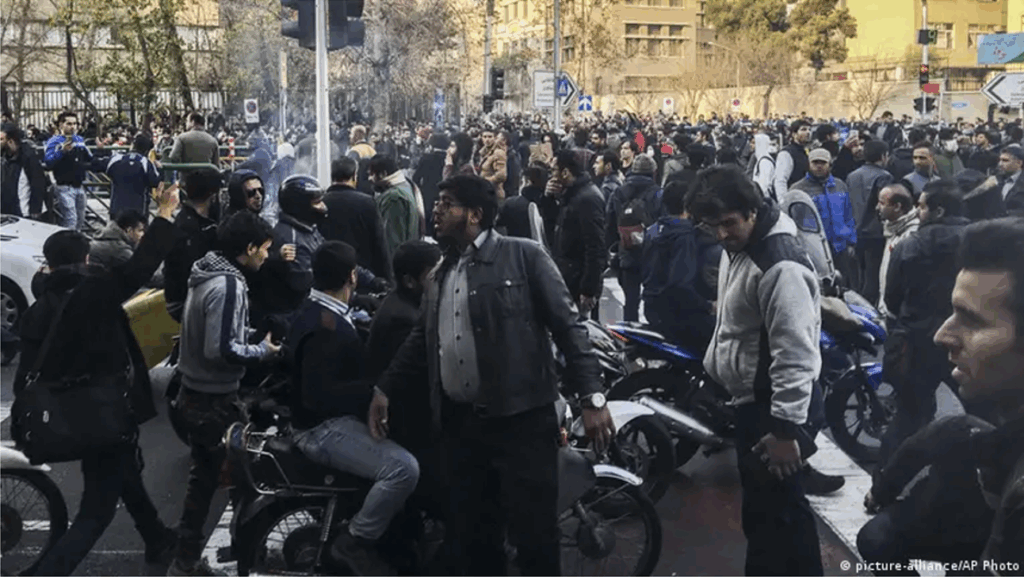
After the protests in Tehran intensified in late December 2017, the Supreme National Security Council assigned the task of securing the capital city to the Sarallah Headquarters, the largest combat unit of the IRGC.[15] On numerous occasions, IRGC and Basij personnel deployed on the streets of Tehran exhibited disregard for the lives and safety of citizens.[16] The situation in other parts of the country was more dire. Even when security forces had alternative means to deter and disperse protesters with less lethal force, they opted not to do so and instead employed an excessive level of deadly force. Numerous videos circulated on social media show that several protesters have been injured—and in some cases, killed—by gunfire from security forces.[17] Mohammad Ali Jafari, the commander of the IRGC at the time, later confirmed that operations had been carried out by the IRGC in the three provinces of Isfahan, Lorestan, and Hamadan.[18]


2.1. Start of Protests in Mashhad
The protests of December 2017-January 2018 started in Mashhad, but the exact circumstances of how the protests began are not clear. On December 28, 2017, a demonstration took place in Shohada Square in Mashhad. According to sources close to the government and reformists, the protests were organized by some conservative officials to undermine President Hassan Rouhani. Notwithstanding the original intent of the protest, it quickly evolved into an anti-government protest.[19]
Ali Hosseingholilou, a human rights activist currently residing in Germany, recounted that the area surrounding Shohada Square was unusually crowded, and that the atmosphere was tense. Numerous security forces were present, including plainclothes officers blending into the crowd. Anyone seen with a cell phone in hand risked arrest on suspicion of capturing videos. He witnessed several individuals, including an elderly woman, being beaten and apprehended by security forces that day.[20]

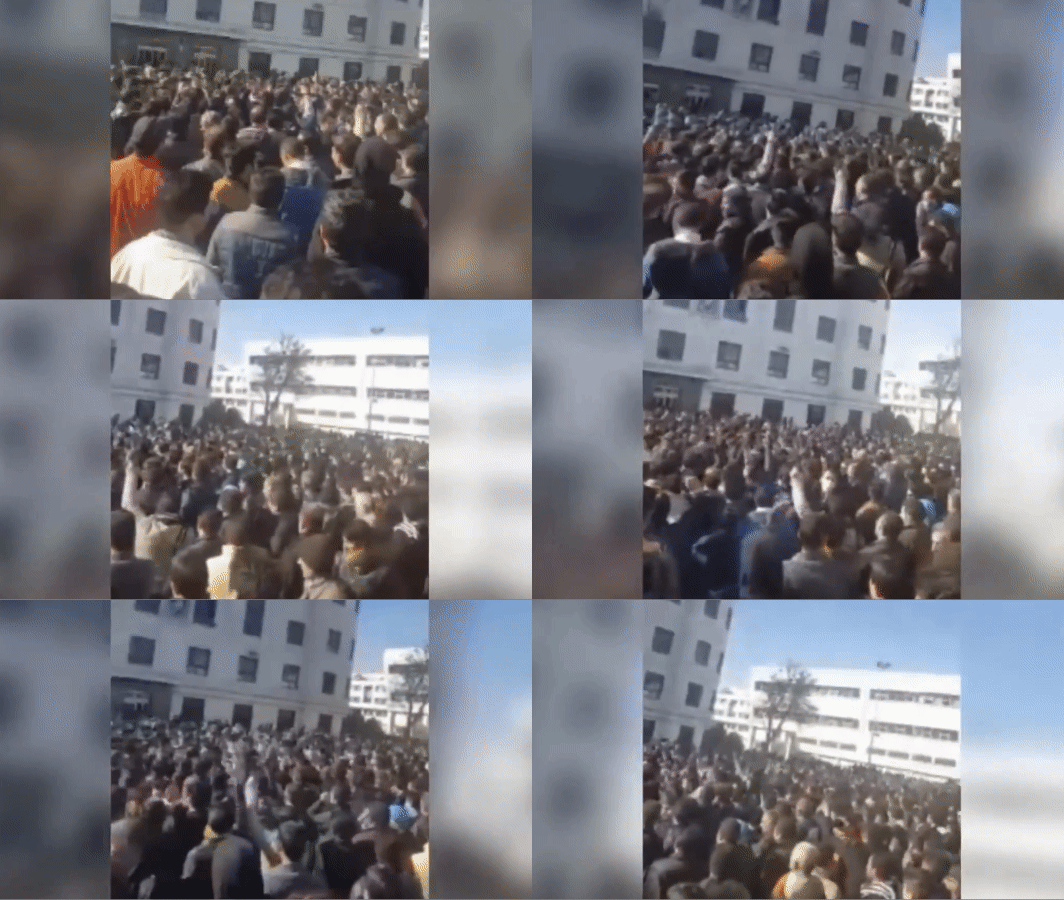
In his interview with IHRDC, Ali Hosseingholilou described how the protest expanded to different parts of the city on the following nights, including Park (Azadi) Square, Emamamt Boulevard, and Mellat Park in the vicinity of Ferdowsi University. On the evenings of December 29 and 30, these areas became overcrowded. Protesters initially gathered in Mellat Park and subsequently entered Emamamt Boulevard, where their numbers swelled significantly on both nights. Police fired an excessive amount of tear gas, while plainclothes agents threw stones at the protesters. Dozens of individuals were arrested.[21] See the picture below illustrating the location of protests in Mashhad.
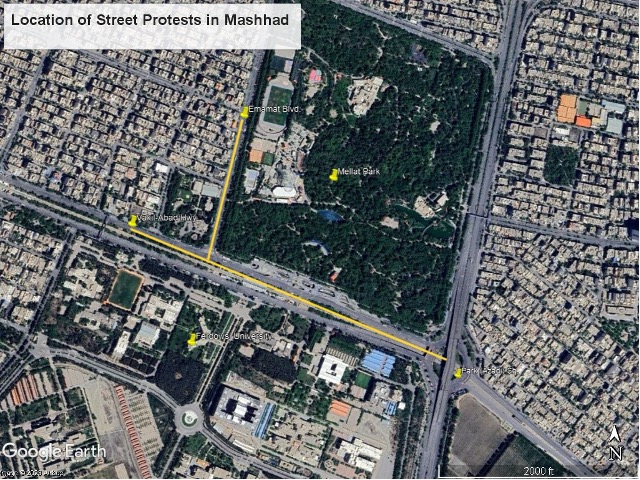

Eivar Farhadi, a political and media activist, has also provided similar accounts of the December 2017-January 2018 protests in Mashhad. According to him, Mellat Park in Mashhad has consistently served as a focal point for the initiation and spread of public protests.[22]
There had also been a call for people to gather in this area on December 30. That night, I was at work. From the balcony, I had a clear view of Bozorgmehr-Sajjad Intersection. Around 7:30 to 8:00 PM, suddenly, a large number of police vehicles from Amir al-Mo’menin precinct, Ahmadabad precinct, and other areas sped past. Mobile internet had also been cut off. I left my workplace and headed toward Sajjad Bridge. It was completely dark by then. In that area, I could hear the sound of aerial gunfire. I made my way through the park to the Emamat Intersection and the beginning of Azadshahr. A large crowd had gathered—most of them were young people. Several Special Unit motorcycles had been set on fire. At times, security forces would charge at the crowd, and at other times, the people would push back and attack them. Protesters were chanting slogans like, ‘Death to the dictator’ and ‘The Leader lives like a god, the people live like beggars.[23]
Less than a year later, in October 2018, Farhadi was arrested after security forces identified him as an anonymous anti-regime user active on X (formerly Twitter). In an interview with IHRDC, he explained that, without access to legal representation, he was sentenced to six years in prison by Judge Mansouri at the Mashhad Revolutionary Court on charges of membership in anti-revolutionary groups and disseminating propaganda against the regime. He left the country shortly after the sentence was issued.[24]
Ali Hosseingholilou, however, was apprehended at his workplace in February 2018. The security forces had identified him among the protesters. The Mashhad Revolutionary Court convicted him of acting against national security and insulting Supreme Leader Ali Khamenei in a trial that lasted only a few minutes. He received a three-year prison sentence, with two years of it being enforceable.[25]
2.2. Witness Account from Tehran
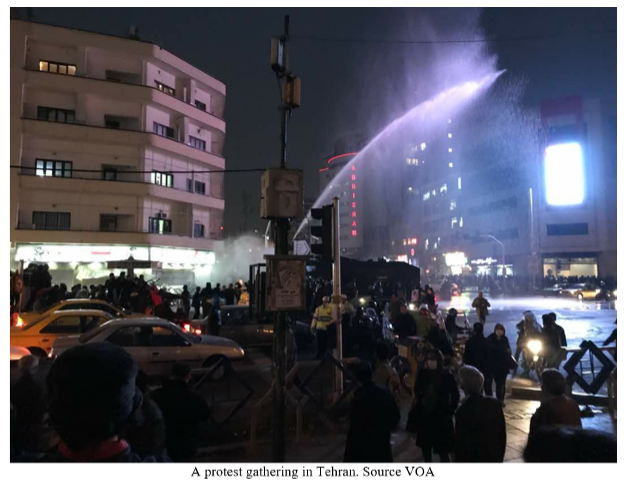
Born and raised in Khuzestan Province in southwestern Iran, Dariush Zand had already witnessed government corruption, discrimination, and dire economic conditions. In December 2017, he resided in Tehran and was engaged in human rights activities. On December 30, he participated in a protest at Enqelab Square in Tehran. In an interview with IHRDC, Dariush Zand provided a detailed account of the highly charged atmosphere of that day.[26]
A large crowd [of protesters] had gathered, and numerous security forces were present. The number of protesters was increasing by the moment. Starting at the University [of Tehran] entrance, a group of students began chanting, and the people joined them […] The officials had closed the University’s entrance, leaving many students locked inside the campus. There were many students, however, outside the campus mixed with the crowd […] Most of the protesters I saw that day were young. The slogans were radical, including “Death to the dictator,” “We don’t want the Islamic Republic, we don’t want it,” and “Death to Velayat-e Faqih (Guardianship of the Jurist).”[27]

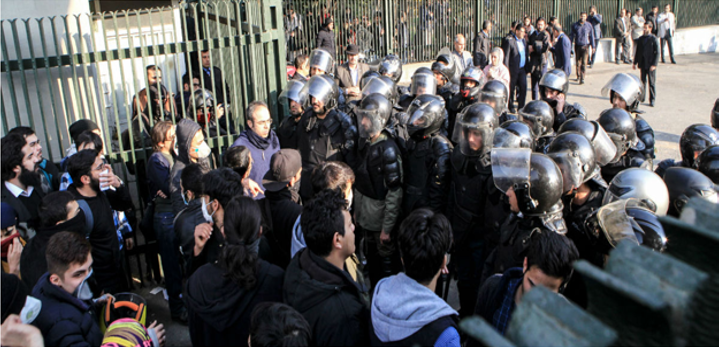
According to Dariush Zand, riot police and plainclothes forces violently attacked the protesters, causing them to disperse. These forces had strategically positioned themselves in various streets, effectively encircling the protesters. “They beat the protesters using whatever means they had at their disposal,” Zand added.[28] Another witness, who discussed the matter with IHRDC and wants to remain anonymous, also recounted the unparalleled level of violence displayed by security forces. “In one of the alleys near University of Tehran, I witnessed plainclothes forces attempting to apprehend a young student. They subjected him to such brutal violence that recalling that scene continues to haunt me even after all these years,” the anonymous witness added.[29]

2.3. Witness Account from Gorgan
On December 30, 2017, Benyamin Deilam Katouli, a poet and a songwriter, joined street protests in Gorgan, Golestan Province, in northern Iran. Security forces had a notable presence in Gorgan in the days leading up to December 30. On the evening of that day, the protest initially centered around Shahrdari Square, also known as Vahdat Square. Subsequently, protesters congregated at Kakh Square (Valiasr) and Shalikoubi Street (Valiasr), forming a larger crowd. Despite the presence of city officials who threatened the protesters to disperse, the gathering remained peaceful, with participants engaging in chants.[30]
The protesters’ slogans encompassed both economic issues, such as poverty and inflation, and a desire to challenge the government’s legitimacy with the intent of overthrowing it. I did not witness any violent behavior from the protesters. They didn’t even throw stones and avoided confrontation and clashes with security forces […] At approximately 10:00 p.m., security forces initiated an attack. Plainclothes agents riding trail motorcycles infiltrated the crowd, wielding batons and beating individuals. Simultaneously, the police joined the assault. They would suddenly approach a protester, strike that person with a baton, and pursue them until they were isolated from the rest of the crowd. This tactic allowed them to corner the individual in a secluded area, facilitating their arrest.[31]
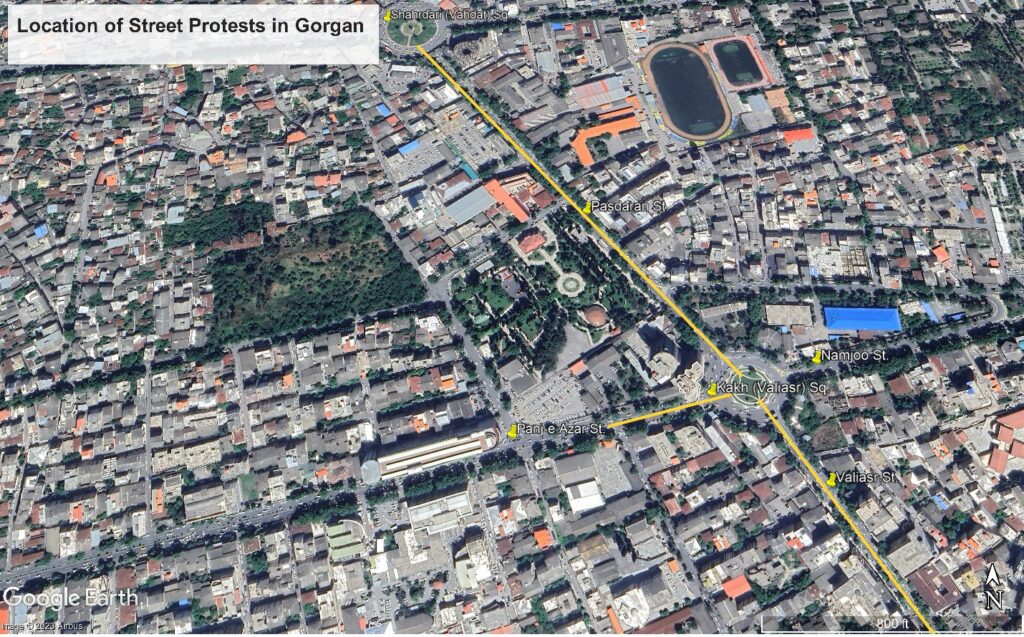

In his interview with IHRDC, Benyamin Deilam Katouli described that the majority of security forces were local Basij militia, with many of them in plainclothes, while some wore military camouflage uniforms. A group of plain-clothes Basij militia members carried machetes and swords, whereas police special forces were equipped with firearms and several medium machine guns mounted on the rear of their pickup trucks.[32]
Dozens of protesters, including several of Deilam Katouli’s acquaintances, were arrested. Following their release, some opted to withhold accounts of their detention ordeals. Deilam Katouli attributes their silence to the intimidation and coercion exercised by security forces. He, too, encountered harassment from the authorities, which eventually forced him to leave Iran to evade further persecution.[33]

2.4. Witness Account from Isfahan
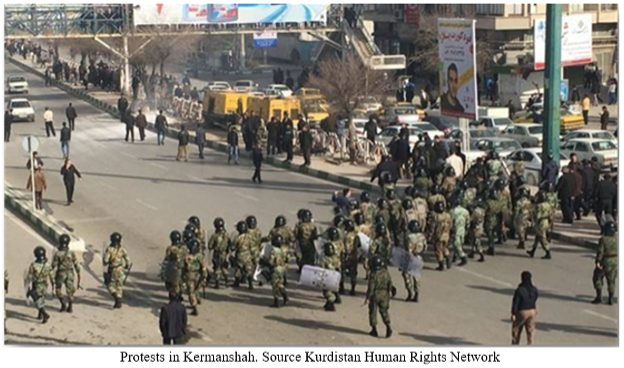
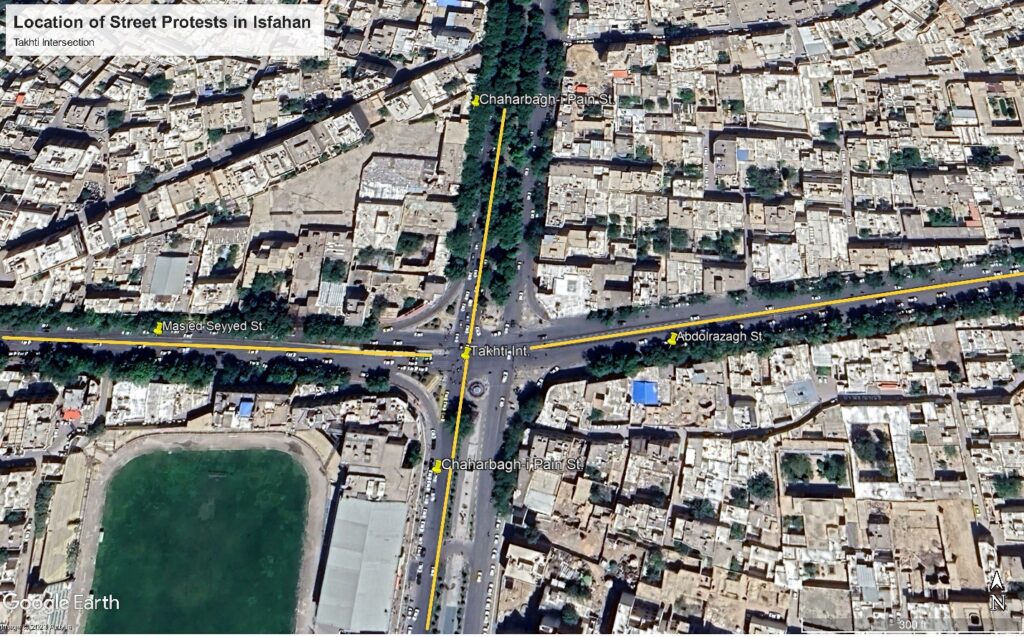
A witness who wishes to remain anonymous explained to IHRDC that the most intense protests took place in economically disadvantaged neighborhoods, such as Zeynabiyeh in eastern Isfahan. According to him, the protests in Zeynabiyeh commenced during the early evening hours of December 30, 2017. Upon the riot police’s arrival, they launched violent attacks against the protesters. Their actions included indiscriminate taser usage, widespread tear gas deployment, firing warning shots, and cutting off electricity to streetlight poles to disperse the protesters. The same witness also participated in another demonstration at the Takhti Intersection in downtown Isfahan the following night. According to his account, security forces resorted to live ammunition and pellet bullets when dealing with the protesters on the second night.[34]
Many had been hit by [pellet bullets] in the face. Some of them were shot in the leg, waist, or back. The number of the wounded was high. Everyone you saw was holding a part of their body that was bleeding. I remember a middle-aged man wearing a dark-colored jacket. The bullet had struck his upper chest and near his neck. He was bleeding heavily. Those who were present there said that he was no longer breathing and had died.[35]
2.5. Witness Account from Najafabad
Najafabad, Isfahan Province’s third largest city, is renowned for its unique religious ambiance.[36] In such a context, it was highly unusual to hear anti-Islamic Republic slogans challenging the government’s overall legitimacy in this city, even though significant protests had taken place there in prior years.[37] A witness, who spoke with IHRDC on the condition of anonymity, recalled that a major protest occurred around Bagh Meli, the iconic central square in Najafabad, on January 1, 2018.[38]
It was around 7 p.m. When I arrived at Quds Street, I noticed it was already crowded. The riot police had pushed the protesters from Bagh Melli to adjacent streets […] A heated battle was taking place. [The riot police] were deploying tear gas, while the protesters chanted slogans and hurled stones at them […] After a while, the riot police surrounded the protesters, forcing us to move to the Shahrdari Intersection. Over there, they attacked brutally and beat a large number of people. It was like they were operating under a directive to employ force against [protesting] people without any justification. It didn’t matter if someone was present at a protest, chanted a slogan, or held a stone. I was savagely beaten there. My entire body, from my lower legs to the back of my shoulders, turned black and bruised. I also suffered a frontal head fracture, resulting in profuse bleeding.[39]
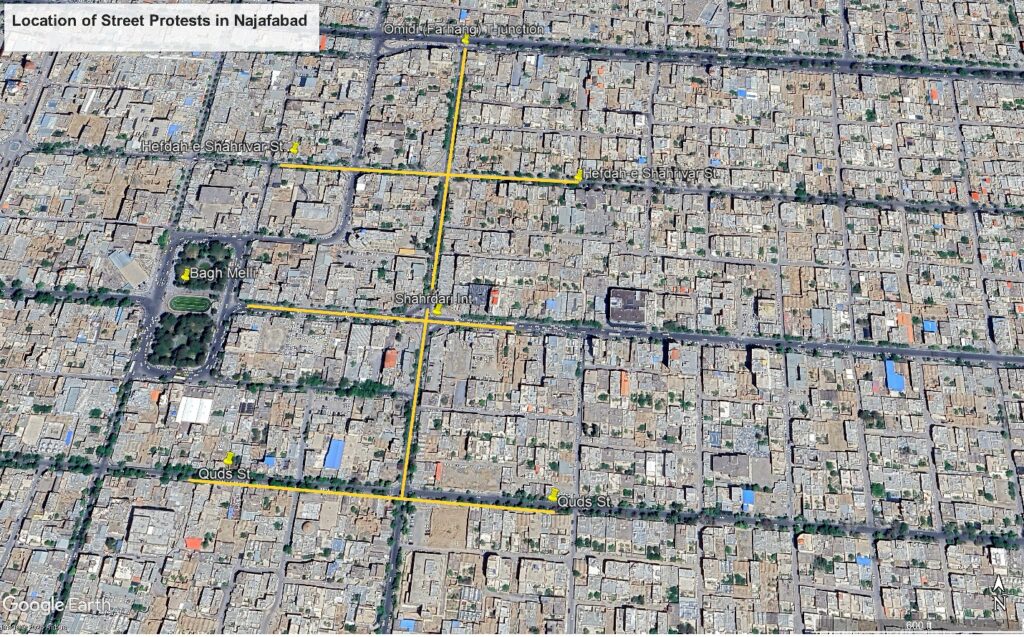
A video circulated on social media captured a sound resembling gunfire in Najafabad’s streets on January 1, 2018.[40] The witness who spoke with IHRDC also recalled hearing gunfire on Hefdah-e-Shahrivar Street, located between the Shahrdari Intersection and the Omidi (Fahrang) T-junction in Najafabad, on that specific date.[41]
3. Cases of Extrajudicial Killing
Article 3 of the Universal Declaration of Human Rights (UDHR) and Article 6 of the International Covenant on Civil and Political Rights (ICCPR) underscore the inherent right to life for all individuals and prohibit arbitrary deprivation of life. Additionally, Articles 19 and 21 of the ICCPR protect individuals’ ability to peacefully assemble and express their views without the threat of lethal force.[42]
The use of lethal force by law enforcement or security forces should only be employed as a last resort and must be proportionate to the threat faced. In cases where unarmed protesters are killed, it is imperative to establish accountability mechanisms, including thorough investigations and prosecutions, to ensure a comprehensive examination and resolution of violations of the right to life.[43]
Asghar Haroon al-Rashidi and four other citizens lost their lives during protests in the Juy Abad neighborhood of Khomeini Shahr, a city in Isfahan Province, on January 1, 2018.[44] According to the coroner’s report, Haroon al-Rashidi’s cause of death was damage to blood vessels and internal organs resulting from the impact of a high-velocity penetrating projectile (bullet).[45] Multiple videos provide evidence that Asghar Haroon al-Rashidi was shot by security forces.[46] Consequently, his family initiated a criminal complaint against several IRGC and Basij members who were implicated in his killing.[47] Contrary to expectations, however, it was not the accused IRGC and Basij members who were arrested but rather 13 friends of Asghar Haroon al-Rashidi.[48]
Mehdi Salehi, Mohammad Bastami, Majid Nazari Kondari, Hadi Kiyani, and Abbas Mohammadi were accused of baghy (armed rebellion against the Muslim ruler), moharebeh (waging war against God), and efsad-e fel-arz (sowing corruption on earth). In February 2020, the Isfahan Revolutionary Court sentenced them to death and five years’ imprisonment.[49] The other eight defendants received flogging and imprisonment sentences.[50] Iran’s Supreme Court upheld these convictions in August 2020.[51] Notably, the Supreme Court’s ruling did not mention the term qisas (legal retribution) as the punishment for murder, despite the defendants being convicted of murdering five citizens, including Asghar Haroon al-Rashidi.[52]
During the trial, the defendants were denied the opportunity to present witnesses and evidence challenging the accusations. Their convictions relied solely on confessions obtained under torture and an IRGC intelligence report.[53] Following a public outcry over these convictions, the execution of the defendants was temporarily suspended.[54] Eventually, in February 2021, the Supreme Court granted a retrial request, although the families of the defendants faced pressure from security officials to remain silent about the details of the case.[55]
This criminal case reveals significant inconsistencies and a miscarriage of justice. In addition to the systematic violation of the defendants’ due process rights, one of them, Mehdi Salehi, was apprehended several months after the protests, and notably, his name did not appear in the IRGC intelligence report at all.[56] During the trial, he denied the accusations and stated that he had gone to Asghar Haroon al-Rashidi’s aid but witnessed him being shot.[57] An informed source stated later that Mehdi Salehi was subjected to severe torture during his detention.[58]
Mehdi was tortured so severely at the time of his arrest that his urine contained blood for months, and he received such intense electric shocks to his head that he suffered two strokes and constantly experienced severe headaches. Under such torture, they extracted a coerced and false confession from him. During the interrogation, he felt as though he were on the brink of death for days.[59]
Mehdi Salehi died unexpectedly on April 14, 2022, while still on death row, reportedly due to receiving the wrong medication and falling into a coma. The circumstances surrounding his death remain undisclosed, with prison officials denying any negligence. His burial was conducted under heavy security force presence, and there were reports that security forces threatened his family with arrest if they spoke to the media.[60] In August 2022, the remaining defendants who had been sentenced to death were released from prison after their death sentences were overturned.[61]
4. Cases of Arbitrary Arrest and Inhuman Detention Conditions
Arbitrary detention, which encompasses confinement in unofficial or secret detention centers, is forbidden by Articles 3 and 9 of the UDHR and Article 9 of the ICCPR.[62] Individuals held in any form of detention or imprisonment must not be subjected to torture, cruel, inhuman, or degrading treatment or punishment, and no circumstances can ever serve as an excuse or justification for such treatment.[63] In addition, detention facilities are mandated to maintain conditions that meet essential standards of cleanliness, health, and safety.[64]
During the protests, hundreds of citizens were arrested.[65] According to Dariush Zand’s testimony, the number of individuals apprehended in Tehran was very high, leading him and a group of those under arrest to endure hours of waiting before being admitted to Evin prison. Once inside, they were assigned to already overcrowded wards lacking even the most basic necessities, including food and sanitation.[66] The situation in other detention facilities across the country was equally grim, and in some instances, even worse.[67] Numerous sources have documented the horrifying mistreatment and inhumane conditions endured by those in custody.[68] At Evin prison, officials initiated widespread administration of methadone, a potent narcotic, with dire consequences.[69] Reports of the distribution of pills containing unknown or narcotic substances among prisoners had surfaced previously, but the situation escalated significantly following the protests.[70]
The act of distributing narcotics with the intent to harm prisoners constitutes cruel and inhuman treatment, a violation strictly prohibited under Article 7 of the ICCPR and Article 1 of the Convention Against Torture and Other Cruel, Inhuman or Degrading Treatment or Punishment (CAT).[71] Even if prison officials had a legitimate justification other than intentionally harming detainees, it is important to highlight that Rule 22(1) of the Mandela Rules explicitly prohibits the administration of medication or medical substances to prisoners as a form of punishment.[72] Unregulated methadone use could lead to drug addiction, a situation that qualifies as inhuman and cruel punishment. Whether categorized as a deliberate act of torture or gross negligence, the actions of Islamic Republic officials would still represent a breach of international norms regarding the treatment of prisoners.
Furthermore, Article 14(3)(b) of the ICCPR specifies that during proceedings to adjudicate any criminal charge against an individual, every individual is entitled to fundamental safeguards, including the right to engage in effective and timely communication with their chosen attorney. Similarly, Rule 93 of the Mandela Rules highlights the right of incarcerated persons to have access to legal counsel.[73] The majority of arrested citizens after the December 2017-January 2018 protests were denied their right to legal representation of their choice. Judiciary officials refused to permit attorneys from outside their trusted circle to represent arrested protesters. These trusted attorneys often demanded exorbitant retainer fees, making their services financially inaccessible to the families of the detained citizens.[74]
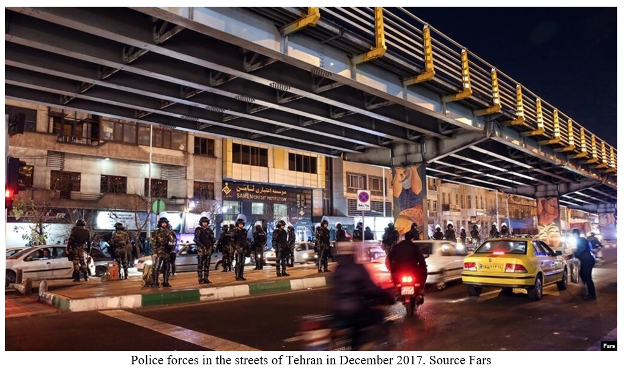
4.1. Detention Centers in Unusual Places; Mosques and Religious Sites
The brief confinement of detained individuals in locations such as Basij bases and religious sites is a practice that the Islamic Republic’s security forces occasionally employ. According to at least one report, security forces transported a group of apprehended protesters to Imamzadeh Abdollah and Ameneh Khatun Shrine, a religious site in Arak, before subsequently transporting them to formal prisons in January 2018.[75]
On December 30, 2017, Dariush Zand, a human rights activist, was apprehended during the protests occurring near Enghelab Square in Tehran. According to his testimony, he and a group of detained individuals were transported to the basement of the nearby Seyed al-Shohada Mosque via a rear entrance within a narrow alley known as Jannati.[76] Different accounts on X (formerly Twitter) have indicated that this very same mosque has been utilized as a temporary detention center during the 2022 protests.[77] The picture below illustrating the location of the mosque.
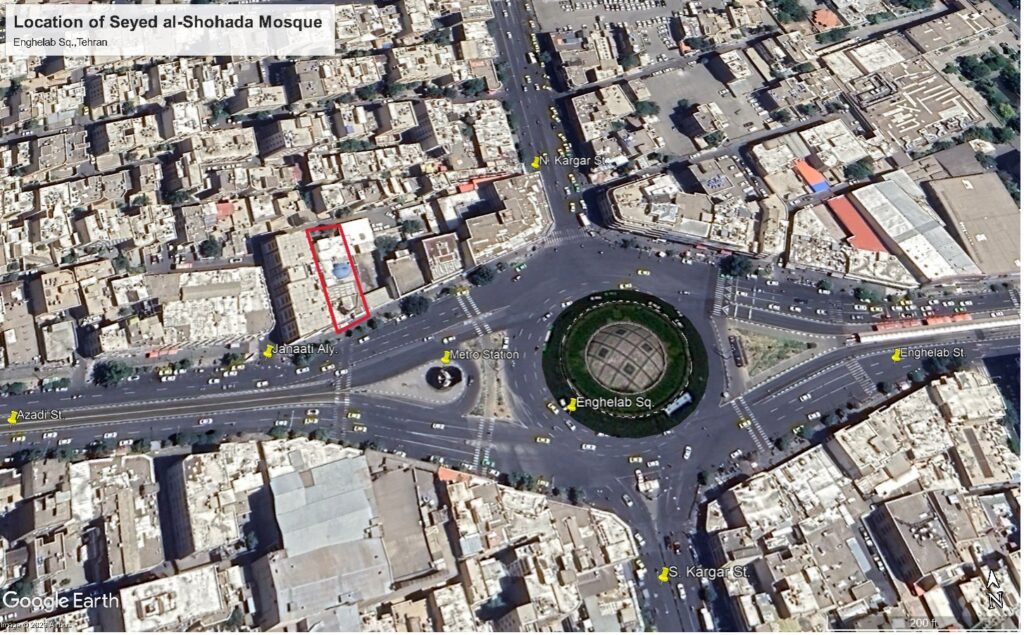

According to Zand’s account, numerous individuals were held in custody in that basement, which was under the control of plain-clothed Basij and IRGC personnel.[78]
The security forces were assaulting us, employing obscenities, and making threats […] I have diabetes. I told one of the security forces that I needed insulin. He replied, ‘For what?! It won’t help you anymore! […] In the room I was in, there were about twenty men. We were sitting tightly packed and in rows, facing the wall. Most of those who had been arrested were young, some even teenagers […] After about two to three hours […] A person, who I believe was one of the managers of Seyed al-Shohada Mosque, a man with an amputated hand up to the wrist, likely a veteran of the Iran-Iraq War, spoke to us. He said, ‘Cooperate with the [security] forces. They could have shot you all in the head right here and disposed of you! But [instead] they intend to take you to the prosecutor [at Evin prison]!’[79]
Another witness who spoke with IHRDC also described his apprehension by a team of plain-clothes security forces in Najafabad, Isfahan Province, on January 1, 2018. He, along with dozens of other detainees, was taken to a Basij base, which was an unmarked building decorated with the logo of IRGC, images of Ayatollah Khomeini, and Qur’an verses. While Dariush Zand and other detainees in Seyed al-Shohada Mosque were later transferred to another detention center, the witness in Najafabad was later released onto the streets.[80]

4.2. IRGC’s Secret Detention Center
Dariush Zand and other detainees were transported to an undisclosed location, which he later discovered was likely an IRGC secret detention center known as 1-A.[81] The detention of arrested individuals in undisclosed or covert facilities is a routine practice employed by the security apparatus of the Islamic Republic.[82] Various sources have indicated that the 1-A detention center is situated east of Tehran.[83] An anonymous witness stated, “1-A is located far away from residential, commercial, and industrial areas. About a quarter of an hour before we reached the entrance of this complex, no sound of any traffic could be heard.”[84] Similar characteristics have been corroborated by other witnesses.[85] The picture below illustrates the estimated location of this detention center.
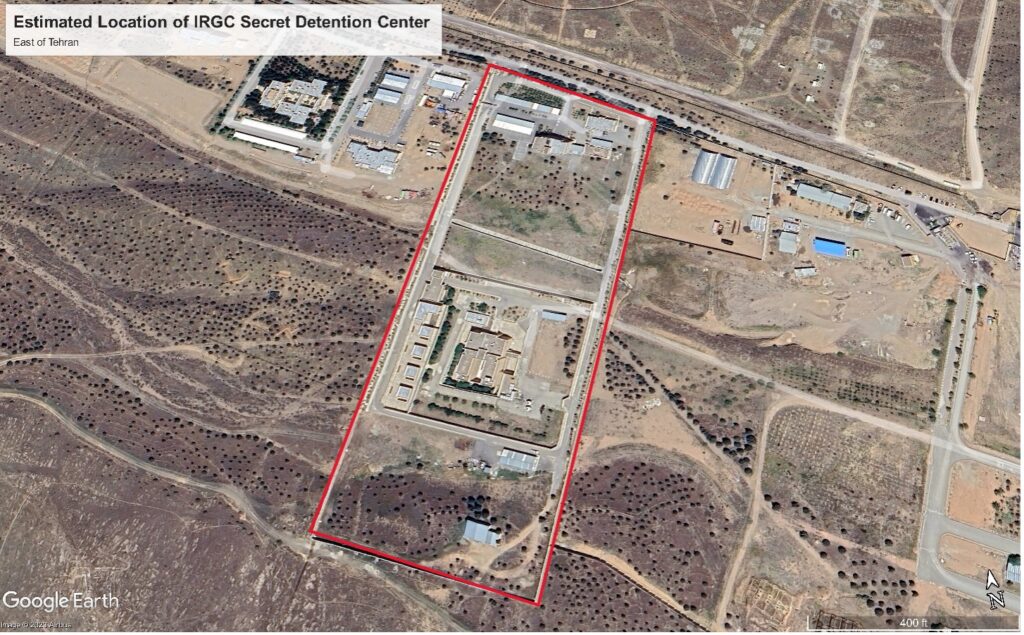
Reports indicate that 1-A falls under the jurisdiction of Sarallah Headquarters of the IRGC; however, the personnel at this detention center have asserted that it is under the control of the police.[86] Since at least 2017, the 1-A detention center has been in operation and has served as the location where dozens of individuals, apprehended by IRGC and Basij forces during the protests, have undergone interrogations.[87] Detainees held at 1-A have provided accounts of experiencing torture, sexual harassment, coerced confessions, and constant surveillance.[88] The facility is equipped with CCTV cameras and microphones installed throughout the premises.[89] Dariush Zand recounted the night of his detention at 1-A.
It was a freezing night. Our warm clothes […] had been taken from us. My hands were still tied, and the sack was still on my head […] From the sounds I heard, I realized there were many people in that place […] Suddenly some individuals attacked us. They cursed and beat us with fists, kicks, batons, and anything they could handle […] I genuinely thought that they wanted to kill us […] I was placed in a cell that was about 12 meters, but they crammed 24 people into it! […] We were all badly beaten and bloodied! […] From the moment of our arrest, they didn’t even provide us with water, let alone food! […] In that extremely crowded cell, people were forced to defecate right there […] Even now, when I think of that night, it feels like we were a group of Jews in the hands of the Nazis.[90]
5. Cases of Death Under Suspicious Circumstances
In cases where the death of a detained individual takes place while they are in custody, an investigation into the cause of death or disappearance should be conducted by a judicial or other competent authority. This inquiry may be initiated either independently or upon the request of a family member of the deceased or anyone with knowledge of the situation. When circumstances require, a similar investigation should be carried out under the same procedural framework when the death or disappearance happens shortly after the end of the detention or imprisonment.[91]
Following the protests of December 2017-January 2018, several detainees died in circumstances that raised suspicions. Different officials, including the then speaker of the judiciary Gholam-Hossein Mohseni-Eje’I, asserted that these detainees lost their lives due to illness or suicide. To this day, they have consistently framed these deaths as part of a psychological campaign against the Islamic Republic and have avoided taking any responsibility.[92]
5.1. Sina Qanbari
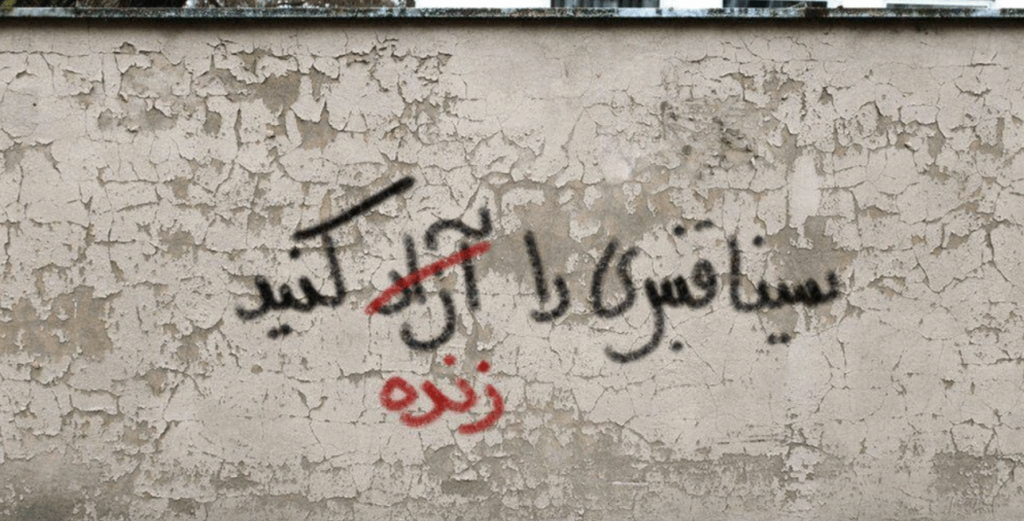
Sina Qanbari was apprehended in Tehran on December 31, 2017. He subsequently was transferred to the quarantine ward of Evin prison, which was already overcrowded. In the early morning of January 7, 2018, his lifeless body was found in a restroom.[93] Official reports claimed that Sina Qanbari had taken his own life, but no substantial evidence, including CCTV footage, was ever provided to substantiate this assertion. Multiple witnesses who were in the quarantine ward contradicted the official narrative.[94] They attested not only to the absence of any signs of depression or suicidal intentions in Sina Qanbari but also to his eager anticipation of release.[95] Furthermore, Sina Qanbari had no history of mental health issues or previous suicide attempts.[96]
They claimed he hanged himself in the restroom using a garbage bag! This was highly unusual because, in a place where nearly 500 people reside, the restroom is never empty enough for someone to commit suicide! […] Moreover, there was nothing in that restroom to hang oneself from.[97]
Several witnesses also testified that during the hours leading up to his death, Sina Qanbari needed medical attention due to a high fever and chills. The prison guards removed him from the ward briefly, only to return him later. He informed fellow inmates that he had been subjected to severe beatings by the prison guards and was given unidentified pills during this time.[98] One of the witnesses who, under the condition of anonymity, shared information with IHRDC, verified that Sina Qanbari had been given some unidentified pills previously, and these pills had a peculiar effect on him. The witness noted, “[H]e became anxious. Sometimes he would sit in a corner and talk to himself.” The witness further revealed that prison officials coerced inmates into writing statements, warning that sharing any information about Sina Qanbari’s death could lead to criminal prosecution.[99]

5.2. Vahid Heydari
Vahid Heydari was arrested during the protest in Arak, Markazi Province, on December 31, 2017. Subsequently, he was taken to Police Station #12, commonly known as Razavi Station. On January 6, 2018, authorities informed his family that he had died by suicide while in custody. At least one of his family members had the opportunity to view the body before his burial, which occurred under heavy security presence. This family member confirmed the presence of a grave wound on the left side of his head, along with other indications of torture.[100]
Officials, including the Public and Revolutionary Prosecutor of Markazi Province at the time, claimed that Vahid Heydari had been detained on drug-related charges unrelated to the protests. They also asserted that Vahid Heydari had inflicted injuries on himself, and this incident was captured on CCTV cameras. His family disputed these allegations.[101] Multiple sources suggest that they subsequently received threats from security officials to prevent them from discussing the circumstances surrounding his death.[102]
5.3. Sarou Qahremani and Kianoosh Zandi
Sarou Qahremani and Kianoosh Zandi, two young men from the city of Sanandaj in Kurdistan Province, disappeared around January 2, 2018. Eleven days later, security forces informed their families of their death and promptly buried their bodies on the same day. Shortly thereafter, state media released a video in which Sarou Qahremani’s father asserted that his son had affiliations with a Kurdish armed group and had died during an armed confrontation with security forces.[103] His mother, however, had verified the presence of visible signs of physical abuse on the body.[104]
According to his relatives, Sarou Qahremani’s father was coerced into giving this interview while in custody of security forces at the Ministry of Intelligence detention center. Subsequently, the then-local governor of Sanandaj contended that Sarou Qahremani had been involved in an armed conflict with security forces and that his arrest had no connection to the protests. No explanation was provided, however, regarding Kianoosh Zandi’s situation.[105] The families of both young men faced intense pressure and threats from security officials, compelling them to refrain from speaking with the media.[106] According to some reports, security forces opened fire at the vehicle carrying Sarou Qahremani and Kianoosh Zandi during their arrest.[107] To this day, the circumstances surrounding their deaths remain in question.
5.4. Taleb Basati
Taleb Basati, an emergency medical worker in Malekshahi County, Ilam Province, was arrested on February 18, 2018, on charges of affiliation with Kurdish opposition groups. One week later, officials informed his family that he had passed away while in prison. His death certificate listed the cause of death as brain trauma. The representative of Ilam in the Iranian parliament stated that his death was caused by a stroke he had suffered while in prison.[108] Witnesses, however, have reported visible signs of torture on the body of Taleb Basati.[109]
5.5. Amin Korki
On January 2, 2018, Amin Korki was apprehended at his residence in Dezful, Khuzestan Province. He faced charges related to destroying images of Ruhollah Khomeini and Ali Khamenei, the former and current Supreme Leaders of the Islamic Republic, and he was subsequently sent to Dezful prison, where he remained incarcerated for 74 days. Two weeks after his release from prison, he vanished, and later his lifeless body was discovered in an unfinished building.[110]
Official statements attributed his death to drug use. Amin Korki’s family, however, asserted that he had no history of drug abuse or mental health issues. They confirmed the presence of signs of physical assault on his body, including a fractured head. The coroner’s report also documented head injuries and fractures as well as indications of two injections in his hands. Several neighbors reported witnessing plain-clothes agents and police officers arresting Korki on the same day he disappeared. His father filed a criminal complaint against these agents, but this case was eventually closed by the head of the Ministry of Justice Office in Dezful without identifying anyone responsible for his death.[111]
5.6. Other Cases
According to at least two sources, including the aide to former President Rouhani, a female college student died while in detention.[112] Additionally, there were multiple sources that documented the death of Seyyed Shahab Abtahizadeh while he was in the custody of security forces in Arak, Markazi Province.[113] Government officials claimed that his death had no connection to the protests and attributed it to a drug overdose.[114] Similarly, the questionable death of Aria Rouzbehi-Babadi while detained by security forces in Khuzestan Province was reported by various sources.[115]
6. Execution of Mostafa Salehi
Article 10 of the UDHR and Article 14 of the ICCPR ensure the right to a just and public trial conducted by an impartial tribunal. In accordance with Article 3 of the ICCPR, individuals accused of criminal charges are entitled to prompt notification of the nature of the charges, the freedom to choose their legal representative, and protection from any form of coercion leading to self-incrimination or admission of guilt.[116
Mostafa Salehi was apprehended several months following the protests and charged with the fatal shooting of an IRGC officer in Kahrizsang, a small town in Isfahan Province, on January 1, 2018.[117] On August 5, 2020, he was executed by hanging as qisas was sought by the family of the deceased IRGC officer. Apart from a coerced confession from a witness, there was no compelling evidence, such as the purported ammunition, that would link Mostafa Salehi to the crime. Despite enduring months of torture, he steadfastly refused to confess to the alleged offense and asserted his innocence until the very end.[118] His trial exemplified a egregious miscarriage of justice under the Islamic Republic’s judiciary.
7. Consequences Unfold: Analyzing the Post-Protest Landscape
7.1. Targeting Grieving Families and Advocates
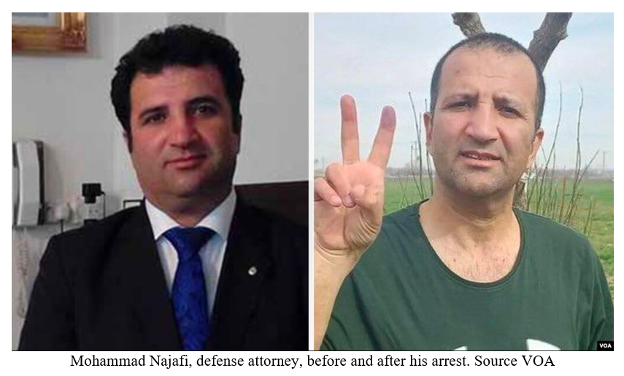
Mohammad Najafi, an attorney in the city of Shazand, Markazi Province, investigated the circumstances surrounding Vahid Heydari’s death in custody in January 2018. Throughout his inquiry, Najafi interviewed Vahid Heydari’s family and friends, revealing that he had no prior felony records, including any involvement with narcotics. Moreover, Najafi concluded that the signs of torture on Vahid Heydari’s body rule out the possibility of suicide.[119]
Shortly after releasing the findings of his inquiry, Mohammad Najafi was apprehended.[120] During his interrogations, the primary focus was on Vahid Heydari’s death. In December 2018, Najafi received a 13-year prison sentence, with 10 years of it being enforceable, on charges of collaborating with hostile countries, insulting Supreme Leader Ali Khamenei, and disseminating propaganda against the Islamic Republic. In his ruling, the judge at Branch One of the Revolutionary Court in Arak rendered the assertion of Vahid Heydari’s death being murder as “false.” Since then, Mohammad Najafi has been deprived of his due process rights and confronted with new charges while in prison.[121]

7.2. Evasion of Accountability by Perpetrators
Various sections of the Islamic Republic’s security and military apparatus, including the Basij militia, IRGC, and police forces, actively participated in suppressing the December 2017-January 2018 protests. Despite extensive documentation of serious human rights abuses such as acts of violence and even murder committed by these forces, there has been no accountability thus far. No reports indicate that those responsible within the security forces have faced any form of disciplinary action, let alone prosecution or trial for their offenses. The Commander-in-Chief of the Islamic Republic’s police at the time went to the extent of claiming that their forces were unarmed during the protests, a statement reiterated by the then-Chief of the General Staff of the Armed Forces.[122] Furthermore, not only have there been no investigations into several suspicious deaths in custody, but the grieving families and their advocates have also been silenced.[123]
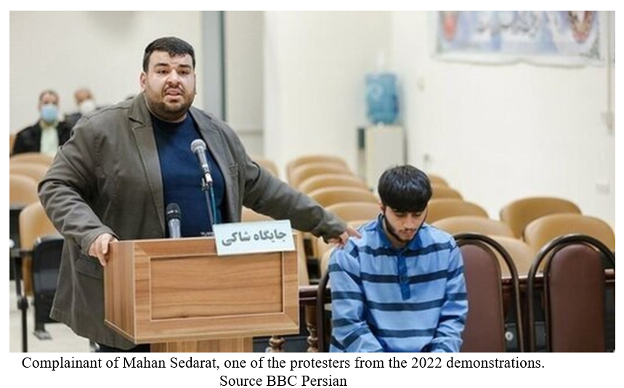
During an interview with IHRDC, Dariush Zand recounted an incident that underscores the profound lack of accountability and impunity enjoyed by human rights perpetrators within the Islamic Republic, despite the abundance of incriminating evidence against them.
Mohammadreza Qanbartalab, who has a large body, was a private complainant in the case of Mahan Sedarat during the 2022 protests. Initially, Mahan Sedarat was sentenced to death. I was taken aback when I saw my assailant [Mohammadreza Qanbartalab] in the photos from Mahan Sedarat’s trial. Although during the trial, [officials] attempted to portray him as an ordinary citizen, it eventually became evident that he is a member of the IRGC intelligence.[124]

7.3. Filtering, Cyber Warfare, and Protest Dynamics in Social Media
Iranian officials have dedicated significant financial resources to the promotion of domestic messaging applications and the national Internet network project, with the goal of reducing dependence on the global Internet.[125] Building on these investments, they swiftly executed widespread internet shutdowns during the protests in 2019 and 2022.[126] The development of such infrastructure became imperative following the social media filtering during the December 2017-Juanary 2018 protests, which resulted in substantial economic losses.[127]
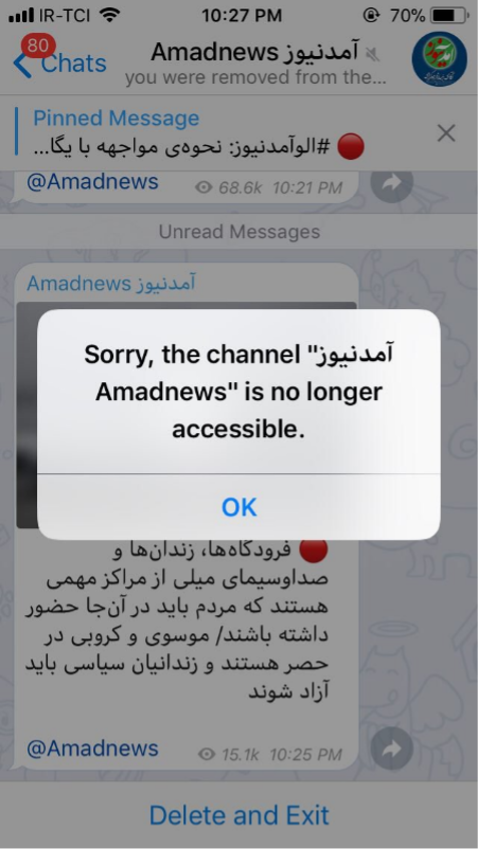

In the course of those protests, the role of social media underwent a major transformation, introducing new political dynamics and avenues for reporting. Amad News, a Telegram channel managed at the time by Iranian journalist Ruhollah Zam, gained a considerable audience and was regarded by security officials as pivotal to the protests.[128] In their attempts to suppress Amad News, they even contacted Telegram’s CEO, urging him to block access to this popular channel.[129] However, Zam’s abduction and subsequent execution ultimately diminished Amad News effectiveness, marking a new era in the Islamic Republic’s repressive measures.[130]
In separate interviews conducted by IHRDC, two witnesses who were active on X (formerly Twitter) shared their accounts, indicating that hopes for political reform within the government had waned following the protests of December 2017-January 2018, leading many activists to openly express their desire for regime change.[131] In this evolving climate, the Islamic Republic initiated investments in the training of organized forces known as “soft war officers” to advocate its propaganda efforts and suppress opposition on various social media platforms.[132] Concurrently, security agencies directed their attention towards popular X users who openly advocated for the overthrow of the Islamic Republic. As a result, several anonymous users who managed popular X accounts were identified and later arrested.[133]
7.4. Utilization of Cutting-edge Technology for Suppression
The Islamic Republic has utilized facial recognition technology for monitoring and apprehending protesters since the late 2010s.[134] In May 2022, it was disclosed that the Islamic Republic had procured facial recognition equipment from foreign companies, including Germany’s Bosch. Bosch confirmed the sale of eight thousand security cameras to the Islamic Republic between 2016 and 2018. According to the company, these cameras lack fully automatic face recognition software but are equipped for smart tracking. Additionally, it has been revealed that a training program on “Bosch Security” specifically focused on face recognition and intelligent object tracking was conducted in Iran, led by one of Bosch’s sales managers in the Middle East.[135]
In interviews with IHRDC, at least two witnesses indicated that security forces identified protesters by analyzing street CCTV camera footage.[136] In addition, one witness mentioned that the majority of detainees, whom he met in Evin prison, were arrested at their homes, not in the streets.[137] These accounts suggest that the Islamic Republic may have had access to facial recognition technologies during the December 2017-January 2018 protests.
In the years following those protests, the Islamic Republic has revamped and modernized its repressive tactics. The implementation of AI-based facial recognition camera systems in the streets of Iran has been employed to identify women who do not comply with compulsory hijab, as well as protesters. Consequently, repression has reached a new, intensified level.[138]
7.5 Reevaluating Terminology within the Islamic Republic
In the ideology of Ayatollah Ruhollah Khomeini, the first leader of the Islamic Republic, the term “the oppressed” denoted the impoverished and marginalized people. The Islamic Republic came to power with the claim of restoring their rights. During the years after the 1979 Iranian Revolution, “the oppressed” were consistently depicted as the staunchest advocates and supporters of the Islamic Republic.[139]
Although anti-government protests by economically disadvantaged and marginalized communities were not unheard of following the 1979 Revolution, their prevalence considerably increased after the December 2017-January 2018 demonstrations and during the protests of 2019 and 2022.[140] The intensity of these protests reached a level that compelled Supreme Leader Ali Khamenei to reassess the meaning of “the oppressed,” a pivotal term in the Islamic Republic’s discourse, during a speech on November 27, 2019:
[T]hey misinterpret the word oppressed; They [define] the oppressed as [economically] inferior, or, as it has been a trend in recent years, [define] as vulnerable classes; [But] the Qur’an does not consider the oppressed as such […] The oppressed means imams and the potential leaders of the world […] those who will be the inheritors of the earth and all the creatures of the earth; This is the mobilization of the oppressed (referring to the Islamic Republic and the Basij militia).[141]
Conclusion
The protests that took place from late December 2017 to mid-January 2018 were driven by a collective outcry against the persistent poverty and socio-economic instability that had afflicted the nation for years. Notably, the initial protests began sporadically in cities around the desert region in central Iran, historically one of the country’s most underdeveloped areas. In a relatively short period of time, these demonstrations rapidly spread to numerous cities, with protesters increasingly calling for significant political changes. Those bold demands marked a notable departure from previous nationwide protests, which primarily focused on reforming the government.
In defiance of its international commitments regarding the right to life and the right to peaceful assembly and association, the Islamic Republic not only ruthlessly quashed all forms of protest gatherings, but also failed to hold accountable those responsible for the deaths of unarmed civilians. The Islamic Republic officials systematically pressured grieving families and their advocates to forgo seeking justice, incarcerated hundreds of protesters in deplorable conditions that led to several fatalities, subjected some to grossly unfair trials, and intensified their suppression efforts through increased investment in new technologies, including cyber warfare expansion.
Methodology
IHRDC has systematically gathered open-source data documenting incidents of violence committed by Iranian security forces against civilians across the country during the December 2017-January 2018 protests. This dataset—comprising dozens of pieces of content—was sourced from publicly accessible platforms, including Google, X (formerly Twitter), Instagram, Telegram, and Facebook. The materials include media reports, user-generated content (photos, videos, and written posts), and documentation from human rights organizations.
For the purposes of this report, IHRDC relied on a selected subset of the collected open-source data, focusing exclusively on specific cases and particular patterns of human rights violations relevant to the scope of this study.
The methodology employed combines open-source intelligence (OSINT) with closed-source material, particularly direct witness testimonies. The IHRDC legal team conducted interviews with seven individuals located in Iran and abroad, all of whom had first-hand experience with the December 2017-January 2018 protests. Some witnesses requested anonymity due to safety concerns. In addition to these interviews, the research incorporated media reporting to contextualize events and provide supplemental details. Relevant domestic laws and international legal standards were also cited throughout the analysis. Where information from state-sponsored media is used, the report clearly identifies these sources and, where appropriate, evaluates their credibility.
IHRDC independently verified 41 cases of protest-related deaths occurring during the December 2017-January 2018 period. Each case was corroborated through at least three independent sources. Due to the lack of publicly accessible official records, it was not possible to verify the age of all individuals through state-issued documents. Accordingly, the ages referenced in the report and its appendix are based on corroboration from one or more alternative sources that provided consistent information. Additional cases were excluded from the final count where corroboration could not be reasonably established due to the absence of sufficiently reliable and publicly available data.
Throughout this process, IHRDC adhered to a rigorous and principled methodology, guided by legal best practices concerning the collection, verification, and analysis of evidence. The assessment of each case was grounded in standards of reliability, credibility, and accountability.
All names of individuals, locations, organizations, and other entities originally written in Persian have been transliterated in accordance with the system used by the International Journal of Middle East Studies (IJMES).
Appendix I – List of Killed Citizens
| ID | Name | Place of Death | Date of Death | Cause of Death & Other Details |
| 1 | Mohammad Chobak | Dorud, Lorestan Province | Dec. 30, 2017 | Shot with live ammunition |
| 2 | Mohsen Virayeshi
|
Dorud, Lorestan Province | Dec. 30, 2017
|
Shot with live ammunition |
| 3 | Hossein Rashnu
|
Dorud, Lorestan Province | Dec. 30, 2017
|
Shot with live ammunition |
| 4 | Hamzeh Lashani | Dorud, Lorestan Province | Dec. 30, 2017
|
Shot with live ammunition
|
| 5 | Ehsan Kheiri | Dorud, Lorestan Province | Dec. 30, 2017
|
Shot with live ammunition
|
| 6 | Mehdi Kohzadi | Dorud, Lorestan Province | Dec. 30, 2017
|
Shot with live ammunition
|
| 7 | Shahriar Hadavand | Dorud, Lorestan Province | Dec. 30, 2017 | Struck by a fire truck |
| 8 | Gholam-Reza Hadavand | Dorud, Lorestan Province | Dec. 30, 2017 | Struck by a fire truck |
| 9 | Mohsen Adeli | Dezful, Khuzestan Province | Dec. 31, 2017
|
Shot with live ammunition in the head |
| 10 | Vahid Heydari | Arak, Markazi Province | Dec. 31, 2017 | Death under suspicious circumstance in custody |
| 11 | Masoud Kiani Dehkiani | Izeh, Khuzestan Province | Dec. 31, 2017
|
16-year-old. Shot with live ammunition |
| 12 | Ali Momeni | Nurabad, Lorestan Province | Dec. 31, 2017 | Shot with live ammunition |
| 13 | Hossein-Reza Qalkhanbaz | Tuyserkan, Hamedan Province | Dec. 31, 2017 | Shot with live ammunition |
| 14 | Alireza Gomar | Tuyserkan, Hamedan Province | Dec. 31, 2017 | Shot with live ammunition |
| 15 | Amar Fallahinezhad | Shahin Shahr, Isfahan Province | Dec. 31, 2017 | Shot with live ammunition |
| 16 | Mohammad Shirzad | Shahin Shahr, Isfahan Province | Dec. 31, 2017 | Shot with live ammunition |
| 17 | Behzad Shahsavari | Kermanshah, Kermanshah Province | Jan. 1, 2018 | Shot with live ammunition |
| 18 | Nimatullah Salehi | (Juy Abad) Khomeinishahr, Isfahan Province | Jan. 1, 2018 | Shot with live ammunition |
| 19 | Asghar Haroon al-Rashidi | (Juy Abad) Khomeinishahr, Isfahan Province | Jan. 1, 2018 | 23-year-old. Shot with live ammunition |
| 20 | Shahab Amanullahi | (Juy Abad) Khomeinishahr, Isfahan Province | Jan. 1, 2018 | Shot with live ammunition |
| 21 | Saeed Mohammad-Sharifi | (Juy Abad) Khomeinishahr, Isfahan Province | Jan. 1, 2018 | Shot with live ammunition |
| 22 | Gholam-Hossein Shahab | Qahdarijan, Isfahan Province | Jan. 2, 2018 | Shot with live ammunition |
| 23 | Hossein Shafizadeh | Qahdarijan, Isfahan Province | Jan. 2, 2018 | Shot with live ammunition |
| 24 | Nimatullah Shafiei | Qahdarijan, Isfahan Province | Jan. 2, 2018 | Shot with live ammunition |
| 25 | Mohammad Ebrahimi | Qahdarijan, Isfahan Province | Jan. 2, 2018 | Shot with live ammunition |
| 26 | Ahmad (Sohrab) Heydari | Qahdarijan, Isfahan Province | Jan. 2, 2018 | 14-year-old. Shot with live ammunition |
| 27 | Armin Sadeghi | Khomeinishahr, Isfahan Province | Jan. 2, 2018
|
15-year-old. Shot with live ammunition |
| 28 | Shayan | Khomeinishahr, Isfahan Province | Jan. 2, 2018
|
High school student. Shot with live ammunition |
| 29 | Arash Khadiri | Masjed-Soleyman, Khuzestan Province | Jan. 2, 2018
|
Shot with live ammunition |
| 30 | Maryam (Forouzan) Jafarpour | Sanandaj, Kurdistan Province
|
Unknown | Death under suspicious circumstances in custody |
| 31 | Sina Qanbari | Tehran, Tehran Province | Jan. 7, 2018 | Death under suspicious circumstances in custody |
| 32 | Aria Rouzbehi-Babadi | Ahvaz, Khuzestan Province | Jan. 10, 2018
|
Death under suspicious circumstance in custody |
| 33 | Sarou Qahremani | Sanandaj, Kurdistan Province | Jan. 13, 2018 | 24-year-old. Death under suspicious circumstances in custody |
| 34 | Kianoosh Zandi | Sanandaj, Kurdistan Province | Jan. 13, 2018 | 24-year-old. Death under suspicious circumstances in custody |
| 35 | Seyyed Shahab Abtahizadeh | Arak, Markazi Province | Jan. 14, 2018 | 20-year-old. Death under suspicious circumstances in custody |
| 36 | Hossein Qaderi | Sanandaj, Kurdistan Province | Jan. 15, 2018
|
Death under suspicious circumstances in prison |
| 37 | Hassan (Shahin) Torkashvand | Jomhouri Square in Karaj, Alborz Province | Jan. 16, 2018 | 24-year-old. Shot with live ammunition in the stomach and died several days later in hospital. |
| 38 | Taleb Basati | Ilam, Ilam Province | Feb. 25, 2018 | Death under suspicious circumstance in custody |
| 39 | Amin Korki | Dezful, Khuzestan Province | Mar. 30, 2018 | Death under suspicious circumstance after prison |
| 40 | Mostafa Salehi | Isfahan, Isfahan Province | Aug. 5, 2020 | Executed |
| 41 | Mehdi Salehi Ghaleh Shahrokhi | Isfahan, Isfahan Province | Apr. 14, 2022 | 39-year-old. Death under suspicious circumstance in custody |
[1] Fereshteh Ghazi, Sarnivisht Kushtih Shudigān Diī 96; Kushtand Va Gardan Muʿtariżān Andākhtand [The Fate of Those Killed in December 2017; (The Government) Killed (People) and Blamed Protesters for That], Radio Farda (Jan. 8, 2021), https://www.radiofarda.com/a/31033190.html (In Persian) See also Taʾyīd Margi Duvūmīn Bāzdāshtī Eʿtirāż Hā Dar Irān [Confirming the Death of the Second Detainee of the Protests in Iran], BBC Persian (Jan. 9, 2018), available at https://www.bbc.com/persian/iran-42622388 (In Persian) (stating the number of arrested individuals in the country).
[2] Meysam Saadat, Kuliksīun Eʿtirāż Hā [Collection of Protests], Hammihanonline (Jan. 11, 2023), https://hammihanonline.ir/news/politic/klksywn-a-trad-ha (In Persian) See also Pouria Zeraati (@pouriazeraati), X (Jan. 1, 2018, 5:21 p.m.), available at https://twitter.com/pouriazeraati/status/947940749886226432 (In Persian) (depicting a group of individuals allegedly setting fire to a government building in Qahdarijan).
[3] Qarārgāh Hā va Tashkilāt Niẓāmī Vābastih Bi Basīj [Bases and Military Organizations Affiliated with Basij], IranWire (Apr. 7, 2019), https://iranwire.com/fa/features/29133/ (In Persian) See also Nīrūy Zamīnī Sipāh Va Qarārgāh Hāay Vābasti Bi Ān [IRGC Ground Force and its Affiliated Bases], IranWire (Apr. 7, 2019), available at https://iranwire.com/fa/features/29125/ (In Persian) (describing the organic connection between Basij and IRGC).
[4] IHRDC Interview with the Anonymous Witness #1 (Mar. 14, 2013) (on file with IHRDC).
[5] Omid Montazeri, Eʿtirāzāt Sarāsarī Diy 96; Āltirnātīv Jumhūrī Eslāmī Mutivalid Shudih? [Nationwide Protests of 2017-18; Is the “Alternative” of the Islamic Republic Has been Born?], BBC Persian (Dec. 28, 2018), https://www.bbc.com/persian/iran-46695836 (In Persian).
[6] Tajamuʿ Rūz Hashtum Dar Ālīgūdarz Ustān Lūristān: Khāminiyy Ḥayā Kun, Mamlikatu Rahā Kun [The 8th Day Rally in Aligudarz, Lorestan Province: Khamenei! Shame on You, Leave the Country], VOA Persian (Jan. 2018), https://www.youtube.com/watch?app=desktop&v=o7i58Br51Uw (In Persian).
[7] Shuʿār “Riżā Shāh, Maʿzirat, Maʿzirat” Dar Shīrāz [The Slogan of “Reza Shah! We Apologize, We Apologize” In Shiraz], Radio Farda (Dec. 31, 2017), https://www.youtube.com/watch?v=WAlFLNDQIWI (In Persian).
[8] Naser Etemadi, Lūmūnd: Yīk Enghilāb Vāqiʿī Kulīyat Niẓām Irān Ra Nishānih Gerefteh Ast [Le Monde: A Real Revolution Has Targeted the Totality of the Iranian Regime], rfi (Mar. 1, 2018), لوموند: یک انقلاب واقعی کلیت نظام ایران را نشانه گرفته است (rfi.fr) (In Persian).
[9] Reza Haghighatnejad, Sālgard ʿtirāżāt Diī 96; Si Namā Az Furūpāshī [The Anniversary of the Protests of December 2017; Three Views of Collapse], Radio Farda (Dec. 29, 2021), https://www.radiofarda.com/a/december-2017-protests-in-iran-three-scenes-of-collapse/31631671.html (In Persian).
[10] Ākharīn Āmār Kushti Shudigān Dar Taẓāhurāt; Sukhangūyi Qūvih Qażāyīh: 25 Tan Dar Khīyābān Kushti Shudand [The Latest Statistics of Those Who Were Killed in the Protests; The Speaker of the Judiciary: 25 People Were Killed in the Streets], Radio Farda (Jan. 14, 2018), https://www.radiofarda.com/a/iran_judiciary_mohseni_ezhei_protests/28974896.html (In Persian).
[11] Jean-Pierre Pernaut, Irān, Tavalud “Yīk Nīrūiy Sivūm” [Iran, the Birth of the “Third Power”], Radio Zamaneh (Jan. 12, 2018), https://www.radiozamaneh.com/376198/ (In Persian) See also Behrang Zandi, ‘Mā Gurusnih Iīm;’ Rūz Shumār Eʿtirāżāt Va Eʿtiṣābāt Kārgarī Az Diī 96 Tā 97 [‘We Are Hungry’: Diary of Labor Protests and Strikes from December 2017 to December 2018], BBC Persian (Fb. 9, 2019), available at https://www.bbc.com/persian/iran-features-47183334 (In Persian).
[12] Ali Sudaeei, Eʿtirāzāt Sarāsarī Diī 96; Dīgi Tamumi Mājarā? [Nationwide Protests of 2017; Is the Thing (with the Islamic Republic) Over?], BBC Persian (Dec. 27, 2018), https://www.bbc.com/persian/iran-features-46651220 (In Persian).
[13] Naser Etemadi, Dars Hāay Zilzilih Ostān Kirmānshāh, Guftigū Bā Ṣādiq Zībā Kalām va Shīrīn Az Faʿālān Madanī Kirmānshāh [Lessons from the Earthquake in Kermanshah Province, a Conversation with Sadegh Zibakalam and Shirin, one of the Civil Activists of Kermanshah], RFI (Nov. 21, 2017), درس های زلزلۀ استان کرمانشاه، گفتگو با صادق زیباکلام و شیرین از فعالان مدنی کرمانشاه – زمینه ها و دیدگاه ها (rfi.fr) (In Persian).
[14] Basic Principles on the Use of Force and Firearms by Law Enforcement Officials, G.A. Res. 45/166, U.N. GAOR, 45th Sess., Supp. No. 49A, at 186, U.N. Doc. A/45/49 (1990), https://www.ohchr.org/en/instruments-mechanisms/instruments/basic-principles-use-force-and-firearms-law-enforcement (hereinafter “Basic Principles on the Use of Force and Firearms by Law Enforcement Officials”).
[15] Guzīnihiyy Az Taḥvūlāt Irān Dar Panjumīn Rūz Taẓāhurāt Eʿtirāzī [A Portion of Developments in Iran on the Fifth Day of Protests], Deutsche Welle Persian (Jan. 1, 2018), گزینهای از تحولات ایران در پنجمین روز تظاهرات اعتراضی – DW – ۱۳۹۶/۱۰/۱۱ (In Persian).
[16] Witness Statement of Dariush Zand, ihrdc (Feb. 1, 2023), https://iranhrdc.org/fa/شهادتنامه-داریوش-زند/ (In Persian).
[17] Vahid Online (@Vahid), X (Jan. 1, 2018, 5:29 p.m.), https://twitter.com/Vahid/status/947942818516996098?ref (In Persian) See also Taʾīd Khabar Kushti Shudan Dū Nafar Az Muʿtariżān Dar Dūrūd Ustān Lūrīstān [Confirmation of the News that Two Protesters Were Killed in Dorud, Lorestan Province], Radio Farda (Dec. 30, 2017), available at https://www.radiofarda.com/a/lorestan-victims/28947680.html (In Persian) See also Taẓāhurāti Emrūz Mardum Kirmānshāh, 11 Diyī Māh Āghāz Shud [The Demonstration of the People of Kermanshah Started Today, January 1], Peyke Iran (Dec. 30, 2017), available at https://www.youtube.com/watch?v=Hmd2yL6ofxg (In Persian).
[18] Farāndih Sipāh Pāyān “Fitnih 96” Rā Eʿlām Kard [The IRGC Commander Announced the End of “Sedition of 2017-18”], Zeitoons (Jan. 3, 2018), https://www.zeitoons.com/42643 (In Persian).
[19] Daftari ʿalam Alhūdā Eḥżār Uo Bi Shūrāyi ʿālī Amnīyati Milī Rā Takzīb Kard [Alamolhoda’s Office Denied Summoning Him to the Supreme National Security Council], BBC Persian (Dec. 31, 2017), https://www.bbc.com/persian/iran-42528752 (In Persian) See also Tajamuʿ Hā Dar Shahr Hāay Mukhtalif Irān Dar Chahārumīn Rūzi Eʿtirāż Hāayi Gustardih [Gatherings in Different Cities of Iran on the Fourth Day of the Massive Protests], VOA Persian (Dec.31, 2017), available at https://ir.voanews.com/a/iran-protest/4186478.html (In Persian).
[20] Witness Statement of Ali Hosseingholilou, ihrdc (Nov. 1, 2023), https://iranhrdc.org/fa/شهادتنامه-علی-حسین-قلی-لو/ (In Persian).
[21] Id.
[22] IHRDC Interview with Eivar Farhadi (May 15, 2024) (on file with IHRDC) (In Persian).
[23] Id.
[24] Id.
[25] Hosseingholilou, supra note 20.
[26] Zand, supra note 16.
[27] Id.
[28] Id.
[29] IHRDC Interview with the Anonymous Witness #2 (Oct. 9, 2013) (on file with IHRDC) (In Persian).
[30] Witness Statement of Benyamin Deilam Katouli, ihrdc (Aug. 9, 2023), https://iranhrdc.org/fa/شهادتنامه-بنیامین-دیلم-کتولی (In Persian).
[31] Id.
[32] Id.
[33] Id.
[34] Anonymous Witness #1, supra note 4.
[35] Id.
[36] Sussan Siavoshi, MONTAZERI THE LIFE AND THOUGHT OF IRAN’S REVOLUTIONARY AYATOLLAH 21 (2017).
[37] توانا Tavaana (@Tavaana), X (Dec. 30, 2017, 11:57 a.m.), https://twitter.com/Tavaana/status/947134528711208961 (In Persian) See also Dargīrī Hāay Dīrūz Najafābād Ki Bāʿis Ḥukūmati Niẓāmī Shud [Yesterday’s Clashes in Najafabad, Which Resulted in Imposing Curfew], Moojesabz (Dec. 27, 2009), available at https://www.youtube.com/watch?v=gsZWEzd8L0o (In Persian) (depicting protests in Najafabad in 2009).
[38] Anonymous Witness #1, supra note 4.
[39] Id.
[40] تلویزیون ایران آزادی (@IranAzad_TV), X (Jan. 2, 2018, 6:40 a.m.), https://twitter.com/IranAzad_TV/status/948141959243337728 (In Persian).
[41] Anonymous Witness #1, supra note 4.
[42] Universal Declaration of Human Rights, G.A. Res. 217A (III), U.N. GAOR, 3rd Sess., Pt. I, art. 3, U.N. Doc. A/810 (1948), https://www.un.org/en/development/desa/population/migration/generalassembly/docs/globalcompact/A_RES_217(III).pdf (hereinafter “Universal Declaration of Human Rights”) see also International Covenant on Civil and Political Rights, Dec. 16, 1966, 999 U.N.T.S. 171, reprinted in 6 I.L.M. 368 (1967) available at https://www.ohchr.org/en/instruments-mechanisms/instruments/international-covenant-civil-and-political-rights (hereinafter “ICCPR”).
[43] Basic Principles on the Use of Force and Firearms by Law Enforcement Officials, art. 4, 5, 6, 7, 11(d).
[44] Shahed Alavi, IranWire Exclusive: Torture, Forced Confessions and Death Sentences for Five Iranian Protesters, IranWire (Aug. 2, 2020), https://iranwire.com/en/features/67399/
[45] Dah Ḥukmi Eʿdām Barāyi Panj Muʿtariż; Nigāhī Bi Parvandih Muʿtariżān Maḥkūm Bi Eʿdām Eʿtirāżāt Dīy Māh 96 Dar Khumīni Shahr [Ten Death Sentences for Five Protesters; A Look at the Case of the Protesters Sentenced to Death in 2018 in Khomeini Shahr], hrana (Jul. 27, 2020), https://www.hra-news.org/2020/hranews/a-25885/ (In Persian).
[46] Ghazi, supra note 1.
[47] Alavi, supra note 44 see also Fears Growing for Five Protesters on Death Row, IranWire (Apr. 21, 2021), available at https://iranwire.com/en/features/69386/.
[48] Alavi, supra note 44 see also hrana, supra note 45.
[49] hrana, supra note 45.
[50] IranWire, supra note 47.
[51] Id.
[52] Yīk «Qtli Farī Qażāyīiyy» Dīgar; Mihdī Ṣāliḥī Az Bāzdāsht Shudigān Eʿtirāżāt Dīy 96 Dar Zindān Jān Bākht; Pīykari Vīy Emrūz Bi Khāk Sipurdi Shud [Another “Extrajudicial Killing”; Mehdi Salehi, Who was Connected to the Protests of 2017-18, Died in Prison; His body Was Buried Today], Kayhan London (Apr. 15, 2022), https://kayhan.london/1401/01/26/281103/ (In Persian).
[53] Alavi, supra note 44.
[54] Kayhan London, supra note 52.
[55] Iran Wire, supra note 47.
[56] Alavi, supra note 44.
[57] Iran Wire, supra note 47.
[58] Mehdi Salehi Shahroukhi, Iran Prison Atlas, available at https://ipa.united4iran.org/en/prisoner/6161 (last visited Jul. 20, 2025).
[59] Id.
[60] Mihdī Ṣāliḥī Kīst Va Chirā Darguzasht Iīn Zindānī, Khabar Sāz Shud? [Who is Mehdi Salehi and Why Did the Death of This Prisoner Become the News?], BBC Persian (Apr. 16, 2022), https://www.bbc.com/persian/iran-61126415 (In Persian) see also Iran Prison Atlas, supra note 58.
[61] Eʿtirāżāt Dīy Māh 96; Chahār Muʿtariż Khumīnīshahr Az Zīndān Dastgard Eṣfāhān Āzād Shudanand [Protests of December 2017-January 2018; Four Protesters from Arm Were Released from Dastgerd Prison in Isfahan], hrana (Aug. 2, 2022), https://www.hra-news.org/2022/hranews/a-36258/ (In Persian).
[62] Universal Declaration of Human Rights see also ICCPR.
[63] Convention Against Torture and Other Cruel, Inhuman or Degrading Treatment or Punishment, Dec. 10, 1984, S. Treaty Doc. No. 100-20, 1465 U.N.T.S. 85. art.1, https://www.refworld.org/legal/agreements/unga/1984/en/13941 (hereinafter “CAT”) see also Body of Principles for the Protection of All Persons under Any Form of Detention or Imprisonment, G.A. Res. 43/173, adopted Dec. 9, 1988, U.N. Doc. A/RES/43/173, art. 6, available at https://www.ohchr.org/sites/default/files/bodyprinciples.pdf (hereinafter “Body of Principles for the Protection of All Persons under Any Form of Detention”).
[64] United Nations Standard Minimum Rules for the Treatment of Prisoners (the Mandela Rules), U.N. Doc. A/RES/70/175 (Dec. 17, 2015), art. 16, 42, https://www.unodc.org/documents/justice-and-prison-reform/Nelson_Mandela_Rules-E-ebook.pdf (hereinafter “Mandela Rules”).
[65] Bāzdāsht Nazdīk Bi 5 Hizār Nafar Dar Tajamuʿāt Eʿtirāzī Dīy Māh Irān [Arrest of Nearly Five Thousand Individuals in Iran’s December-January Protests], Iran Int. (Feb. 3, 2018), بازداشت نزدیکبه ۵هزار نفر در تجمعات اعتراضی دیماه ایران | ایران اینترنشنال (iranintl.com) (In Persian) see also BBC Persian, supra note 1.
[66] Zand, supra note 16.
[67] Sāzmān Zindān Hāay Irān Bakhshnāmih Iyy Barāyi Raʿāyati Ḥuqūq Zindāniyān Ṣādir Kard [Iran Prisons Organization Issued a Directive to Respect the Rights of Prisoners], BBC Persian (Jan. 11, 2022), https://www.bbc.com/persian/59948525 (In Persian).
[68] Eʿtirāżāt Dīy Māh; Guzārishī Az Vażīyati Muʿtarīżān Bāzdāsht Shudi Dar Tunikābun/Asnād [Protests in January; A Report on the Situation of Protesters Arrested in Tenkaban / Documents], hrana (Jan. 15, 2018), https://www.hra-news.org/2018/hranews/a-14210/ (In Persian) see also mehdi mahmoudian (@MahmoudianMe), X (Jan. 21, 2018, 3:26 p.m.), available at https://x.com/mahmoudianme/status/955159688294920192 (In Persian) (describing the situation in Evin prison).
[69] Human Rights In Iran (@ir_humanrights), X (Jan. 17, 2018, 12:00 p.m.), https://twitter.com/ir_humanrights/status/953658407072026624 (In Persian) see also Guftigūyī Ekhtiṣāṣī Kīhān Landan Bā Yīkī Az Bāzdāsht Shudigān Eʿtirāżāt Sarāsarī: Tā Mītavānistand Bā Bātūm, Shūkir Va Har Chi Dastishān Mī Āmad Mā Rā Kutak Zadand [Kayhan London’s Exclusive Interview with One of the Arrested Individuals in the Nationwide Protests: They Beat Us as Much as They Could with Batons, Shockers, and Whatever They Could], Kayhan London (Jan. 12, 2018), available at https://kayhan.london/1396/10/22/102079/ (In Persian) see also Shahed Alavi, Guzārish Yīk Margi Mashkūk; Bāzkhānī Parvandih Jān Bākhtani Sīnā Qanbarī Dar Zindān Evīn [Reporting a Suspicious Death; Reading the Case of Sina Qanbari’s Death in Evin prison], IranWire (Jan. 21, 2019), available at https://iranwire.com/fa/features/29424/ (In Persian).
[70] Shima Shahrabi, Are Political Prisoners Forced to Take Hallucinogens? IranWire (Jan. 22, 2018), https://iranwire.com/en/features/65110/.
[71] ICCPR see also CAT.
[72] Mandela Rules.
[73] Id. See also ICCPR.
[74] Ākharīn Vażʿīyati Bāzdāshtī Hāay ʿtirāżāt Dīy Māh 96 [The Latest Status of Arrested Protests of December 2017], Deutsche Welle Persian (Dec. 30, 2018), https://www.dw.com/fa-ir/iran/a-46898593 (In Persian).
[75] Mahtab Vahidi Rad, Guftū Gū Bā ʿalī Bāqirī, Faʿāl Madanī, Dar Mūrid Bāzdāsht Vahīd Ḥiydarī [Interview with Ali Bagheri, a Civil Activist, about the Arrest of Vahid Heydari], Radio Farda (Jan. 11, 2018), https://www.radiofarda.com/a/28968890.html (In Persian).
[76] Zand, supra note 16.
[77] اسماعیل (@esmaeils1169), X (Jan. 14, 2023, 11:53 a.m.), https://twitter.com/esmaeils1169/status/1614304739939827714?s=20 (In Persian) see also گر در اوج فلکم باید مرد، عمر در گند بسر نتوان برد (@maleki_se), X (Oct. 2, 2022, 2:42 p.m.), available at https://twitter.com/maleki_se/status/1576643719477882880?s=20 (In Persian) see also Vahid (@brother_vahid), X (Jan. 7, 2020, 8:04 a.m.), available at https://twitter.com/brother_vahid/status/1214533339958456320?s=20 (In Persian).
[78] Zand, supra note 16.
[79] Id.
[80] Id. see also Anonymous Witness #1, supra note 1.
[81] Zand, supra note 16.
[82] Ātlas Zinān Hāay Irān: Sipāh Bāzdāshtgāh Sirī Dīgarī Sākhtih [Atlas of Iran’s Prisons: IRGC Has Built Another Secret Detention Center], Radio Zamaneh (Apr. 4, 2020), https://www.radiozamaneh.com/497230/ (In Persian).
[83] Muʿarifī Yīk Bāzdāshtgāh Makhfī Sipāh; Yīk Ālif Kujāst? [Introducing an IRGC Secret Detention Center; Where is 1-A?] Prison Atlas (Apr. 1, 2020), https://prisonatlas.com/%D8%A8%D8%A7%D8%B2%D8%AF%D8%A7%D8%B4%D8%AA%DA%AF%D8%A7%D9%87-%DB%B1 (In Persian) see also Milad Pourisa, Dar Bāzdāshtgāh Makhfī Sipāh Bā Zindānīyān Chi Ṭur Raftār Mī Kunand? [How the Prisoners Being Treated in the IRGC Secret Detention Center?], IranWire (Apr. 18, 2020), available at https://iranwire.com/fa/features/37820/ (In Persian).
[84] Prison Atlas, supra note 83.
[85] Zand, supra note 16 see also Pourisa, supra note 83.
[86] Radio Zamaneh, supra note 82.
[87] Prison Atlas, supra note 83.
[88] Muʿarifī Bāzdāshtgāh Amnīyatī Ālif-Yīk Vābasti Bi Qarār Gāh Sāralāh Sipāh [Introducing the 1-A Detention Center Affiliated with Thar-Allah Headquarters of the IRGC], hrana (Aug. 17, 2022), https://www.hra-news.org/2022/hranews/a-36544/ (In Persian).
[89] Pourisa, supra note 83.
[90] Zand, supra note 16.
[91] Body of Principles for the Protection of All Persons under Any Form of Detention, art. 34.
[92] Taẓāhurāt Shabāni Dar Āmul; Āfzāyīsh Shumār Jān Bākhtigān, Fishār Bi Zindānīyān Barāyi Maṣrafi Mitādūn [Night Protests in Amol; Increase the Number of Deaths, Pressure on Prisoners to use Methadone!], Kayhan London (Jan. 18, 2018), https://kayhan.london/1396/10/28/102759/ (In Persian).
[93] Alavi, supra note 69 see also Zand, supra note 16.
[94] Id.
[95] Zand, supra note 16 see also Kayhan London, supra note 69.
[96] Alavi, supra note 69.
[97] Zand, supra note 16.
[98] Alavi, supra note 69 see also Shahrabi, supra note 70.
[99] Inside Evin Prison: A Witness’s Account of Sina Qanbari’s Death, ihrdc (Mar. 8, 2018), https://iranhrdc.org/inside-evin-prison-a-witnesss-account-of-sina-qanbaris-death/.
[100] Vahidi Rad, supra note 75.
[101] BBC Persian, supra note 1.
[102] Mahrukh Gholamhosinpour, Nā Ārāmī Hāay Irān; Āyā Vahīd Ḥiydarī Khūdkushī Kard? [Unrest in Iran; Did Vahid Heydari Commit Suicide?], IranWire (Jan. 12, 2018), https://iranwire.com/fa/features/24442/ (In Persian) see also Vahidi Rad, supra note 75.
[103] Kīyānūsh Zandī, 24 Sālih, Dūvūmīn Qurbānī Vaqāyīʿ Akhīr Dar Shahri Sanandaj [Kianoosh Zandi, 24 Years Old, the Second Victim of Recent Events in Sanandaj], hrana (Jan. 20, 2018), https://www.hra-news.org/2018/hranews/a-13881/ (In Persian).
[104] Bastigān Sārū Qahrimānī Az “Taḥvīl Giriftani Jināzih Uo” Khabar Dādadnd [The Relatives of Sarou Qahremani Announced the “Delivery of His Corpse”], BBC Persian (Jan. 13, 2018), https://www.bbc.com/persian/iran-42677979 (In Persian).
[105] hrana, supra note 103.
[106] Id.
[107] Kianoosh Zandi, Iran Prison Atlas, https://ipa.united4iran.org/en/prisoner/5404 (last visited Jul. 20, 2025).
[108] Taleb Basti, Iran Prison Atlas, https://ipa.united4iran.org/fa/prisoner/4100/ (last visited Jul. 20, 2025).
[109] Ghazi, supra note 1.
[110] Shahed Alavi, Ekhtiṣāṣī Irān Wāyīr: Sukūt Khānivādih Yīkī Dīgar Az Kushti Shudigān Eʿtirāzāt Dīy Māh Shikast [IranWire Exclusive: The Silence of the Family of Another Person Who Was Killed in the January 2018 Protests Was Breached], IranWire (Jan. 3, 2019), https://iranwire.com/fa/features/30054/ (In Persian).
[111] Id.
[112] Mūlāvirdī Hamzamān Bā Entishār Khabar Yīk Marg Mashkūk Dīgar: Darkhāst Bāzdīd Az Bāzdāshtgāh Hā Rā Dādihyīm [Simultaneously with Disseminating the News of Another Suspicious Death, Molaverdi [Stated]: We Have Requested to Visit Detention Centers], Radio Zamaneh (Jan. 20, 2018), https://www.radiozamaneh.com/377663 (In Persian) see also Marg Hāay Mubham, “Khūdkūshī Hāay Zanjīrihiyy” [Mysterious Deaths, “Chain Suicides”], Zeitoons (Jan. 21, 2018), available at https://www.zeitoons.com/43929 (In Persian).
[113] Edāmih Vākunish Hā Bi Kushti Shudani Shahāb Abṭaḥī: Margi Yīk Muʿtariż Dīgar Taʾyīd Shud [Continuation of Reactions to the Killing of Shahab Abtahi: the Death of Another Protester Was Confirmed], Manototv in Balatarin (Jan. 20, 2018), https://www.balatarin.com/permlink/2018/1/20/4739918 (In Persian) see also شهروندیار (@shahrvandyar), X (Jan. 12, 2019, 3:46 a.m.), available at https://twitter.com/shahrvandyar/status/1084008809545297920 (In Persian) (depicting the Memorial of Shahab Abtahi).
[114] Raʾīs Kul Dādgūstarī Ustān Markazī: Jasadi Kashf Shudi Dar Ḥāshiyih Ārāk Ertibāṭī Bā Nā Ārāmī Hā Nadārad [Head of the Justice Department in Markazi Province: The Body That Was Discovered in the Outskirts of Arak Is Unrelated to the Unrest], irna (Jan. 17, 2018), https://www.irna.ir/news/82799576/%D8%B1%D8%A6%D9%8A%D8%B3-%D9%83%D9%84 (In Persian).
[115] Pīydā Shudan Yīk Jasad Dar Rudkhāni Kārūn Dar Āhvāz [A Body Was Found in Karun River in Ahvaz], irna (Jan. 9, 2018), https://www.irna.ir/news/82790686 (In Persian).
[116] Universal Declaration of Human Rights see also ICCPR.
[117] Muṣṭafā Ṣālihī Az Muʿtariżān Dīy Māh 96 Eʿdām Shud [Mustafa Salehi, One of the Protesters of December 2017-January 2018, Was Executed], Deutsche Welle Persian (Aug. 5, 2020), مصطفی صالحی از معترضان دی ماه ۹۶ اعدام شد – DW – ۱۳۹۹/۵/۱۵ (In Persian).
[118] Eʿdām Muṣtafā Ṣāliḥī Bāyad Bā Maḥkūmīyat Jāmiʿih Jahānī Rūbirū Shavad [Mustafa Salehi’s Execution Must Face the Condemnation of the International Community], Iran Human Rights (Aug. 5, 2020), https://iranhr.net/fa/articles/4369/ (In Persian).
[119] Muḥammad Najafī Vakīk Dādgustarī Dar Yīk Parvandih Tāzih Bi «Si Sāl Ḥabs Maḥkum Shud» [Attorney Mohammad Najafi Was “Sentenced to Three Years in Prison” in a New Case], BBC Persian (Apr. 12, 2023), https://www.bbc.com/persian/articles/cjmzdnjzr3go (In Persian).
[120] Behzad Mehrani (@behzadmehrani), X (Jan. 15, 2018, 1:38 p.m.), https://twitter.com/behzadmehrani/status/952958075429904384 (In Persian).
[121] Muhammad Najafi, Iran Prison Atlas, https://ipa.united4iran.org/en/prisoner/3994 (last visited Jul. 20, 2025) see also Entiqāl Bi Qaranṭinih Va Āghāz Eʿtiṣāb Ghazāay Muḥammad Najafī, Vakīl Zindānī, Pas Az Eʿtirāż Bi Khāminiehiyy [Moved to Quarantine and Started a Food Strike by Mohammad Najafi, the Imprisoned Attorney, after Protesting Against Khamenei], IranInt (Aug. 19, 2019), available at انتقال به قرنطینه و آغاز اعتصاب غذای محمد نجفی، وکیل زندانی، پس از اعتراض به خامنهای | ایران اینترنشنال (iranintl.com) (In Persian).
[122] Taẓāhurāt Shabāni Dar Āmul; Āfzāyīsh Shumār Jān Bākhtigān, Fishār Bi Zindānīyān Barāyi Maṣrafi Mitādūn [Night Protests in Amol; Increase the Number of Deaths, Pressure on Prisoners to use Methadone!], Kayhan London (Jan. 18, 2018), https://kayhan.london/1396/10/28/102759/ (In Persian) see also Sipāh Yā Basīj Bā Aslahih Bu Khīyābān Nayāmadand [IRGC or Basij Did Not Come to the Street with Guns], Sharghdaily (Jan. 11, 2018), available at https://www.sharghdaily.com/%D8%A8%D8%AE%D8%B4-%D8%A7%D8%AE%D8%A8%D8%A7%D8%B1-3/700164- (In Persian).
[123] Justice for Iran (@Justice4Iran), X (Jan. 5, 2021, 10:07 a.m.), https://twitter.com/Justice4Iran/status/1346473310373089280 (In Persian).
[124] Zand, supra note 16.
[125] Hazīnih Rah Āndāzī Payām Risān Dākhilī Chiqadr Ast? [How Much Does It Cost to Set up Domestic Messaging Apps?], Mardomsalari (Oct. 12, 2022), https://www.mardomsalari.ir/news/177096 (In Persian) see also Intirnit Pur Surʿat Nasli Panjum Dar Rahi Irān. Sarmāyih Guzārī 96 Hizār Mīlīyārd Rīyālī Barāyi Rah Andāzī Shabakih Milī Intirnit [5th Generation High-Speed Internet on the Way to Iran. Investment of 96 Thousand Billion Rials to Set up the National Internet Network], Tahlilbazaar (Jan. 19, 2020), available at https://www.tahlilbazaar.com/news/2896 (In Persian).
[126] “Intirnīt Zughālī” Dar Ruz Hāay Binzīnī [“Coal Internet” in the Gasoline-Infected Days], Asriran (Nov. 19, 2019), https://www.asriran.com/fa/news/698879 (In Persian) see also Internet disrupted in Iran amid protests over death of Mahsa Amini, Netblocks (Sept. 19, 2022), available at https://netblocks.org/reports/internet-disrupted-in-iran-amid-protests-over-death-of-mahsa-amini-X8qVEwAD.
[127] Żarar Jidīdi Bi Ṣad Hā Hizār Furūshandih Entirnītī Bi Dalīl Fīltrīng Tiligrām va Instāgirām [“Serious Damage” to Hundreds of Thousands of Internet Vendors Due to Telegram and Instagram Filtering], Radio Farda (Jan. 8, 2018), https://www.radiofarda.com/a/iran_telegram_instagram_filtering_impact_bussiness/28962845.html (In Persian).
[128] Haghighatnejad, supra note 9.
[129] Pavel Durov (@durov), X (Dec. 31, 2017, 8:17 a.m.), https://twitter.com/durov/status/947441456238735360?ref.
[130] Hossein Bastani, Dastgīrī Zam; Pāyān Āmad Nīyūz? [Zam’s Arrest; The end of Amad News?], BBC Persian (Oct. 15, 2019), https://web.archive.org/web/20191212062525/https://www.bbc.com/persian/iran-features-50062919 (In Persian) see also Rūḥūlāh Zam Eʿdām Shud [Ruhollah Zam Was Executed], BBC Persian (Dec. 12, 2020), available at https://www.bbc.com/persian/40223487 (In Persian).
[131] Anonymous Witness #2, supra note 29 see also IHRDC Interview with Anonymous Witness #3 (Oct. 19, 2013) (on file with IHRDC).
[132] Afsarān Javān Jibhi Muqābili Bā Jangi Narm [The Young Officers of the Front Face of the Soft War], Fars (June 28, 2019), https://www.farsnews.ir/news/8904071187%20%20%20%20/%D8%A7%D9%81%D8%B3%D8%B1%D8%A7%D9%86- (In Persian).
[133] Anonymous Witness #3, supra note 131.
[134] Ehtimāl Estifādih Az Dūrbūn Hāay Shirkati Ālmānī Būsh Barāy Tashkhīṣ Chihrih Dar Irān [The Possibility of Using the Cameras of the German Company Bosch for Face Recognition in Iran], IranInt. (Aug. 7, 2023), https://www.iranintl.com/202308074263 (In Persian).
[135] Shirkati Būsh Entighāl Dūrbūn Hāay Tashkhīṣ Chihrih Bi Irān Rā Takzīb Kard [Bush Company Denied the Transfer of Facial Recognition Cameras to Iran], Persian Deutsche Welle (Aug. 6, 2023),شرکت بوش انتقال دوربینهای تشخیص چهره به ایران را تکذیب کرد – DW – ۱۴۰۲/۵/۱۹ (In Persian).
[136] Zand, supra note 16 see also Deilam Katouli, supra note 27.
[137] Anonymous Witness #2, supra note 29.
[138] Gūzārish Fāks Nīyūz Darbārih Estifādih Ḥukūmati Irān Az Fanāvarī Hāay Hūsh Maṣnūʿī Barāy Gustarish Sarkūb [Fox News Report on Iran’s Use of Artificial Technologies to Expand Repression], Radio Farda (May 6, 2023), https://www.radiofarda.com/a/iri-unleashes-ai-for-maximizing-suppression-in-a-wholesale-manner-/32399489.html (In Persian).
[139] Ebrahim Amini, Emām Khuminī (RA) Va Mustażʿāfān [Imam Khomeini (Rah) and the Oppressed], ibrahimamini.com, https://www.ibrahimamini.com/fa/node/4094 (In Persian) (last visited Jul. 20, 2025).
[140] Mahtab Divsalalr, Shurish Farāmush Shidih; Eslāmshahr, Farvardīn 74 [The Forgotten Riot: Eslamshahr, March 1995], Radio Zamaneh (Apr. 3, 2021), https://www.radiozamaneh.com/660364/ (In Persian).
[141] Mafahīm Qurāanī Tamadun Sāz Dar Andishih Ḥażrati Āyatulāh Khāminih iyy Maʿnāyi Ḥaqīqī “Mustażʿāfīn” Az Manẓari Qurāan Chīst? [The Quranic and Civilization Builder Concepts in the Thought of Ayatollah Khamenei. What is the True Meaning of “the Oppressed” From the Perspective of the Qur’an?], khamenei.ir (Nov. 27, 2019), https://farsi.khamenei.ir/others-note?id=44276 (In Persian).