Iran’s Protest Massacre – Daily Update | January 13, 2026
Iran – January 13th, 2026
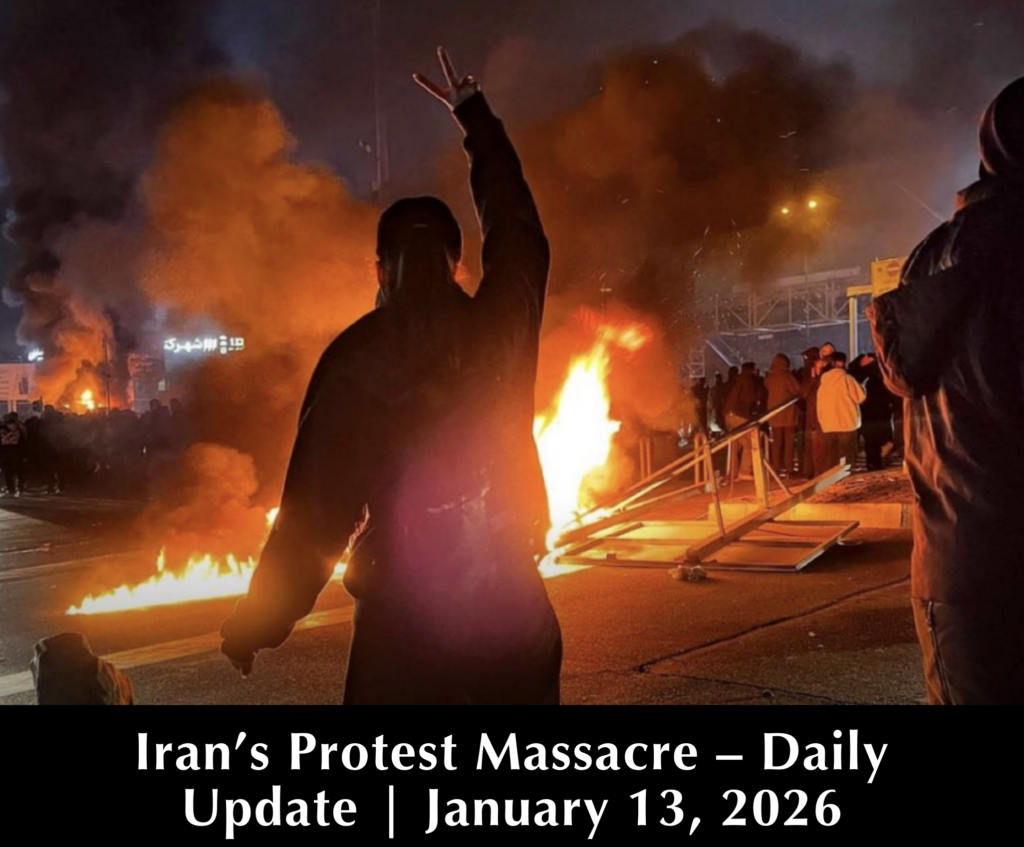
Based on verified reports, eyewitness testimonies, visual evidence, and ongoing documentation by Iran Human Rights Documentation Center (IHRDC) and affiliated sources, Iran witnessed one of the most extensive and deadly crackdowns on civilian protesters in its modern history during January 8–9, 2026.
The following is a consolidated and structured summary of the key findings documented to date:
- Large-Scale, Organized Killings of Protesters
- According to multi-source investigations and verification processes, at least 12,000 protesters were killed over two consecutive nights across multiple cities in Iran.
- The killings were nationwide, coordinated, and systematic, carried out primarily by the Islamic Revolutionary Guard Corps (IRGC) and Basij forces.
- A significant number of victims were under the age of 30.
- Available evidence indicates that the operation was conducted under direct orders from senior state leadership.
- Due to a near-total internet blackout and information suppression, documentation is ongoing and final casualty figures may rise.
- Identified Victims
- Yasin Mirzaei Qaleh Zanjiri, a Yarsani citizen and student who had been residing in Italy, was killed by gunfire during protests in Dareh Derij, Kermanshah, shortly after returning to Iran to visit his family.
- Miragha Rezaei, a 54-year-old father of two, was shot and killed during a peaceful protest in Tehran’s Fallah neighborhood. His body was later released to his family from Kahrizak Forensic Medicine Center.
- Alireza Rahimi, 26, was killed by a direct gunshot to the head in Tehranpars.
These cases represent only a small fraction of the confirmed victims.
- Evidence from Forensic and Medical Facilities
- Newly released videos and photographs from Kahrizak Forensic Medicine Center show hundreds of bodies stored in warehouse-like facilities, with families searching among them for missing relatives.
- Footage also documents the unloading of bodies from refrigerated trucks and their transfer using small vehicles.
- Unconfirmed but credible reports indicate the presence of at least 150 bodies at Tehranpars Hospital.
- Reports of Financial Extortion from Victims’ Families
- Multiple testimonies suggest that some families were demanded to pay money in exchange for the release of their loved ones’ bodies.
- While independent verification remains difficult due to communication shutdowns, the consistency and volume of these reports raise serious concerns.
- If confirmed, such practices would constitute grave violations of international human rights law, including inhuman treatment, collective punishment, and psychological abuse.
- Involvement of Foreign Armed Groups
- A former Iraqi government spokesperson publicly acknowledged the involvement of Hashd al-Shaabi–affiliated militias in suppressing protests inside Iran.
- These militias, funded by the Iraqi state, previously played a documented role in the killing of Iraqi protesters in 2019.
- Their deployment inside Iran represents a form of cross-border repression and may amount to crimes against humanity.
- Communication Blackout and Systematic Censorship
- Iranian authorities have:
- Cut access to the global internet nationwide,
- Blocked international phone calls,
- Begun physically removing satellite dishes from private homes.
- These measures aim to conceal the scale of the crackdown and prevent the flow of independent information.
- State Efforts to Shift Blame and Manipulate the Narrative
- State broadcaster IRIB released videos attempting to attribute civilian deaths to unidentified armed actors allegedly firing from elevated positions.
- These claims lack scientific and forensic credibility and appear to be part of a coordinated propaganda effort to absolve state security forces of responsibility.
- Despite censorship, accumulating evidence continues to demonstrate systematic use of lethal force against civilians by state actors.
- Disturbing Eyewitness Accounts
- In Isfahan, security forces reportedly threatened a young male protester at gunpoint before shooting a young woman accompanying him in the leg.
- In a separate incident, four unidentified bodies were discovered inside a local shop, with no official explanation provided.
Conclusion
The scale of violence, the organized nature of the killings, the targeting of civilians, the involvement of foreign militias, and the systematic suppression of information collectively demonstrate a strategy of rule through terror rather than lawful governance. Under international law, these acts may constitute crimes against humanity. Expressions of concern or symbolic condemnation are insufficient. What is urgently required is accountability, legal action, and concrete international measures to end impunity for those responsible.
Sources and Documentation
All referenced reports, updates, and visual documentation are publicly available on the official social media channels (Telegram / Instagram) of the Iran Human Rights Documentation Center, where ongoing developments continue to be published as documentation progresses.