Iran’s Protest Massacre – Daily Update | January 14 and 15, 2026
Iran – January 15th, 2026
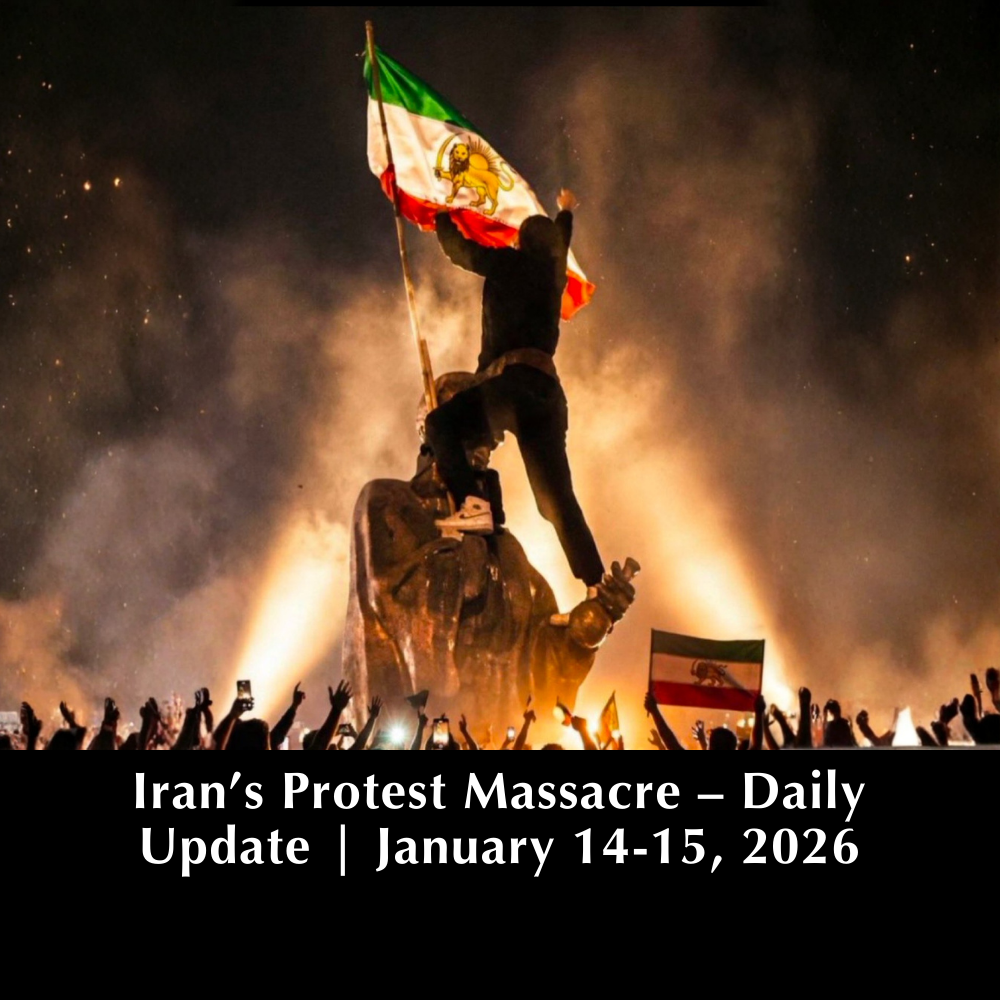
Amid the ongoing nationwide crackdown on protests in Iran and the continuing internet blackout, multiple credible field reports have documented the killing of protesters, coercion and extortion of families, life-threatening conditions for detainees, and the expansion of militarized intimidation across several cities. Due to the internet blackout, the flow of information has been severely restricted, slowing the verification of reports and limiting independent confirmation of events.
1. Confirmed Killings of Protesters by Security Forces
IHRDC, through reliable sources, has confirmed the following fatalities resulting from direct gunfire by security forces:
(A) Ardeshir Zarei, 40, a follower of the Yarsan faith and father of three, was killed in Saveh, Markazi Province, after being shot with live ammunition from behind by security forces. Mr. Zarei was unarmed and reportedly standing near a pharmacy following a medical consultation for a heart condition. Sources describe the shooting as a “final shot,” a pattern repeatedly observed in the suppression of recent protests.
(B) Keyvan Rezaei, 35, a Kurdish Yarsani citizen, was fatally shot during protests in the Dareh Derizh neighborhood of Kermanshah, reportedly by IRGC forces affiliated with the Kermanshah Nabi Akram Corps. Reports indicate a significant role of IRGC units in the suppression of protests, with Nabi Akram Corps in western Iran noted for their aggressive actions against civilians.
2. Coercion and Extortion of Families of Killed Protesters
Families of those killed—including from the Yarsan community, as verified by IHRDC sources—have reportedly faced unlawful and degrading conditions in order to retrieve the bodies of their loved ones. Authorities have allegedly demanded payments ranging from 700 million to 1 billion tomans (approximately USD 5,000 to USD 7,150), referred to as “bullet fees.” In some instances, families were reportedly pressured to either pay the fee or consent to have the deceased officially registered as a member of the Basij milita.
Reports indicate that this practice is widespread and not limited to a specific region. It appears to form part of a broader state strategy to obscure the circumstances of civilian deaths and present an alternative narrative internationally. Falsifying victims’ identities to portray them as regime supporters, though documented in previous years, is reportedly being enforced at an unprecedented scale. This includes instances where families, under coercion, were compelled to accept official records designating deceased loved ones as state-affiliated to retrieve bodies.
Such practices may contribute to inflated official casualty figures for state forces and provide a pretext for imposing severe legal penalties on arrested protesters, who could be prosecuted for alleged attacks against these purported state agents. Consequently, all official reports on state casualties should be critically scrutinized, as they may include individuals who were, in fact, unarmed protesters.
3. Critical and Life-Threatening Conditions at Greater Tehran Prison
A significant number of individuals arrested during recent protests have been transferred to Greater Tehran Prison. According to informed sources, the conditions within the facility are described as “critical and unprecedented.” Several prison wards have reportedly been evacuated and merged, resulting in extreme overcrowding, with some sections allegedly holding up to 230 detainees. Reports indicate that detainees have been subjected to severe physical abuse, including beatings and electric shocks, direct exposure to tear gas, denial of medical care, and acute food shortages. Given the historical precedent of the 2009 Kahrizak detention center deaths, these circumstances raise serious concerns regarding imminent threats to detainees’ lives.
4. Militarized Urban Intimidation Across Cities
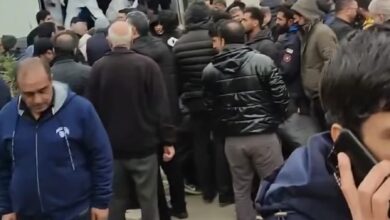
Recent video documentation from cities including Mashhad, Shahsavar (Tonekabon), and Dezful depicts extensive deployments of armed personnel, armored vehicles, motorcycle units, and heavy weaponry. These operations appear designed to deter public gatherings, suppress protests, and cultivate an atmosphere of intimidation. In Dezful’s Saat (Khomeini) Square, verified footage shows repeated gunfire and launcher-like blasts, corroborated and geolocated by the IHRDC team.
5. Nationwide Internet Blackout
Iran has now entered its seventh consecutive day of a nationwide internet shutdown. Technical data confirm that connectivity remains severely restricted across the country, effectively isolating the population from external communication channels. Despite these constraints, reports indicate that small-scale protest gatherings persist.
6. Prison-Style Restrictions on Telephone Communication
Individuals abroad report that phone calls with family members in Iran are consistently limited to one to three minutes before being automatically disconnected. This practice mirrors the controlled and monitored nature of prison communications, suggesting that mechanisms of detention-style communication restriction have been extended to the general population.
Conclusion
Taken together, these reports indicate a consistent pattern of lethal force against protesters, systematic repression, coercion of families, mistreatment and torture of detainees, communication restrictions, and the militarization of public spaces across Iran. The persistence, scale, and severity of these practices underscore the urgent need for international scrutiny, the implementation of accountability mechanisms, and immediate intervention by relevant human rights bodies.
Sources and Documentation
All referenced reports, updates, and visual documentation are publicly available on the official social media channels (Telegram / Instagram) of the Iran Human Rights Documentation Center, where ongoing developments continue to be published as documentation progresses.