Iran’s Protest Massacre – Daily Update | January 16 and 17, 2026
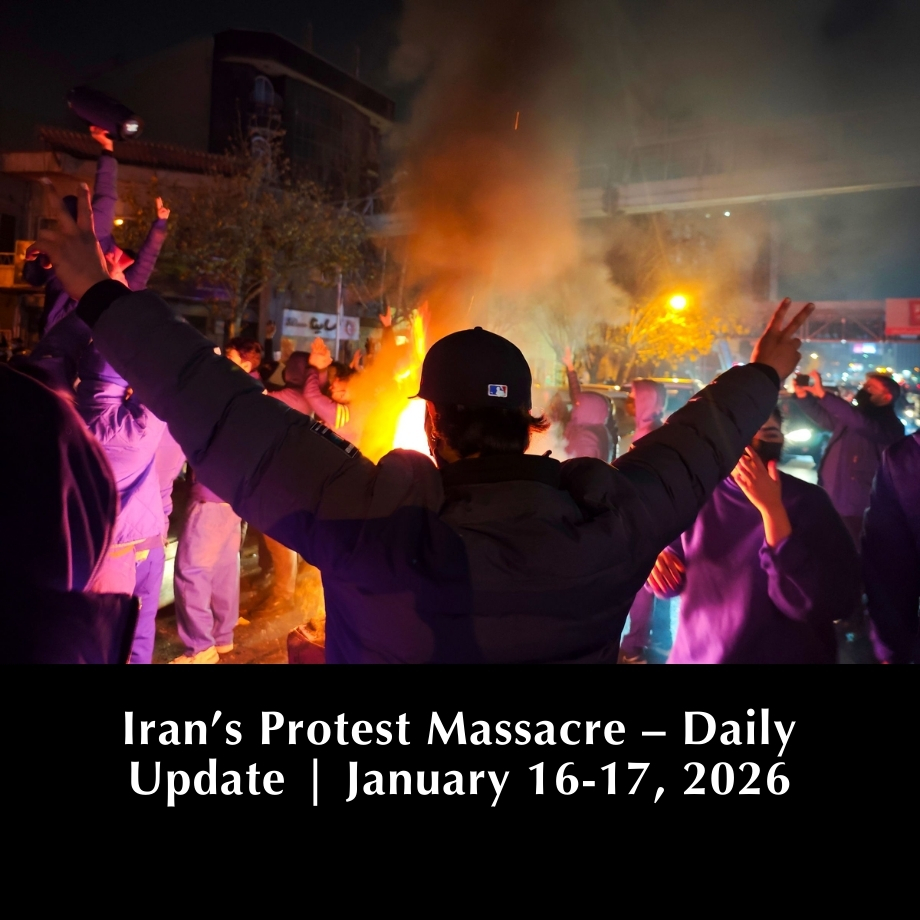
Iran – January 17, 2026
Amid the continued nationwide repression of protests in Iran and the persistence of severe communication restrictions, additional credible reports document intensified militarization of cities, mass arrests, further civilian deaths, official admissions regarding the scale of killings, and the deepening human toll of the ongoing crackdown. The partial and largely symbolic restoration of limited domestic communication services has not meaningfully improved access to information and continues to obstruct independent verification and documentation efforts.
- Militarization and Security Lockdown of Urban Centers
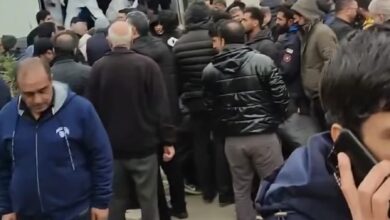
According to Haalvsh, a human rights outlet reporting on Sistan and Baluchestan Province, heavy security measures remained in effect across Zahedan on Friday, January 16, 2026. Authorities reportedly cited concerns over potential protest activity and deployed a significant military and security presence throughout the city, particularly along routes leading to Makki Grand Mosque.
Multiple military vehicles were positioned in surrounding streets and alleys, while armed personnel enforced movement controls. These measures substantially disrupted civilian traffic and daily life and contributed to an atmosphere of intimidation and collective punishment of residents. This pattern mirrors similar militarized deployments documented in other cities and appears aimed at preemptively suppressing protests and normalizing armed control over civilian spaces.
- Mass Arrests and Risk of Arbitrary Detention in Gilan Province
According to official statements by the provincial police commander of Gilan Province, more than 1,500 citizens were arrested in the past few days. The official failed to provide clear or detailed information regarding the identities of detainees, their places of detention, criminal charges, or access to legal counsel.
The same official claimed that 50 individuals described as “leaders” were among those arrested and referred to protesters using broad, accusatory labels such as “seditionists” and “vandals.” Such terminology, frequently employed by Iranian authorities, raises serious concerns regarding the presumption of guilt and the erosion of fair trial guarantees.
Following these mass arrests, families of detainees reportedly face extreme uncertainty and distress. Numerous families remain unaware of their relatives’ whereabouts, physical condition, legal charges, or access to legal representation. Authorities have reportedly failed to provide transparent or timely responses. These developments are unfolding amid ongoing communication restrictions, which significantly impede independent monitoring, documentation, and legal follow-up. Human rights observers warn that the systematic use of vague, security-oriented labels to describe protesters facilitates arbitrary detention, heightens the risk of enforced disappearance, and undermines fundamental protections under international human rights law. The scale of arrests in Gilan underscores the urgent need for independent oversight and international scrutiny.
- Identification of Killed Protestors Continuing
A credible source has directly reported that Amin Salami, a civilian shop owner from the Elahiyeh neighborhood of Kermanshah, was killed on January 8, 2026, during protests in the same area. Salami reportedly owned a scarf and handbag shop.
Further details regarding the circumstances of his death remain under investigation. Nonetheless, this case aligns with a broader and well-documented pattern of civilians being killed by the Islamic Republic security forces during protests.
- Evidence of Mass Fatalities and Psychological Harm to Families
Disturbing video footage released by journalist Farzad Seifikaran, reportedly recorded on January 10, 2026, at the Kahrizak Forensic Medicine Center, shows a mother searching among a large number of bodies for her child. The footage captures her cries and expressions of grief as she mourns her 22-year-old son.
This visual evidence underscores the scale of fatalities and highlights the profound psychological trauma inflicted on families of those killed. It raises serious concerns regarding the handling of bodies, transparency in identification processes, and the treatment of bereaved families.
5. Partial Restoration of Communications and Continued Digital Repression
On the morning of January 16, 2026, state-affiliated media announced the limited restoration of certain communication services, including SMS messaging and access to the so-called “national internet” in select areas. At the same time, several pro-government Telegram channels resumed activity, while independent and international platforms remained largely inaccessible.
Despite official claims of a phased restoration, data from NetBlocks indicate that overall connectivity remains at approximately 2 percent of normal levels, rendering the restoration largely symbolic. The nationwide blackout, imposed on January 8, 2026, coincided with intensified repression and appears intended to prevent the documentation and dissemination of evidence of human rights violations.
6. Admission by Supreme Leader Regarding Scale of Killings
In a speech delivered on January 17, 2026, Iran’s Supreme Leader Ali Khamenei publicly acknowledged that “several thousand people” were killed during the recent nationwide protests. This statement represents a rare implicit admission by the highest authority of the scale of lethal force used against civilians.
Throughout his remarks, Khamenei repeatedly referred to protesters using terms such as “sedition” and “seditionists,” adopted a threatening tone, and declared that the Islamic Republic would not “forgive domestic and international criminals.” He emphasized the need for firm action by security and judicial institutions and attributed the protests to “foreign enemies,” including allegations against U.S. President Donald Trump, without presenting evidence.
Human rights observers note that these statements do not acknowledge responsibility for large-scale civilian deaths. Instead, they reinforce a security-driven narrative aimed at justifying continued repression, deflecting accountability, and legitimizing further violations of fundamental rights.
Conclusion
The developments documented on January 16–17, 2026, reveal an escalating and coordinated pattern of militarized governance, mass arrests without transparency, arbitrary detention, psychological harm to families, official acknowledgment of mass fatalities, and sustained digital repression. Taken together with earlier reports, these findings indicate serious and potentially systematic crimes against humanity on a large scale.
The scope, consistency, and gravity of these abuses underscore the urgent need for independent international investigations, robust accountability mechanisms, and immediate engagement by United Nations bodies and other relevant international actors.
Sources and Documentation
All referenced reports, updates, and visual documentation are publicly available on the official social media channels (Telegram / Instagram) of the Iran Human Rights Documentation Center, where ongoing developments continue to be published as documentation progresses.