Report on Fatalities and the Scope of Massacre in Esfarayen
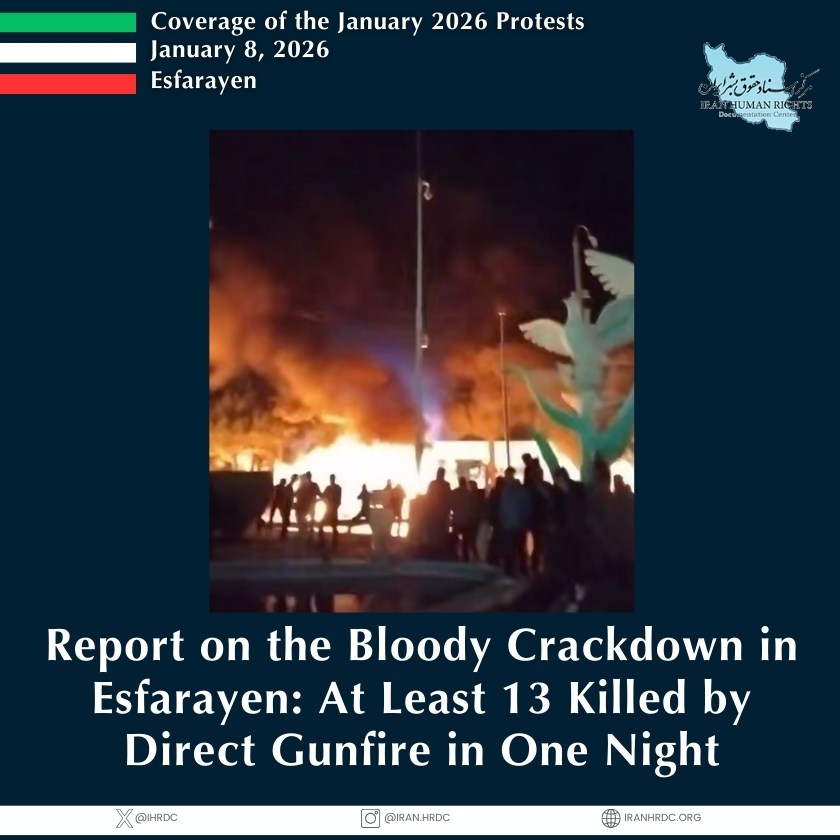
Esfarayen – Evening of January 8, 2026
Summary
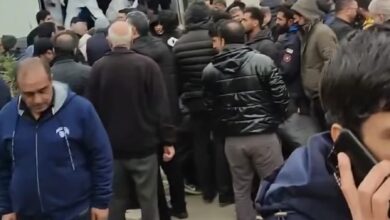
Based on information collected from local sources and medical staff, during the protests on the evening of January 8, 2026, in the city of Esfarayen (North Khorasan Province), Islamic Republic security forces carried out widespread killings by direct gunfire and the use of military-grade weapons against protesting civilians. Available evidence indicates a significant number of civilian deaths, organized efforts to conceal the true number of victims, pressure on families, and attempts to impose fabricated narratives on the injured.
Identified Fatalities
As of the time of this report, the identities of 13 victims have been confirmed:
- Jalil Milanlouei
- Shahram Valizadeh
- Mohammadhasan Jafari
- Reza Ezzati
- Sorena Rabat-Jazi
- Pouya Ostadi
- Bijan Ebrahimi
- Ali-Asghar Khodadadi
- Mohammad Pouya Karimabadi (13 years old)
- Abbas Zeinali
- Anis Garivani
- (…) Khanzadeh (first name unknown)
- (…) Azimi (first name unknown)
According to preliminary estimates by local sources, the actual number of fatalities is significantly higher, with at least more than 50 people believed to have been killed that night.
Additional Information on Burials
- Anis Garivani was buried in the village of Chaharborj near Esfarayen.
- Bijan Ebrahimi was buried in the village of Tuy near Esfarayen.
- Local sources report that security forces sought to prevent the burial of victims within Esfarayen city in order to avoid public gatherings.
- Mohammad Pouya Karimabadi was only 13 years old.
Efforts to Conceal the True Death Toll
According to medical staff:
- Forces affiliated with the Islamic Revolutionary Guard Corps (IRGC) removed the bodies of victims from hospitals during the night to prevent the registration and disclosure of the true number of deaths.
- Some bodies were buried with only a limited family presence and under severe security restrictions.
- Families were denied permission to hold public mourning ceremonies or to display banners or other signs of mourning.
Weapons Used and Methods of Repression
Based on eyewitness testimony:
- IRGC Hilux vehicles, equipped with heavy machine guns and DShK weapons, fired indiscriminately at crowds.
- The use of such weaponry demonstrates the deployment of heavy military arms against unarmed civilians.
Citizens’ Accounts of the Onset of Gunfire
Some people of Esfarayen, after watching a video from the city of Abdanan—showing law enforcement officers waving to people from the top of a building—believed that protesters would not be shot and therefore moved toward a police station.
However, security and military forces stationed on rooftops opened direct fire on the crowd.
Role of Medical Staff
Despite intense security pressure, medical personnel in Esfarayen made extensive efforts to treat the injured. Reports indicate that some members of the medical staff prevented the arrest of wounded individuals inside hospitals.
Pressure to Impose a Fabricated Narrative
According to testimony from local sources:
- IRGC forces approached some injured individuals and proposed that, in exchange for receiving a Basij (the primary volunteer paramilitary organization operating under the IRGC) identification card, they should wear masks, claim to be Basij members, and allege that they were beaten or shot by “agents of the Zionist regime.”
- The injured individuals rejected this scenario and refused to cooperate with the forced fabrication.
Legal Conclusion
What occurred in Esfarayen was not merely a security response, but a set of organized and coordinated actions, including:
- The killing of protesters through direct gunfire
- The use of military weapons against unarmed civilians
- The concealment of the true number of fatalities
- The control and restriction of mourning practices
- Attempts to impose fabricated narratives on the injured
Taken together, these actions may constitute clear evidence of crimes against humanity under international law.
Note: Due to severe communication restrictions and ongoing internet outages, independent verification of all details of these accounts is currently not possible.
نسخه فارسی گرازش در اینجا