Aadel Collection
The Kurdish Question
          The ICartlish Qnestion
          C ONSIDER THE KURDS, an ethnically, culturally
          and linguistically distinct community of perhaps
          12 million souls dispersed across parts of western
          Asia, notably, these days, Iran. In any world truly de-
          voted to the principle of national self-determination,
          they would have had their own state decades ago. But
          they live in countries (the Soviet Union, Turkey, Iraq)
          with the determination and force to suppress their
          political longings, and currently the Kurdish ques-
          tion is alive only in Iran. Kurds there initially wel-
          corned the new regime for its promise of hospitality
          to their aspirations for autonomy. When the new re-
          gime turned out to be no less cynical toward iran's
          several non-Persian minorities than the old, the
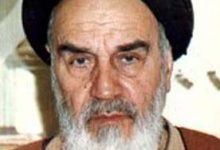
          ICurds moved into armed revolt. Ayatollah Khomeini
          is trying to suppress it now, having proclaimed him-
          self supreme military commander to that end.
          ft is inconsistent on its face for the ayatollah to
          demand independence for the Palestinians, whose
          Arab brothers possess already more than a score of
          sovereign states, and to deny independence, or even
          autonomy, to the no less nationally worthy Kurds,
          who have no home of their own. Why do the ayato l-.
          iah's Arab and Moslem friends not point this out to
          him? Do not hold your breath. The best way for the
          Kurds to win Arab/Moslem backing would be to
          move to Israel.
          It was not so long ago that a Republican administra-
          tion's supposed betrayal of Kurds Uraq) was widely
          cited as an example of the cynicism that a new Demo-
          cratic administration would eschew. Yet the Carter
          administration has left the Khomeini regime to do
          what it will with the Kurds. It is supplying the regime
          with the spare parts and ammunition for its suppres-
          sion of them. rt has not been heard advising Tehran
          to accept their legitimate rights, human or political,
          or protesting that Iran is using its American-supplied
          weapons for purposes other than external defense.
          The United States needs Iran's oil.
          To be sure, sovereign states cannot go around
          lightly suggesting that others grant autonomy, let
          alone full independence, on their national territory
          to ethnic claimants. Such claims go to the heart of the
          integrity of nations. They are too sensitive, too dis-
          ruptive. They strike too close to home.
          Yet the real “Kurdish question” is the political
          weight of oil. Oil is a legitimate reason of state, but
          not one that a great power can afford to place above
          all others. lt is chiefly oil that has put Palestinian self-
          determination on the international agenda, and kept
          Kurdish self-determination off. But while oil supplies
          a reason to accommodate an established nation and a
          once and potentially future friend like Iran, it does
          not supply a reason to let down another established
          state and a constant and special friend like Israel.
          Americans appear to be feeling their way toward just
          such an equation. It must be pursued with humility
          as well as with political care.