Aadel Collection
Death in the afternoon
          INTERNATIONAL
          platoons he has collected together may
          still not prove a match for the formidable
          army led by Mrs Indira Gandhi. Mr
          Charan Singh has already achieved a
          virtual merger with the anti-Gandhi Con-
          gress party, roped in the dissident Social-
          ists and the Moslem League, and reached
          an electoral understanding with the unit-
          ed front of leftist parties. He seems well
          on his way to forging an alliance with the
          regional parties of Punjab, Tamil Nadu,
          Kerala and possibly Kashmir. Although
          his personal following is limited to north-
          ern India, his electoral combination has
          acquired a nationwide character, and it
          could yet prove to be the dominant force
          in eastern and southern India.
          Ideologically, this combination makes
          no sense at all. Mr Charan Singh is an
          unabashed champion of the land-owning
          farmer, and has little love for socialism,
          let alone communism. As a Hindi linguis-
          tic chauvinist, he has always been regard-
          ed with suspicion by the regicn al rties
          in non-Hindi-speaking areas. His combi-
          nation may have much electoral value,
          48
          but it hardly looks like a future govern-
          ment, and many of the parties in it may
          break away once the election is over.
          The fact that so many diverse interests
          have banded together in it highlights the
          present isolation both of Mrs Gandhi and
          of the Janata faction led by Mr Jagjivan
          Ram. Mrs Gandhi's authoritarian streak
          has repelled even the most opportunistic
          regional parties, who know full well her
          reluctance to share power with anybody.
          The strongest party in Tamil Nadu, al-
          though an old ally of hers, is now part of
          Mr Charan Singh's coalition. Even the
          (pro-Moscow) Communist party of India,
          which hung on to her skirts for a decade,
          has now let go and joined hands with the
          Marxists, with which it had been at log-
          gerheads since the Sino-Soviet split in the
          1960s. Now that these two parties have
          forged a united front along with minor
          socialist groups they are well placed to
          sweep the polls in West Bengal and
          K rala and to make inroads in Assam.
          Despite all this however, Mrs Gandhi still
          shows much confidence.
          Copyright 1979, The Economist Newspaper Limited
          News
          Laos
          After boat people,
          the hill people
          FROM A CORRESPONDENT IN BANGKOK
          The hospital was full, so they placed her
          on a concrete slab outside the front door.
          She was pathetically thin, her body rav-
          aged by dysentery and starvation. The
          hospital attendant said she would be dead
          in a few days. This 10-year-old girl was
          one of the Hmong hill-tribe people from
          Laos who have fled to neighbouring Thai-
          land. At the refugee camp where she
          lay—in the Thai province of Loei, 300
          miles north-east of Bangkok—more than
          37,000 of her people wait to be resettled.
          Thousands more linger in other Thai
          camps.
          The Hmong say that the communist
          Pathet Lao government of Laos, and the
          occupying Vietnamese forces which sup-
          port it, launch constant ground and artil-
          lery assaults against their mountain hold-
          outs, including the use of poison gas. The
          aim of this pressure, they say, is to drive
          the strongly anti-communist Hmong from
          the country.
          The plan seems to be succeeding. From
          their cramped quarters in Loei, Hmong
          spokesmen talk of their people's plight in
          Laos: they have few weapons and too
          little ammunition and, worst, are desper-
          ately short of food. They say that the
          communist harassment is so severe that
          they cannot even grow subsistence crops.
          The choice many of them have made—to
          flee to Thailand—often means a south-
          ward trek of between one and three
          months. But even that escape route
          seems to be closing. Thailand already has
          something like 200,000 Indochinese refu-
          gees, a large part of them from Laos, and
          may shut its doors to new arrivals.
          In one incident, which the refugees
          fear could point to a new Thai govern-
          ment policy, a group of nearly 200
          Hmong got as far as a Laotian island on
          the Mekong river, the border between
          much of Laos and north-eastern Thai-
          land. Their pleas for permission to cross
          the 400 yards of brown water to the Thai
          shore were rejected by Thai soldiers, who
          fired their rifles into the water to make
          sure the Hmong understood. On July
          31st, three days after the group had
          reached the island, the Pathet Lao landed
          and forced them to return to the Laotian
          mainland.
          The authorities in Bangkok deny that
          refugees from Laos are refused permis-
          sion to enter Thailand and claim that
          local officials were responsible for the
          Mekong island incident. But, if the Thai
          government does refuse to take any more
          THE ECONOMIST SEPTEMBER 1, 1979
          Death in the afternoon
          I
          4'.
          p
          4
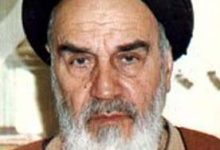
          “Your purpose is not to negotiate with the criminals and their leaders. They must be
          crushed.” So spoke Ayatollah Khomeini on Tuesday as he despatched one of his
          religious henchmen to Kurdistan, and appeared to shatter the hope that there might
          yet be a peaceful settlement between the Iranian regime and the Iranian Kurds who
          are demanding a limited form of autonomy. A few hours earlier negotiations had
          appeared to be leading to a formal ceasef ire; the government is still talking as if there
          were one. Reports have it that 500 people have been killed in the Kurdish province
          over the past two weeks. So far 68 Kurds, including the two above preserved in ice
          blocks, have reportedly been executed.
          J
          Document Reference: ECON-1 979-0901 Date: 01 -09-1 979