Aadel Collection
Iran Repression Just Changes Its Uniform: Under Khomaini, Political Prisoners Again Fill Jails, and Rights are Crushed
          Iran Repression Just Changes Its Uniform: Under Khomaini, Political Prisoners Again Fill Jails, a ,
          Ncui Farhad
          ngeles Ton s (192i ( ‘ Un ens File,), Oct 16, 197)
          ProQt es his orical Nc spapcrs Los An c ‘s l'imcs (1881-1987)
          pg Ca
          Iran Repression Just Changes Its Uniform
          Under Khomaini, Political Prisoners Again Fill Jails, and Rights Are Crushed
          BY FABRAD NOURI
          T sat february 's overthrow of Mohammed
          Reza Pahiavi, the Shah of Iran, was an
          event that was welcomed by xmflsons of
          Iranians, The toppling of his hated re me
          released powerful expectations of democracy
          and Justice, But today many of those who
          helped rid the country of the dictator are
          worried about the course of events under the
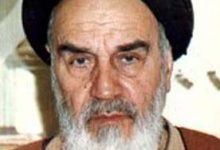
          leadership of the Ayatollah Ruhollah o
          During his 25 year reign, the shah de
          stroyed the ability of ordinary Iranians to
          organize politically by repressing all political
          organizations, except his own rubber stamp
          party Consequently, the anti shah movement
          fell into the hands of the corut s only
          organized eadership—the relignus hierarchy
          in tie mosqu
          omaini, the best loiown of the relupaus
          leaders appealed to the people to demonstrate
          in the streets by the millions, He appealed to
          the shah's soldiers to break the disripline of
          the army and to join the protesters. And he
          refused to make any compromises,
          As a result, Ifaiomaim e ipeyed immense
          popularity More than 5 million people came
          into the streets to greet him on his return
          from esile, But, once in office, lthomami be-
          gan attempting to stabilize Iran by preserving
          the capitalist structure a move to the right
          that conflicted with the workers' concept of
          revolutionary change
          Most Iranians hoped that the shah's depar
          ture would open up the possibility of winning
          ponticat rights, maiung economic ann sociai
          gains and overcoming the tremendous paver
          ty and backwardness inherited from the Pah
          lavi re me. Among fran's most pressing needs
          were and stifi are
          —Industrialization, free from domination by
          foreign copporations,
          —land refcrm for the peasants, who com-
          prise two-thirds of the total population,
          Democratic rights for the national groups
          within Iran who comprise 60% of the popula-
          ban.
          Jobs for the millions of unemployed.
          —Higher wages to meet soaring inflation.
          —Equality for women.
          Ithomaini has so far refused to take mea-
          sures that could meet these goals. Indeed, be
          has resorted increasingly to repressive mea
          sures, trying to prevent the emergence of
          genuine democracy,
          Ithomaini's men have begun to take over
          the workers councils that were formed during
          the insurrection against the shah, Neighbor-
          hood committees and peasant councils have
          been take.. over by government appointees.
          Soldiers who played a heroic role in resist
          aug the shah's orders have been denied politi-
          cal rights Censorship has again been imposed
          on radio, television and the press, and more
          than 40 newspapers and magamnes have been
          banned outright, Opposition political parties
          have been forced underground.
          Nevertheless, in countless ways the Iranian
          people are still reasserting their hopes for a
          democratic and just society, Within the milita-
          ry, sentiment against the war in Kurdistan
          continues to grow, with more and more aol
          diers unwilling to fight against their fellow
          citizens,
          Once again the government's repressive
          measures have filled the jails with political
          Oito of t-k uwu tu4t
          of the 14 members of the Socialut Workers
          Party who were arrested four months ago for
          their activism,
          On Aug. 26, in secret trials, 12 of them were
          sentenced to be executed. The remaining two
          are women and they were sentenced to life
          imprisonment Howe er, because of an in,er
          national outcry, the execution orders have not
          been earned out.
          Their “offense” was advocating a democrat
          ically elected constituent assembly to discuss
          the problems of the country, urging support of
          the rights of the Arabe, Kurds and other
          national groups in Iran, proclaiming the right
          of workers to organize, and seeking other
          democratic rights
          Several of the prisoners lived in Iran
          throughout the shabs reign, which they op-
          posed at great personal sacrifice. Others
          forced into mile, attended school in the United
          States. Many were active in the Committee for
          Artistic and Intellectual Freedom in Iran,
          Their plight and the response of prominent
          people from throughout the world have been
          featured in newspapers in Iran, despite the
          rigid censorship
          The case has become a rallying point for all
          those in Iran who are looking for a way to
          challenge the represrive measures taken by
          the government.
          More protests are needed to save these 14
          dissenters Perhaps then the way will be
          opened for the release of others jailed for their
          political views, for newspapers to be pub-
          lished, for political parties to function again,
          and for the straggle for democracy and free
          dam to go forward, The voices of defenders of
          democratic and human rights must be heard in
          Quin and Tehran, and by li-an's representa
          fives elsewhere.
          Parked N e ar . is a staff wither for Karpar, the
          SocialIst Workers Party newrpaper in Iran. He
          is now on a lecture tour North Amerioo for
          the Committee to Sove the Iranian 14, based in
          New York
          Reproduced with perm ssion of he copyright owner Further reproduction proh bited w ho t permission