Aadel Collection
Racial discrimination and religious discrimination: identification and measures
          UNITED
          NATIONS
          General Assembly
          Distr.
          GENERAL
          A/CONF. 189/PC. 1/7
          13 April 2000
          ENGLISH
          Original: FRENCH
          WORLD CONFERENCE AGAINST RACISM,
          RACIAL DISCRIMINATION, XENOPHOBIA
          AND RELATED INTOLERANCE
          Preparatory Committee
          First session
          Geneva, 1-5 May 2000
          Item 7 of the provisional agenda
          REPORTS, STUDIES AND OTHER DOCUMENTATION
          FOR THE PREPARATORY COMMITTEE AND THE
          WORLD CONFERENCE
          Note by the Secretary-General
          The Secretary-General has the honour to transmit to the Preparatory Committee the study
          entitled “Racial discrimination and religious discrimination: identification and measures”,
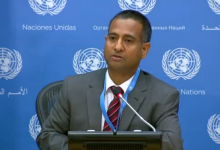
          prepared by Mr. Abdelfattah Amor, Special Rapporteur of the Commission on Human Rights on
          religious intolerance, in accordance with Commission resolution 1999/78.
          GE.00-12706 (E)
          AICONF. 189/PC. 1/7
          page 2
          Annex
          Racial discrimination and religious discrimination: identification and measures
          Study prepared by Mr. Abdelfattah Amor, Special Rapporteur
          on religious intolerance
          CONTENTS
          Paragraphs Page
          Introduction 1 - 7 4
          LEGAL ASPECTS OF AGGRAVATED
          DISCRIMINATION 8-72 5
          A. Context 9- 19 5
          B. Universal protection against aggravated discrimination 20 - 64 7
          1. General instruments 21 - 38 7
          2. Specific instruments 39 - 64 11
          C. Regional protection 65 - 72 18
          II. FACTUAL ASPECTS OF AGGRAVATED
          DISCRIMINATION 73 - 125 21
          A. Tentative system of classification 74- 116 21
          1. Discrimination involving a majority and persons
          or groups forming an ethnic or religious minority 85 - 110 23
          2. Discrimination involving persons belonging to
          different ethnic and religious minorities or groups 111 - 116 29
          B. Evaluationofcontentandscope 117- 125 31
          III. CONCLUSIONS AND RECOMMENDATIONS 126- 152 33
          A. Strengthening protection against aggravated
          discrimination 133- 143 35
          1. International protection 133 - 139 35
          2. Internal protection 140 - 143 36
          AICONF. 189/PC. 1/7
          page 3
          CONTENTS ( continued)
          Paragraphs Page
          B. Prevention of aggravated discrimination 144 - 152 37
          1. Education and training 145 - 147 37
          2. Information and communication 148 - 149 38
          3. Dialogue between and within faiths and
          ethnic groups 1 50 39
          4. Townplanningpolicies 151 40
          5. Democracy and development 152 40
          Appendix
          Bibliographical references 56
          AICONF. 189/PC. 1/7
          page 4
          Introduction
          1. There are over 7,500 ethnic groups and “minoritized” communities, 6,700 languages and
          countless religions and beliefs in the world today, spread over the five continents and the
          185 States Members of the United Nations [ Yacoub, 19981.' To this figure, which shows the
          great richness of our planet, should be added a second, disturbing, figure. According to certain
          sources (already somewhat dated), 2.2 billion people are the victims of discrimination or
          restrictions on the basis of their freedom of thought, conscience, religion or belief or their ethnic
          identity [ Odio-Benito, 19891.2
          2. At the dawn of the twenty-first century, the state of international society is certainly
          paradoxical. While it is definitely much more closely integrated, it has never ceased to be in
          conflict. The old world order has been replaced by new local conflicts in which political and
          economic factors cut across historical, religious, ethnic or nationalistic lines. International
          society is faced with new situations: the divisions are far less clear-cut and the conflicts, ever
          more scattered and sometimes difficult to comprehend, target people's integrity, identity,
          freedom and humanity.
          3. The elimination of all forms of discrimination, as an integral part of the international
          protection of human rights, has consequently become one of the most urgent imperatives in the
          world today. The formation or break-up of States, territorial divisions, voluntary or forced
          migrations, or simply economic and social conditions, religious and political extremism, the
          negative role of the media and prejudice are all likely to heighten tensions, particularly ethnic
          and/or religious tensions. After lying dormant for a long time, they resurface, sometimes
          violently but often in a more diffuse and destructive way. Many population groups have been
          minoritized. Peaceful, or at least conflict-free, coexistence among the various communities is
          jeopardized. Economic development imperatives are disrupted, delayed or called into question.
          The threats to domestic and international peace and security are, more than ever, interdependent.
          4. This explains why the international community, particularly the United Nations system,
          has gone to such lengths to establish rules and set up mechanisms specifically to deal with racial
          and religious discrimination, while taking into account as far as possible the requirements of
          State sovereignty and the constraints of providing increased protection for human rights and
          fundamental freedoms. 3
          5. However, if these rules and mechanisms are studied together with discrimination as it is
          practised throughout the world, the distinctions between racial and religious categories, or even
          between commonly-used concepts or terms, are not clear, whether the subject is minorities
          [ Yacoub, 19981 or religion. 5
          6. There are borderline cases where racial and religious distinctions are far from clear-cut.
          Apart from any discrimination, the identity of many minorities, or even large groups of people, is
          defined by both racial and religious aspects. Hence, many instances of discrimination are
          aggravated by the effects of multiple identities. Moreover, the right to freedom of religion is an
          essential human right, just like the right to belong to an ethnic group or to a minority. When
          both of these rights are infringed in the case of a single person or group of persons, the violation
          AICONF. 189/PC. 1/7
          page 5
          is not just a superimposition or ordinary addition of offences. The combination of the two
          offences creates a new, more serious offence which, while of varying intensity, is by its very
          nature a separate concept.
          7. Because of their specific characteristics, these situations, which can be referred to as the
          aggravated intersection or meeting points of race and religion, require a legal analysis (chap. I)
          and a factual approach based on the way in which such discrimination is practised (chap. II),
          before the solutions and recommendations that seem to us appropriate to these meeting points are
          considered (chap. III).
          I. LEGAL ASPECTS OF AGGRAVATED DISCRIMINATION
          8. The law seems to offer separate protection against the two types of discrimination. This
          study will initially aim to show that, even from a legal viewpoint, racial discrimination and
          religious discrimination overlap, sometimes to a large extent; religious identity is an integral part
          of racial identity and vice versa. The concept of minority, in particular, makes it possible to
          bring the two together and consequently put the problem into context (sect. A). It will then
          highlight the shortcomings of existing texts and mechanisms and identify in these texts a
          possible legal basis for racial discrimination aggravated by religious discrimination. We will
          essentially be dealing with universally applicable international instruments (sect. B), and will
          then consider regional instruments (sect. C). 6
          A. Context
          9. A person who is a victim of discrimination based on religion or belief- within the
          meaning of articles 1 and 2 of the Declaration on the Elimination of All Forms of Intolerance and
          of Discrimination Based on Religion or Belief of 25 November 1981 - may be subjected to
          aggravated discrimination if he or she belongs to a readily identifiable group of people.
          10. Many cases of discrimination, in which only the person's religion or belief is targeted,
          are beyond the scope of this study. 7 It is only when the person concerned is ethnically different
          from the majority or from other minorities or ethnic or religious groups or from ethnic groups of
          the same minority that he or she can claim aggravated racial discrimination. 8
          11. It must be acknowledged, however, that the distinctions in this area are not as
          straightforward as they might appear at first glance. Some religions belong to a particular
          category in which worship, practices, rites, beliefs or even the written and spoken language
          developed for religious purposes are an essential element of their identity and, sometimes, their
          ethnicity [ Eide, E/CN.4/Sub.2/1992/37, para.
          12. Consequently, the concept of the minority is, at least essentially, the cardinal point, or the
          node where race and religion intersect. This means that aggravated discrimination will
          necessarily be discrimination against a person belonging, if not to a minority, then at least to an
          identifiable group of people [ Robert, 19941.'° However, there still appear to be some difficulties
          in defining minorities, particularly religious minorities, despite the fact that the latter were
          historically the first to be concerned by the protection of minorities and, more generally, human
          rights.
          AICONF. 189/PC. 1/7
          page 6
          13. However, as Francesco Capotorti, Special Rapporteur of the Sub-Commission on
          Prevention of Discrimination and Protection of Minorities, rightly observed in his famous
          1979 study: “If, however, the problem is examined without political prejudice and from a truly
          universal point of view, there can be no gainsaying that the essential elements of the concept of a
          minority are well known, and that the only point at issue as far as the definition is concerned is
          whether an indisputable objective ‘core' can be widened or restricted by means of a few
          controversial considerations” [ E/CN.4/Sub.2/3 84/Rev. 1, para. 5641.11
          14. Several definitions of minority have been proposed around this core; most of them use
          cumulative criteria of an objective and subjective nature. Capotorti's definition is particularly
          interesting; according to it, a minority is “a group numerically inferior to the rest of the
          population of a State, in a non-dominant position, whose members - being nationals of the State -
          possess ethnic, religious or linguistic characteristics differing from those of the rest of the
          population and show, if only implicitly, a sense of solidarity, directed towards preserving their
          culture, traditions, religion or language” [ E/CN.4/Sub.2/384/Rev. 1, para. 5681.
          15. Other experts, generally members of the Sub-Commission on Prevention of
          Discrimination and Protection of Minorities, have proposed similar definitions. Worthy of
          mention are those by Jules Deschênes in 1985 [ E/CN.4/Sub.2/1985/3 11,12 Asbjorn Eide in 199413
          and Stanislav Tchernichenko in 1997 [ cited in Yacoub, 19981.14 Mention should also be made of
          the definition of the Permanent Court of International Justice in its advisory opinion of
          31 July 1930, from which the definitions of the above-mentioned legal writers seem to be drawn
          [ “The Greco-Bulgarian ‘communities”1.' 5 None of these definitions has been found to be
          16 .
          satisfactory [ Andrysek, 19891, which has much less to do with the appropriateness of the
          definitions proposed than with obstacles of a political or even psychological nature and to an
          unjustified fear of the risks of separatism.
          16. International law habitually protects rights without requiring general agreement on a
          definition of the beneficiaries of the protection. The best example of this is the right of peoples
          to self-determination. The lack of a definition in the international conventions where the term
          “minority” is used (including article 27 of the International Covenant on Civil and Political
          Rights and article 14 of the European Convention on Human Rights) has not prevented the
          bodies set up under these conventions from settling disputes involving minorities. In any case,
          the criteria proposed overlap considerably. The subjective criteria (sense of solidarity and
          determination to preserve their distinctive religious and cultural characteristics) are implicit in
          the objective criteria (existence of a group or a community that is distinct and non-dominant in
          numerical terms, having common ethnic and religious characteristics). In other words, such a
          definition, even if not enshrined in positive law,' 7 can easily be applied to persons belonging to
          religious minorities who suffer from racial discrimination.
          17. The minorities we are studying here, the “national” or “identity” minorities - as distinct
          from other minorities based on other criteria (homosexual, vegetarian, disabled, political, etc.,
          who are not covered by international conventions) - are generally divided into three categories:
          ethnic, religious and linguistic; international instruments dealing specifically with minorities
          agree on these three criteria [ Malinverni, 19911.18 However, these three categories or criteria are
          far from mutually exclusive. For our purposes, several religious minorities are at the same time
          ethnic and/or linguistic minorities. These differences from the rest of the population normally
          AICONF. 189/PC. 1/7
          page 7
          have an impact on their culture and way of life.' 9 Constitutions throughout the world provide
          protection for minorities using a wide variety of terminology that captures the conceptual
          difficulty of distinguishing between the racial and the religious dimensions of the concept. 2 °
          18. Finally, as we shall see, aggravated discrimination does not concern minorities
          exclusively. Groups of people who differ in their religion or ethnic origin from the majority of
          the population or other groups can be the target of aggravated discrimination even though they
          may not satisfy all the criteria for the definition of a minority, either for objective reasons (for
          example, they are not linked by nationality to the State in whose territory they reside) or for
          subjective reasons (the group has little or no sense of solidarity or of preserving its specific
          characteristics).
          19. The question, therefore, is whether this interconnection of religion and race is legally
          established in the universally applicable international instruments.
          B. Universal protection against aggravated discrimination
          20. Two categories of instruments can be distinguished: those of a general nature dealing
          with the protection of human rights and those of a specific nature dealing with a particular
          category of rights to be protected. The type of instrument (convention, declaration) and its
          relevance to the problem concerning us are variable. However, none of these instruments
          envisages the hypothesis of aggravated discrimination by singling it out from other forms of
          discrimination for special legal treatment. Moreover - and this may be the reason why - none of
          the instruments studied claims to protect minorities as such. They are aimed only at the people
          belonging to minorities. However, this statement should be qualified. None of the instruments
          studied looks unfavourably on the intersection between race and religion. Some even make
          explicit reference to it.
          1. General instruments
          (a) The Charter of the United Nations and the Universal Declaration of Human Rights
          21. Unlike the League of Nations Covenant, the Charter of the United Nations affirms
          “respect for human rights and for fundamental freedoms for all”. Identical wording is
          used: “. . .without distinction as to race, sex, language, or religion” (see art. 1, para. 3;
          art. 13, para. 1(b); art. 55 (c); and art. 76 (c)), 21 even though the Charter is not aimed especially
          at the protection of minorities. This approach is perfectly understandable insofar as the sought-
          after objective of universality requires the assertion of principles intended for application
          everywhere, independently of the particular situation of a category of rights to be protected or
          particular problems in a given region of the world; it is the interpretation of a given principle that
          makes it possible to consider its application to a particular category of rights to be protected.
          22. In this respect, the Charter's contribution is important:
          (a) First of all, it established the principle of non-discrimination and equality, the
          fundamental legal basis for the protection of every group or minority, including the persons we
          are concerned with, the victims of aggravated discrimination;
          AICONF. 189/PC. 1/7
          page 8
          (b) It integrated this principle into the framework of the international protection of
          fundamental human rights (see preambular paragraph 2 and article 1, paragraph 3), in such a way
          as to make States responsible not only for the negative obligations of non-discriminatory
          treatment but also specifically for the protection of the persons concerned. Developments in
          legislation on the subject have shown that giving priority to human rights, far from
          overshadowing the rights of groups, has, on the contrary, integrated them. Protection of
          minorities and groups against discrimination, including aggravated discrimination, is now an
          integral part of international human rights protection, which should resolve the apparent
          contradiction between the need to preserve the identity of minority groups and the need to
          preserve the integrity of the State [ Malinverni, 1991; de Witte, 199 11.22
          23. Moreover, all the instruments relating to minorities stipulate that protection of minorities
          must not be incompatible with the fundamental principles of international law, including the
          sovereignty, integrity and political independence of States. 23
          24. As far as the question before us is concerned, the Universal Declaration of Human Rights
          of 10 December 1948 goes into more detail than the Charter of the United Nations:
          (a) First of all, although the Declaration is not aimed directly at the rights of persons
          belonging to ethnic and religious minorities, the use of general terms in article 2, paragraph 1
          or other opinion ... or other status”) means that it can cover racial discrimination
          aggravated by religious discrimination;
          (b) With regard to religious discrimination, article 18 of the Declaration serves as an
          effective reference point and in fact was the basis for all subsequent texts. For the moment, we
          can focus on three important elements:
          (i) Freedom of religion also includes the freedom to change religion;
          (ii) This freedom is not restricted to religion proper, but also covers freedom of
          belief and
          (iii) It includes the freedom to manifest or not to manifest one's religion or
          belief
          (b) The International Covenants of 1966
          25. The International Covenants on Human Rights of 16 December 1966 were, qualitatively
          speaking, a major step forward. The International Covenant on Civil and Political Rights, in
          particular, contains a large number of relevant provisions, 24 whose scope has been clarified and
          enriched by the decisions and observations of the Human Rights Committee. if these provisions
          are analysed separately and together, the grounds for a right to be free of aggravated
          discrimination can be deduced both from the combination of the concepts employed in the
          Covenant and from their implementation.
          AICONF. 189/PC. 1/7
          page 9
          (i) Conceptual combination
          26. As observed by the Human Rights Committee in its General Comment 18
          of 4 September 1992, the Covenant does not contain a definition of the term “discrimination”
          and does not indicate what constitutes discrimination within the terms of its various provisions,
          particularly article 2, paragraph 125 In the same General Comment, the Committee introduces a
          number of elements that could help to shape the conceptual outline of the issue under study: it
          refers explicitly to the definition of discrimination contained in the International Convention on
          the Elimination of All Forms of Racial Discrimination of 1965 and therefore gives the
          impression that “discrimination” as used in the International Covenant on Civil and Political
          Rights should be understood as having a similar meaning. 26 While pointing out that the
          enjoyment of rights and freedoms on an equal footing does not mean identical treatment in every
          instance, the Committee takes a broad view of the right to non-discrimination which covers all
          forms of discrimination, even those relating to rights that are not explicitly recognized in the
          Covenant. 27 It is precisely when the rights are recognized by the Covenant and when they are
          violated in an aggravated way because of the implications of the identification with multiple
          groups of persons belonging to minorities that, on a strictly legal level, the discrimination cannot
          be treated in exactly the same way as either discrimination affecting a right that is not recognized
          by the Covenant or discrimination affecting a right protected by the Covenant but constituting, as
          it were, a single “violation”.
          27. Two of the Covenant's provisions are especially concerned with the groups and
          minorities we are dealing with: article 18 and article 27.
          Article 18
          28. This article draws heavily on article 18 of the Universal Declaration of Human Rights
          of 1948, providing for freedom of religion and - although it is less explicit on this point than the
          article in the Declaration - freedom to change religion. It is impossible to find a satisfactory
          definition of a “protected religion” because of the significant functional differences between the
          various systems followed. The Covenant seems to take this problem into account by providing -
          like the Universal Declaration - for a broad acceptance of the concept. Thus, the scope of the
          article seems to cover every system of belief and practice based on a relationship with a supreme
          being, one or more deities or spiritual beings, sacred things or simply the universe.
          29. Religion, however, is distinctly more complex: it differs from other manifestations of
          opinion or belief in that it cannot be reduced to a question of personal conviction, i.e. to a simple
          question of freedom of conscience or belief As several authors have pointed out, religions are
          systems of beliefs and practices, myths, rites and worship that have the effect of uniting members
          of a group and ensuring the group's existence and often even its ethnic identity [ Yacoub, 1998;
          Ben Achour, 19941.28 Although religions have been the cause of the bloodiest wars, they have
          also safeguarded the identity of several peoples. Catholicism has done this for the Polish and the
          Irish; Orthodox Christianity for the Bulgarians, Greeks and Serbs; Judaism for the Israelis and
          Jewish minorities across the world; Islam for the Pakistanis, Bosnians, Kosovars and the many
          Muslims in the West; and many traditional polytheistic religions have done the same in Africa
          and Asia and for the indigenous people of the Pacific region and the Americas. As a result,
          religious status is often difficult to dissociate from the cohesion of a social group in terms of its
          AICONF. 189/PC. 1/7
          page 10
          identity or ethnic origin and largely covers minority status [ Ben Achour, 19941.29
          Discrimination, measures of intolerance and xenophobic practices cannot be defined or dealt
          with separately. The discrimination is aggravated because it is difficult in some instances to
          dissociate ethnic aspects from religious aspects.
          Article 27
          30. This article is aimed directly at minorities and is worth citing in full:
          “In those States in which ethnic, religious or linguistic minorities exist, persons
          belonging to such minorities shall not be denied the right, in community with the other
          members of their group, to enjoy their own culture, to profess and practise their own
          religion, or to use their own language.”
          Several authors have written on this article [ Capotorti, 1991; Fenet and Soulier, 1989;
          Rousso-Lenoir, 1994; Duffar, 1995I. ° The many problems posed by this article are well known,
          particularly with regard to its relevance to article 18 of the Covenant, 3 ' the interpretation of the
          phrase “Iii those States in which ... minorities exist” 32 and the question of who is entitled to the
          rights guaranteed. 33 Article 27 applies to persons who suffer from aggravated discrimination,
          because the latter does not concern “an isolated individual” but a person belonging to a group of
          people ethnically distinct from the majority or from other minorities. The phrase “ethnic,
          religious or linguistic minorities” deserves further consideration with regard to the issue with
          which we are concerned.
          31. The use of the expression “ethnic minorities” is not accidental. The genesis of this article
          reveals that the word “ethnic” replaced the word “racial”. Mr. Capotorti sums up perfectly the
          justification for this change: “... so-called racial groupings were not based upon scientific facts
          and tended to become indistinct as a result of evolutionary processes, intermarriage, and changes
          in ideas or beliefs ... the word ‘ethnic' seemed to be more appropriate, as it referred to all
          biological, cultural and historical characteristics, whereas ‘racial' referred only to inherited
          physical characteristics” [ E/CN.4/Sub.2/3 84/Rev. 1, para. 197I.
          32. These observations need no further comment. Suffice it to say that the drafters of
          article 27 of the Covenant eventually retained the broadest category able to encompass all the
          others, including the one differentiated by assumed or real genetic characteristics.
          33. However, the problem is not a straightforward one. It becomes more complicated when
          one tries to define the broad category of “ethnic group”. An ethnic group ( ethnos in Greek, that
          is, “people”) is a sociological category. It is defined by sociologists as “a community defined
          by the existence of one or more common characteristics, such as language, religion, tribal origin,
          nationality or race, and by the fact that its members share the same sense of identity”
          [ Stavenhagen, 1991; Breton, 1992I. This means that the ethnic group, as a sociological
          category, largely covers the legal concept of ethnic minority or, indeed, minority in general.
          Religion is one of the factors, sometimes a major factor, in distinguishing between the two
          concepts, as in both cases religion contributes to forging the group identity. This raises doubts
          about the advantages of distinguishing between the different kinds of minorities.
          AICONF. 189/PC. 1/7
          page 11
          34. One may wonder whether the word “minority” is not sufficient on its own, as a minority
          is distinguished from the majority (or from other minorities) precisely by characteristics used in
          the very definition of the concept (see, for example, Capotorti's definition, quoted in
          paragraph 14 above) - and of ethnic group, for that matter - and consequently do not constitute
          distinct categories.
          35. In fact, the distinction made in article 27 is fully justified. A minority could be solely a
          linguistic minority, or solely a racial one (in the physical sense of the word), while sharing a
          language and religion with the majority. Often, however, the characteristics of minorities,
          particularly ethnic (in the sociological sense) and religious minorities, overlap and combine.
          Religion helps to define the ethnicity, which is expressed through religion and language.
          36. The result - although the International Covenant on Civil and Political Rights does not
          take it to its logical conclusion - is that discrimination is all the more aggravated because it is so
          difficult to determine which of the two co-existing characteristics is targeted by the person guilty
          of discrimination.
          (ii) Implementation of the concepts
          37. The interpretation of article 2, paragraph 1 (non-discrimination clause), and article 26
          (equality before the law and equal protection of the law) has allowed the United Nations
          Human Rights Committee to extend the scope of the Covenant considerably and to build up a
          body of bold decisions on the right to non-discrimination. The non-recognition of a right by the
          Covenant has had no negative effects on the applicability of article 26 or on the Committee's
          competence in this area. 36 It is this kind of bold interpretation that can be envisaged in relation
          to aggravated discrimination. It is for the Committee to exploit all the possibilities of the
          Covenant in this respect. This is all the more conceivable as several provisions of the Covenant
          are violated in the case at hand:
          (a) The general non-discrimination clause (art. 2, para. 1);
          (b) The principle of freedom of religion or belief as specified in article 18;
          (c) The rights enjoyed by persons belonging to ethnic and religious minorities under
          article 27.
          38. In fact, contrary to the assumption of article 26, it is not a question of a right to
          non-discrimination in relation to a new right not provided for in the Covenant, but of rights
          asserted in several provisions of the Covenant resulting from identification with multiple
          (religious and ethnic) groups. The notion of aggravated discrimination appears to us to be a
          necessary logical progression. 37
          2. Specific instruments
          39. Since the United Nations came into being, a considerable number of instruments have
          been adopted in order to eliminate discrimination in a wide range of areas or to protect certain
          groups. Some are of particular interest and deal directly with the subject of our study. Others,
          AICONF. 189/PC. 1/7
          page 12
          modelled on the Charter of the United Nations and the 1948 Universal Declaration of Human
          Rights, are of relatively minor interest although their general spirit is far from unfavourable to
          the overlap between race and religion.
          (a) Explicit recognition
          (i) Instruments protecting groups
          40. The Convention on the Prevention and Punishment of the Crime of Genocide, adopted
          on 9 December 1948, is of essential importance to our work. Article II of the Convention
          defines genocide as an act committed “with intent to destroy, in whole or in part, a national,
          ethnical, racial or religious group, as such”. Article 4 of the Statute of the International Criminal
          Tribunal for the Former Yugoslavia, established on 22 February 1993, and article 6 of the Statute
          of the International Criminal Court, adopted in Rome on 17 July 1998, reproduce this
          definition. 38 It is obvious that the crime of genocide may crystallize the overlap between race
          and religion in the most “odious” way (Convention, third preambular paragraph). Unlike crimes
          against humanity, genocide, even if perpetrated against individuals, aims at destroying the very
          foundations of a human entity or ethnic and religious group. 39 “ [ .1 genocide [ .1 is a crime
          under international law” (Convention, art. I); it “shocks the conscience of mankind, results in
          great losses to humanity [ ...1 and is contrary to moral law and to the spirit and aims of the
          ,,40 . .. . .
          United Nations . History has shown that when genocide is perpetrated, it is aimed at a group s
          total identity, i.e. at causing it bodily or mental harm (Convention, art. 11(b)). The word
          “mental” reflects in itself the most criminal form of aggravated discrimination. The episodes of
          “ethnic cleansing” committed throughout the history of humanity were intended to harm both the
          racial, religious and cultural identity of a group or people, at times its very physical existence. It
          is therefore not possible to dissociate them.
          41. Developments in the concept of the crime of genocide as reflected in the recent case law
          of the International Criminal Tribunal for the Former Yugoslavia deserve a few comments in
          connection with the subject at hand. Three elements must occur together in order for genocide to
          exist: 4 1
          (a) A material element, in the form of the criminal acts listed in the above-mentioned
          instruments;
          (b) A moral element: an “intent to destroy, in whole or in part, a group [ .1 as such”;
          (c) An element ratione personae : genocide must be aimed at a “national, ethnical,
          ,,42
          racial or religious group.
          42. As far as the subject of our study is concerned, the problem arises in cross-interpreting
          these elements, which is not as easy as it might appear. The crime of genocide remains an
          ambiguous concept [ Verhoeven, 1991; Castillo, 1994I. And it is precisely this ambiguity that
          requires an attentive analysis, making due allowances, with regard to aggravated discrimination.
          First, as regards the material element, the relevant instruments on genocide address, in principle,
          AICONF. 189/PC. 1/7
          page 13
          harm to persons exclusively, rather than harm to property. So-called cultural genocide, or
          ethnocide, i.e. genocide aimed at destroying the language, religion or culture of a group, does not
          appear to be taken into consideration, despite the fact that it might be the most intense
          manifestation of the crime of genocide. 44
          43. The International Criminal Tribunal for the Former Yugoslavia makes no reference to the
          concept of “cultural genocide” anywhere in the definition of genocide contained in article 4 of its
          Statute, or in its characterizations or interpretations of the crime of genocide. There is
          nevertheless a feeling that the idea is taking hold in the Karadzic and Mladic case where the
          Tribunal makes several references to it: the bill of indictment 45 speaks of physical, political,
          legal and cultural genocide (note 58, p. 21, para. 44), systematic destruction of sacred sites
          (p. 6, para. 11), the virtually systematic destruction of Muslim and Catholic cultural property
          (p. 8, para. 15) and the desire to annihilate religious services and rites (p. 19, para. 41). The
          Tribunal even refers to the killing of memory and a policy of ethnic cleansing aimed at
          eradicating memory (p. 61, para. 94; p. 35, para. 60). The Tribunal also states that the
          widespread and systematic destruction of houses of worship destroyed, traumatized or
          dehumanized most aspects of life in the Bosnian Muslim and Croat communities in the regions
          over which the Bosnian Serbs gained control (p. 9, paras. 30 and 31).
          44. This is in no way an attempt to place aggravated discrimination, the subject of our study,
          on the same footing as cultural genocide. In any event, the possibility of exclusively cultural
          destruction remains an exception. As Verhoeven notes, “in many cases, ethnocide is merely the
          ‘cultural' aspect of genocide proper, which should suffice in order for it to be punished”. 46
          However, when it is repetitive and, of course, reaches a certain magnitude, aggravated
          discrimination, whether by the State or individuals, 47 borders on cultural genocide or genocide
          proper. In any event, even if the comparison is considered to be inappropriate and unjustified,
          this is all the more reason why such discrimination cannot be given the same treatment as
          discrimination on separate grounds. It may rightfully be argued that genocide requires an intent
          to commit genocide on the part of the perpetrator. Here, too, the problem is far from simple, and
          the solution proposed confirms the idea of a special regime for governing, on a common sense
          basis, discrimination against persons identified with more than one group.
          45. There can be no genocide without the “intent to destroy, in whole or in part, a group [ .. I
          as such”. As H. Donnedieu de Vabres has noted, “the theory of genocide [ .1 is therefore a
          derogation from ordinary law, because it encompasses the motive in the legal constitution of the
          offence”. 48 The problem is whether the intent to commit genocide is sufficient, or whether a
          quantitative threshold is also required in order for the elements constituting the offence to be
          present. Although it is true that the relevant instruments set no quantitative threshold, the
          concept of group appears to be an integral part of the definition of genocide. 49 The very nature
          of the crime implies the will to destroy a significant proportion of the group [ Whitaker, 1985;
          Ternon, 19951.50
          46. However, the opposite argument can also be made. In a system where intent plays a
          decisive role, “What matters” - as Verhoeven writes 51 - “is the perpetrator of the crime rather
          than the number of victims”. As the decisive factor is the intent to destroy a group in whole or in
          part, the number of victims is not an element constituting the offence [ Verhoeven, 19911 52
          Consequently, there is nothing to prohibit a crime being characterized as genocide, even if it has
          AICONF. 189/PC. 1/7
          page 14
          resulted in only a single victim, or at any rate very few victims [ Verhoeven, 1991; Glaser, 1970;
          Planzer, 1956I. This argument is a bold one. It maintains that aggravated discrimination
          directed against a single person or a small number of persons belonging to a minority or an
          ethnic or religious group can indeed have a genocidal aspect, provided that there is a proved and
          well-founded intent on the part of its perpetrator to use the person or persons in question to arrive
          at the destruction of the group or minority as such.
          47. This argument is far from whimsical and should be taken very seriously 54 as a faithful
          interpretation of the relevant instruments shows that what is required is not the destruction in
          whole or in part of a group, but “the intent to destroy, in whole or in part, a group [ .1 as such”.
          Of course, such an intent will be difficult to prove. In practice, however, genocidal intent can
          often be proved through the material element. Genocide is usually expressed through acts
          (killings, disappearances, massacres, deportations, measures intended to prevent births within a
          group, rape, etc.) committed on so vast and so serious a scale as to make it possible to infer their
          perpetrators' intent.
          48. This is what the judgements of the International Criminal Tribunal for the Former
          Yugoslavia appear to indicate: in the Nikolic case, 55 the Tribunal does not refer to a number of
          victims in particular, but cites the magnitude of the “ethnic cleansing” conducted in the
          Vlasenica region; it indicates, precisely, that intent may be linked to the acts which fall within
          the purview of the “ethnic cleansing” policy being conducted in the region, and may generally be
          inferred from this policy. The Tribunal states as follows:
          “The record shows that the discriminatory policy introduced at Vlasenica, which formed
          the backdrop for the acts committed by Dragan Nikolic, was aimed more particularly at
          ‘cleansing' the region of its Muslim population. In the case at hand, this ‘ethnic
          cleansing' policy took the form of extremely serious acts of discrimination, which would
          tend to indicate that it was of a genocidal nature.” 56
          49. Similarly, in the Karadzic and Mladic case, the Tribunal notes the link between the
          massively destructive effects of the acts before it and genocidal intent. 57 In this case the judges
          tend to regard intent as taking precedence over the number of victims: “the mere number of
          victims selected solely because of their membership in a group” could indicate genocidal
          intent. 58 In other cases, the Tribunal develops the same argument of the causal link between
          “planned ethnic cleansing” or “the serious nature of the ethnic cleansing involved” and
          “genocidal intent” ( Vukovar hospital and Srebrenica cases. 59 However, in the Karadzic and
          Mladic case, the Tribunal develops the idea that genocidal intent may be either explicit or
          implicit. 60 It may even be inferred from acts which would not necessarily be listed in article 4,
          paragraph 2 of its Statute. 6 ' For example, the judges have regarded the transmission of a new
          ethnic identity to a child through forced conception or even the destruction of mosques, Catholic
          churches or libraries as possibly constituting an attack on the group's foundations. Such
          discriminatory acts must, however, be part of a general philosophy underlying a political project
          aimed at attacking, through the repetitive nature of the acts, the group's very foundations. 62
          Hence, as said earlier, “ethnocide” or “cultural genocide” was not excluded from the judges'
          reasoning, despite the fact that the human rights treaties seem to accord a narrow meaning to acts
          constituting the crime of genocide.
          AICONF. 189/PC. 1/7
          page 15
          50. Finally, genocide must be aimed at a group, qualified by the relevant instruments as
          “national, ethnical, racial or religious”. Although it is known who is excluded, none of the texts
          defines which groups should enjoy protection. 63 Although certain authors regard each of these
          concepts as having a different meaning [ Glaser, 19701,64 it is difficult, as we have said, to
          distinguish definite boundaries between them [ Verhoeven, 19911.65 Here, too, the case law of
          the International Criminal Tribunal for the Former Yugoslavia is instructive for the purposes of
          our study.
          51. First, the lack of precise boundaries does not seem to have caused the Tribunal any
          difficulty, which confirms the above-mentioned idea that international law habitually protects, in
          the absence of a general agreement as to the beneficiaries of protection. Next, it has to be noted
          that there are terminological variations in the concepts used, although some preference is shown
          for certain of them. For example, the concept of race appears very seldom in the Tribunal's
          references to the groups subject to the crime of genocide. In the Meakic case, the Tribunal refers
          to “Bosnian Muslims and Bosnian Croats as national, ethnical, racial [ our emphasisi or religious
          groups”. 66 However, in addition to the use of the general expression “ethnic” cleansing, the
          terms “ groups ” (Bosnian, Bosnian Croat, Bosnian Muslim national groups) 67 “ communities ”
          (Bosnian Muslim and Bosnian Croat communities) 68 and population (Muslim population) 69 are
          frequently used. The Tribunal does not appear to insist on a formal dividing line between
          national group and other groups (essentially ethnic and religious). The groups referred to are at
          times described as national groups (Bosnian, Bosnian Croat, Bosnian Muslim national groups),
          at times seem to be defined in terms of their religious identity (Muslim communities), and may
          even be defined in terms of a blend of national and religious aspects (Bosnian Muslim national
          group). When it refers to this last group, religion even becomes “a nationality”, confirming what
          has been said about the ethnicity of religion. Finally, when it speaks of “ethnic cleansing” the
          Tribunal is referring to all these groups together, against which genocide has been committed.
          This approach may stretch the ethnicity criterion to such a point that it encompasses both
          national and religious, even racial, aspects; unlike the human rights treaties, which seem to make
          a clear distinction between “national, ethnical, racial or religious group”. 7 °
          52. The goal of this study is ultimately not to show how serious the crime of genocide is, as
          the concept itself is amply sufficient to do so. For some writers, genocide is even “an aggravated
          or qualified case of crime against humanity” [ Glaser, 1970I. ' The goal of this analysis is found
          at another level. Our analysis of the constituent elements of the crime of genocide, in particular,
          but not exclusively, the element of intent, has enabled us to identify an ambiguity, what might
          even be termed a conceptual and methodological confusion which makes it possible to compare,
          obviously to a certain extent, genocide with aggravated discrimination, the subject of our study.
          In any event, between genocide - assuming it had a clear-cut definition - and single forms of
          discrimination, there would be a considerable number of variations of discrimination with
          progressive degrees of seriousness, culminating in discrimination which can certainly not be
          characterized as genocide, but which requires a special regime, because it concerns persons
          whose group identity is found at the crossroads between religion and race.
          AICONF. 189/PC. 1/7
          page 16
          (ii) Instruments relating to the elimination of discrimination
          53. The instruments relating to the elimination of racial and religious discrimination reflect
          this overlap and can even provide a solid legal basis for any proceedings in this field. The main
          instruments which contain relevant provisions are the following:
          (a) The United Nations Declaration on the Elimination of All Forms of Racial
          Discrimination of 20 November 1963;
          (b) The International Convention on the Elimination of All Forms of Racial
          Discrimination of 21 December 1965;
          (c) The Declaration on the Elimination of All Forms of Intolerance and of
          Discrimination Based on Religion or Belief of 25 November 1981;
          (d) The Declaration on the Rights of Persons Belonging to National or Ethnic,
          Religious and Linguistic Minorities of 18 December 1992.
          54. It should be noted at the outset that the very concept of discrimination among human
          beings - which is not always defined - is strongly condemned in the above-mentioned
          instruments as being “an affront to human dignity” and “a disavowal of the principles of the
          Charter of the United Nations” (1963 Declaration, art. 1; 1981 Declaration, art. 3) and because it
          “is capable of disturbing peace and security among peoples and the harmony of persons living
          side by side even within one and the same State” (1965 Convention, seventh preambular
          paragraph). In most of these instruments, there are many points of intersection between race and
          religion. They are reflected in the definition of discrimination, its magnitude and the measures
          taken to prevent it.
          55. For example, article 3, paragraph 1 of the 1963 Declaration states explicitly that
          “Particular efforts shall be made to prevent discrimination based on race [ .. . especially in the
          fields of [ .. . religion.” Similarly, article 1, paragraph 1 of the 1965 Convention contains a broad
          definition of the expression “racial discrimination” which is not based exclusively on anatomical
          criteria (race, colour) but also on “national or ethnic origin” and which has the purpose of
          undermining equality “in the political, economic, social, cultural or any other field of public
          life.” Religion as a public expression of the life of a nation or social group may be included in
          these fields. Article 5 of the 1965 Convention confirms, if need be, this extension of racial
          discrimination to the field of religion; under subparagraph (d) (vii) States undertake to prohibit
          and to eliminate racial discrimination and to guarantee equality of treatment, notably in the
          enjoyment of “the right to freedom of thought, conscience and religion”. Thus racial, in the
          sense of ethnic matters, fully encompass the religious aspect. Finally, article 3 of the Declaration
          on Race and Racial Prejudice of 27 November 1978 renders the legal bases for prohibiting
          aggravated discrimination much more forcefully when it states “religious intolerance motivated
          by racist considerations ...“ is incompatible with the requirements of an international order which
          is just and guarantees respect for human rights.
          AICONF. 189/PC. 1/7
          page 17
          56. The Declaration of 25 November 1981 should be understood in the same spirit, but
          conversely, i.e. religion as encompassing race. It is true that the terms “intolerance and
          discrimination based on religion or belief' are defined exclusively on the basis of religious
          considerations (see art.2, para.2); unlike the instruments relating to racial discrimination
          analysed above, where race is interpreted largely from a twofold standpoint, as covering both
          ethnicity (which itself is defined using parameters that include religion) and religion as such.
          Nevertheless, many of the Declaration's provisions refer to instruments where the intersection
          between the two types of discrimination may be inferred (preambular paragraphs 1, 2 and 7,
          article 3). Preambular paragraph 6 even establishes a causal link between religious freedom and
          the elimination of racial discrimination when it states, “.. freedom of religion and belief should
          also contribute F.. Ito the elimination [ .. .j of racial discrimination”.
          57. The Declaration on the Rights of Persons Belonging to National or Ethnic, Religious and
          Linguistic Minorities of 18 December 1992 represents an important step with regard to
          protection of minorities [ Bokatola, 19931.72 Article 1, paragraph 1 stipulates that “States shall
          protect the existence and the national or ethnic, cultural, religious and linguistic identity of
          minorities within their respective territories and shall encourage conditions for the promotion of
          that identity”. In reality, the Declaration is aimed essentially at the individual rights that persons
          belonging to minorities should enjoy. Nearly all of the Declaration's provisions are intended for
          such persons, rather than minorities as such. In addition, the division between “national or
          ethnic, religious and linguistic minorities” is ill-founded and does not always correspond to the
          distribution of minorities throughout the world. A national minority may also have ethnic and/or
          religious specificities different from those of the majority or of other minorities. 73
          58. On the whole, although aggravated discrimination has not been provided for and is in no
          way given special or priority treatment, it has to be acknowledged that, because nearly all the
          specific instruments speak explicitly of the overlap between race and religion, in particular race
          as encompassing religion, discrimination against a person or minority group on religious grounds
          may be characterized as racial discrimination. 74 Similarly, a discriminatory measure or
          xenophobic practice based on religion or belief, in the meaning of the 1981 Declaration, may be
          aimed at the group's identity and/or its ethnic integrity.
          (b) Implicit recognition
          59. Since the United Nations came into being, an impressive number of treaties and other
          instruments have been adopted to protect, either a specific category of individuals, property of
          particular importance, or even certain fields, against various forms of discrimination. It is
          difficult to provide a detailed analysis of all these instruments in the framework of our study.
          Thus, we shall examine only those provisions which relate to the overlap between race and
          religion.
          International Labour Organization
          60. In the field of employment, several instruments have been adopted. Examples are the
          ILO Conventions. The discrimination provisions have been modelled after the Charter of the
          United Nations and the 1948 Universal Declaration, i.e. the different types of discrimination are
          generally treated separately.
          AICONF. 189/PC. 1/7
          page 18
          United Nations Educational, Scientific and Cultural Organization
          61. Education and culture can also be an area of aggravated discrimination. UNESCO
          Conventions and other extra-conventional instruments contain many interesting provisions.
          With regard to education, first of all, the Convention against discrimination in education of
          14 December 1960 prohibits discrimination as defined in article 1, based in particular on race,
          religion or national origin. Articles 1 and 5 of the Convention speak not only of “person” but
          also “groups of persons” and “national and religious minorities”. 75
          62. Concerning cultural property, recent conflicts have shown that deliberate attacks against
          symbolic sites are aimed at destroying the most representative characteristics of an ethnic
          group's cultural and religious identity. Among the many instruments adopted by UNESCO,
          mention should be made of the Convention for the Protection of Cultural Property in the Event
          of Armed Conflict, adopted at The Hague on 14 May 1954, which considers the cultural property
          in question to include movable or immovable property of great importance to the cultural
          heritage of every people, such as monuments of architecture, art or history, whether religious or
          secular, etc. 76
          63. Finally, the overlap between race and religion is inseparable from the culture of a people
          or minority. UNESCO and several specialists [ Capotorti, 199 ii acknowledge that culture is
          basically a matter of tradition, in the broad sense, i.e. everything that is socially inherited or
          transmitted through language, pictures or simply by example: beliefs, including religious beliefs,
          knowledge, customs, symbols. This means that culture covers, to a considerable extent, the
          ethnicity of a group or minority and that discrimination is likely to be aggravated if it is aimed at
          one of its components. 78
          64. Certain instruments, while they establish the overlap between race and religion, are
          aimed at protecting particularly vulnerable categories of persons. One such instrument is the
          Convention on the Rights of the Child, adopted on 20 November 1989; it contains a considerable
          number of relevant provisions that could form the basis for the elimination of aggravated
          discrimination. 79 The provision relating to minorities, to take one example, extends protection
          against discrimination, including religious discrimination, to indigenous peoples. 8 ° In the
          context of minorities, the term “indigenous people or population” is applied to a people or
          population that meets three essential criteria, namely, prior establishment in a given territory,
          non-dominance and a claim to an identity that might incorporate features of a religious nature
          81 . . .
          [ Schulte-Tenckhoff, 19971. Several indigenous peoples are also defined by their religious
          beliefs and practices, and it is difficult to imagine talking about these cases without talking about
          the overlap between race and religion (see below, chap. II, sect. A).
          C. Regional protection
          65. Racial and religious conflicts or tension exist to one degree or another on every continent.
          However, a study of the systems established reveals that the development of such conflicts or
          tension is certainly not in proportion to the actual or potential intensity of separate or aggravated
          forms of discrimination. The extent to which minorities, as the ideal target for aggravated
          AICONF. 189/PC. 1/7
          page 19
          discrimination, are taken into consideration actually depends far more on the level of
          development of the regional protection of human rights, democracy or the rule of law than on
          racial and religious disparities in one region or another.
          African region
          66. There is considerable ethnic and religious variety on the African continent. Ethnic
          groups are spread over several States whose geographical borders rarely, if ever, correspond to
          the human groupings on the continent. The Charter of the Organization of African Unity (OAU)
          wisely acknowledges this state of affairs, but the African Charter on Human and Peoples' Rights,
          adopted on 28 June 1981, did not manage to define the term “peoples”. Does the term apply to
          the population of a State as a whole or to ethnic groups - and therefore to minorities - within a
          State? The situation in Africa is so complex that the 1981 Charter avoids the question entirely.
          In fact, in many African States, it would be more appropriate to speak of “multiple minorities”,
          with no majority. In any event, while the 1981 African Charter does not explicitly recognize the
          concept of minority, article 2 of the Charter establishes the rights and freedoms of individuals
          using wording which is very similar to that used in article 2 of the International Covenant on
          Civil and Political Rights, although it adds distinctions based on “ethnic” origin. 82 Article 8, on
          the other hand, is more restrictive. Although freedom of conscience and the profession and
          practice of religion are guaranteed, there is no provision for freedom to adopt a religion or belief
          of one's choice. Moreover, the proviso “subject to law and order”, which is not defined in the
          1981 Charter, can lead to arbitrariness. 83 However, the Charter's contribution lies in its attention
          to rights and duties towards society, the State, the family and other communities (art. 27) while
          taking into account the promotion and protection of traditional values and positive African
          values (art. 29). In many of its provisions, the Charter emphasizes the idea of tolerance
          (arts. 28, 29, etc.).
          Cairo Declaration on Human Rights in Islam
          67. The Cairo Declaration on Human Rights in Islam of 5 August 1990 can also be classed as
          a context-sensitive instrument (the text of the Declaration can be found, in document
          A145/421-S/21/797, annex III). Discrimination on the grounds of race, colour, religion or other
          considerations is prohibited (art. 1). Nevertheless, article 10 stipulates that Islam is the natural
          religion of human beings, while at the same time the Declaration asserts that every person has
          the right to protection of his or her religion (art. 18). The coexistence of these provisions raises
          difficulties of interpretation, as it is not clear whether the “protection” provided for in article 18
          concerns Islam, as the natural religion of human beings, or all other religions, particularly those
          of ethnic minorities.
          Arab Charter
          68. The Arab Charter on Human Rights, adopted on 15 September 1994, is aimed especially
          at minorities. Article 29 of the Charter provides as follows: “Minorities have the right to enjoy
          their culture and to manifest their religion through worship and rituals”. It should be mentioned
          that seven Arab States have entered reservations concerning this instrument. It can be observed
          that the Charter, unlike the universally applicable instruments, does not extend this freedom to
          AICONF. 189/PC. 1/7
          page 20
          the teaching or the collective and public practice of religions. The preamble, however, expresses
          the States parties' commitment to the relevant international instruments (1948 Universal
          Declaration of Human Rights, 1966 Covenants and 1990 Cairo Declaration).
          Asian region
          69. Asia is a mosaic of ethnic groups with many religions. The Declaration on the
          Fundamental Duties of Asian Peoples and States, adopted by Indonesia, Malaysia,
          the Philippines and Thailand on 9 December 1983, introduces the concept of “cultural
          communities” and “Asian values”, while including a large number of provisions aimed at
          combating discrimination on the grounds of race, religion, identity or ethnic origin.
          The Americas
          70. The relevant instrument with regard to the American continent is the American
          Convention on Human Rights (also known as the “Pact of San José, Costa Rica”), adopted on
          22 November 1969. Article 12 of the Convention is modelled on article 18 of the International
          Covenant on Civil and Political Rights, with three differences. First, freedom of conscience and
          religion concerns not only religion, in the usual sense of the word, but also “beliefs”. Second,
          this freedom also includes the freedom “to profess or disseminate one's religion or beliefs”. 84
          Lastly, unlike the somewhat vague obligation in article 18, paragraph 3, of the Covenant, parents
          or guardians can demand from States the right to provide their children or wards with education
          that is in accordance with their beliefs.
          The European system
          71. The European system is the most highly developed of the regional systems in terms of
          both the standards produced and the clarification in case law of many of its rules, some of which,
          moreover, are the same as those in universal instruments (the 1948 Universal Declaration of
          Human Rights, the International Covenant on Civil and Political Rights). Of all the relevant
          provisions, articles 14 and 9 of the European Convention on Human Rights of 4 November 1950
          are of crucial importance. Article 14 prohibits, for the first time in international law,
          discrimination on grounds of “association with a national minority”. While no instrument
          currently in force, including in Europe, provides a definition of this concept, it may be assumed
          it should not be understood in purely linguistic or cultural terms, but also in terms of potential
          ethnic or religious characteristics. This is because, while the identity of a minority is often
          defined by religion, religious identity seems to be difficult to distinguish from other attributes of
          the identity of peoples and of individuals (ethnic, racial, etc.). Moreover, article 9 guarantees
          freedom of religion and belief However, its specificity lies in its “public order” restriction,
          which is far more precise in nature and limits it to the requirements of democracy and pluralism.
          72. Other instruments - mostly drawn up within the framework of the Council of Europe -
          attest to the importance and urgency of the minority question in Europe. They include the
          proposal for a European convention for the protection of minorities, adopted on
          18 February 1991 by the European Commission for Democracy through Law, the draft
          additional protocol on minorities to the European Convention on Human Rights,
          1 February 1993,85 and the Framework Convention for the Protection of National Minorities,
          AICONF. 189/PC. 1/7
          page 21
          which was adopted on 10 November 1994 and entered into force on 1 February 1998 - the first
          legally binding multilateral instrument devoted to national minorities. 86 Although the
          Convention sets out the principles of non-discrimination and protection of minorities in many
          areas, it does little to clarify further the definition of the concept. 87
          II. FACTUAL ASPECTS OF AGGRAVATED DISCRIMINATION
          73. We shall first attempt to provide a system of classification for the discrimination under
          review before moving on to an examination of its content and scope.
          A. Tentative system of classification
          74. The factual aspects of the overlap between race and religion and of the aggravated
          discrimination that may result from it pose a problem of identification, hence classification.
          There are two obvious hypotheses, one at each extreme.
          75. The first is the typical example of aggravated discrimination; it can affect persons of
          different races and religions from the majority or from other minorities in a given country. This
          is the case, for example, of discrimination against black Muslims in a white Christian country. It
          can also be the case of white Christians in a black or non-white country where there are many
          non-Christian religions. It can also be the case of white Jews in a non-white, non-Jewish
          country. 88 Lastly, it can be the case of discrimination against indigenous populations whose
          beliefs and physical characteristics are different from those of the rest of the population.
          76. At the other extreme are the single forms of discrimination which are based exclusively
          on religion or on exclusively racial considerations. Typical examples are discrimination against
          members of new religious, or purportedly religious, movements, 89 or discrimination against
          individuals of the same faith as the majority of the population but who are clearly of a different
          race. 90
          77. Between these two extremes there is an extraordinary variety of intermediate situations in
          which it is very difficult to distinguish the contribution of religion and racial factors to the root
          causes of tension, conflicts, discrimination and persecution of people either as individuals or
          because of their membership of a minority. This variety is all the more complex because other
          factors often come into play which make it even more difficult to understand what is actually
          involved. Consequently, any attempt to provide a system of classification will be all the more
          difficult because the impressive number and complexity of racial, ethnic and religious minorities
          in the world is bound to result in intersections and meeting points between race and religion.
          78. Several classifications can therefore be proposed, although it is important to note that
          whichever one is chosen, its value will be relative. Our interest here is basically of a pedagogical
          nature, aimed at gaining a better grasp of the various forms of aggravated discrimination and
          understanding how they are distributed in order to combat them more effectively.
          79. The first classification system, which is one based on geographical criteria (country,
          group of countries, area, continent, etc.), does not seem relevant to us. The choices are likely to
          be arbitrary and the methodology flawed (needless repetition, etc.).
          AICONF. 189/PC. 1/7
          page 22
          80. The second classification system would be based on the race or ethnic minority suffering
          from religious discrimination. It will not be used because, as we have shown, there are some
          difficulties in defining and following clear criteria based on race or ethnic minority.
          Furthermore, such a classification might exclude persons who are the victims of aggravated
          discrimination but who do not, legally speaking, belong to an ethnic minority, for example
          because they are not nationals of the State on whose territory the discrimination took place.
          Even though the overlap between race and religion almost inevitably brings up the minority
          issue, this approach does not seem compatible with the universal instruments which protect
          rights regardless of the legal link connecting the individual and the State. 9 '
          81. A third classification system uses as a criterion the kind of religion aggravated by racial
          discrimination. This classification will also be ruled out, for several reasons: in the first place, it
          is difficult to determine the starting point, or basis, of the discrimination. In one of his last
          reports (E/CN.4/1995/91), the Special Rapporteur on religious intolerance states that he “had
          difficulty in establishing a clear distinction between religious conflicts and ethnic conflicts, and
          between religious intolerance and political persecution” (para. 211). Furthermore, religions are
          not amenable to any definition or classification. 92 Lastly, certain categories of aggravated
          discrimination are difficult to fit into a classification system based exclusively on the criterion of
          religion (discrimination against Arabs, North Africans or Jews). This classification might even
          obscure, or actually render invisible, the problems raised by the overlap between race and
          religion, insofar as it tends to focus on the latter at the expense of the former.
          82. A classification based on the kind of rights and freedoms involved, in accordance with
          the relevant provisions of the international instruments on racial and religious
          non-discrimination, is interesting but will not be used here. 93 The boundaries between these
          rights are far from clear-cut and the risks of duplication and needless repetition are considerable.
          83. The classification we will follow is essentially based on the legal and/or sociological
          status of the victims of aggravated discrimination (groups, minorities) in relation to the rest of
          the population in the territory of a State (majority, minority(-ies)). This is the only classification
          which seems to us to give the “issue” of the overlap between race and religion the prominence it
          deserves while taking into account, as we shall see, some of the criteria used in the other
          classifications.
          84. Two main categories of aggravated discrimination can be distinguished, each having its
          own variations:
          (a) Discrimination against individuals who are ethnically and religiously in a
          minority in relation to a group that is ethnically and religiously in the majority;
          (b) Discrimination against individuals who are ethnically and religiously in a
          minority in relation to a group or several groups that are ethnically and religiously in a minority.
          It is important to note in advance that this study is not, and does not pretend to be, exhaustive.
          What is important here is not so much the examples we find of discrimination but the systems of
          classification themselves. The latter should above all be operationalized in respect of the
          measures adapted to each classification system or sub-system. 94
          AICONF. 189/PC. 1/7
          page 23
          1. Discrimination involving a majority and persons or groups
          forming an ethnic or religious minority
          85. Let us make clear at the outset that the term “discrimination” is used here in a very broad
          generic sense to include intolerance, abuses, restrictions and acts of violence. The first
          hypothesis we consider consists of several sub-classifications, each of which is dependent on the
          status and situation of the persons who are the victims of aggravated discrimination; but in all of
          the cases the people are ethnically and religiously distinct from the majority of the population
          (“majority” is understood here in the arithmetical sense of an absolute majority of the population,
          hence other variations within this classification framework can be conceived: majority/dominant
          minority; majority/numerically scattered minorities).
          (a) Discrimination involving a majority and one or more ethnic and religious minorities
          86. This is the simplest hypothesis: it concerns a large number of countries and religions. In
          the paragraphs below, we shall briefly examine some countries by way of example.
          87. This hypothesis can be applied to India (see E/CN.4/1997/9 1/Add. where the
          relations between Hindus and Muslims are reportedly tense and where Christians are
          occasionally discriminated against (E/CN.4/1 995/91, paras. 60-61). The actions of certain
          extremist groups and ultranationalist (especially Hindu) parties against Muslim communities and
          their places of worship are based on “the exploitation of religion to further a programme which is
          in fact political” (E/CN.4/1997/91/Add.1, para. 90) in order to “gain political advantage among
          the population” (ibid., para. 41). The particular situation of the Muslims in Kashmir rightly
          attracted the attention of the Special Rapporteur, as a community seems to have become a
          hostage in a political conflict primarily involving two States, India and Pakistan (ibid., paras. 49,
          51 and 53). On the other side, owing to anti-Hindu extremism, the conflict appears to have
          resulted in the expulsion of Hindus and their settlement in refugee camps (ibid., para. 27).
          88. Similarly, in Bangladesh, ethnic and religious minorities (mainly Christian, Hindu and
          Buddhist minorities) are allegedly the victims of acts of intolerance and violence committed by
          Muslim extremists and of a policy of discrimination with regard to employment in the public
          sector (see E/CN.4/1995/91, para. 43)96
          89. In Sri Lanka, it is alleged that the Liberation Tigers of Tamil Eelam (LTTE) are
          committing atrocities against the Muslims in the north of the country. Evangelical Christians are
          apparently often subjected to manifestations of hostility, discrimination and sometimes to
          violence by the local Buddhist clergy (see E/CN.4/1995/91, paras. 94 95)97
          90. The case of Mongolia is of interest. A law passed on 30 November 1993 is said to
          contravene freedom of religion and the principle of non-discrimination. Foreign and even
          national Christians have allegedly been subjected to many instances of discrimination (see
          E/CN.4/1995/91, paras. 79 80).98
          91. In the Islamic Republic of Iran, the Jewish, Assyro-Chaldean and Armenian minorities -
          who define themselves as specific religious and ethnic minorities - are allegedly the victims of
          restrictions and discrimination in respect of access to the army and the judiciary and unequal
          AICONF. 189/PC. 1/7
          page 24
          treatment in the courts (see E/CN.4/1996/95/Add.2). 99 Moreover, article 13 of the Iranian
          Constitution, on minorities, apparently contains various restrictions. The most important one for
          our purposes is the exhaustive list provided of the recognized minorities (Zoroastrians, Jews and
          Christians), 100 which may lead to the exclusion of the other ethnic and religious groups and
          which contravenes the standards laid down in international law. 101
          92. In Turkey (where there are 46 ethnic groups), violations of human rights and minority
          rights have been reported. Of interest to this study are the reports that the Assyro-Chaldean and
          Armenian minorities' freedom of belief and freedom to worship have been violated. In
          particular, it is reported that Assyro-Chaldeans are regularly subjected to violence and
          discrimination with regard to education, social institutions and access to public service (see
          E/CN.4/1995/91, para. 99).
          93. In Greece, the Muslim minority in Thrace is said to be hostage to political relations
          between Greece and Turkey and is reportedly subjected to both visible and latent forms of
          intolerance (the way in which “muftis” are appointed, the management of religious property and
          the status of religious and mother-tongue instruction) (see E/CN.4/1997/91, para. 51). 102
          94. In the Sudan, the violation of human rights involves, as in every part of the world,
          restrictions on ethnic and religious minorities. 103 The United Nations General Assembly, in its
          104
          resolution 51/112 of 12 December 1996, condemned those violations and restrictions. The
          policy of forced Islamization and institutional extremism is said to have led to serious violations
          of the rights of persons belonging to Christian ethnic minorities and to various forms of religious
          intolerance: arrests, torture, closure of churches, mass lay-oifs in the public sector,
          discrimination in access to nationality, education, the army and the media, application of Shariah
          law to non-Muslims, etc. (see E/CN.4/1995/91, para. 93 and E/CN.4/1997/91, paras. 54-55; see
          also AI51/542/Add.2, para. 71 if. and paras. 136-137). Constitutional Decree No. 7,
          promulgated in 1993, does protect freedom of religion but some of its provisions 105 and other
          legislation, in particular criminal legislation, appear to discriminate against non-Muslims, who
          are ethnically diiferent from the majority of Sudanese people. 106
          95. In Thailand, it is alleged that in some circumstances religion gives rise to discrimination.
          Discrimination in favour of the Buddhist religion has been pointed out by the Special Rapporteur
          (lack of information on other religions in textbooks in State schools) (see E/CN.4/1998/6,
          paras. 59 and 90).
          96. In Viet Nam, the Constitution is an example of a largely explicit overlapping of racial
          and the religious dimensions. Article S of the Constitution speaks of the unified State of all
          ethnic groups living together in the territory of Viet Nam and recognizes the right of ethnic
          minorities to assert their diiferences (see E/CN. 4/1999/58/Add. 2, paras. 41-42). 107 Although
          article 70 protects freedom of religion, it limits it through restrictive provisions, including
          ideological provisions, that are likely to hinder the freedom of religion available to persons
          belonging to ethnic minorities (ibid., chap. land para. 107 (d)). 108 The situation with regard to
          the Protestant denominations of ethnic minorities seems quite disturbing, owing to the
          destruction of their places of worship and ill-treatment aimed at forcing these minorities to give
          up their faith (ibid., para. 1 19)109
          AICONF. 189/PC. 1/7
          page 25
          97. In Indonesia, the ethnic-Chinese Indonesian minority, made up largely of Christians, was
          the victim, during the riots of 1998, of a wave of violence, vandalism, looting, arson and even
          many killings (see E/CN.4/1999/15, para. 113 if.).
          98. In Australia, it is reported that Aboriginal minorities and Australians of Asian origin are
          sometimes subjected to discrimination concerning, in particular, the criminal justice system,
          cruel, inhuman and degrading treatment and assault causing bodily harm (see E/CN.4/1997/71,
          para. 47 if.).
          99. The violation suifered by the Lake Lubicon Indian minority in the Lubicon v. Canada
          case can be classed among the cases of aggravated violation of the rights of an ethnic and
          110
          religious minority under article 27 of the International Covenant on Civil and Political Rights.
          In this case, the Human Rights Committee recognized that the expropriation of land belonging to
          the indigenous community by the Canadian authorities for commercial purposes violated the
          right of those persons to enjoy their own culture. The Committee seems to put a broad
          interpretation on this term, as it states that “economic and social activities ... are part of the
          culture of the community” in question.” The community also claims that the expropriation is
          liable to rob the members of the Band of the physical realm to which their religion attaches, in
          violation of article 18, paragraph 1 of the Covenant.” 2 Although the Committee did not give a
          precise answer to this claim, it is reasonable to assume that the way of life and culture of the
          Lake Lubicon Band cannot - as it rightly claims - be separated from its right to practise its own
          religion.
          100. In the United States of America, Native Americans are exposed to discrimination that
          aifects them as a group diifering from the majority in both ethnic and religious terms. Indeed,
          “the Native Americans are without any doubt the community facing the most problematical
          situation, one inherited from a past of denial of their religious identity” (see
          E/CN.4/1999/58/Add. 1, para. 53). This discrimination provides a perfect example of aggravated
          discrimination, which has taken several forms, some of which no longer apply, such as
          restrictions on religious ceremonies (dropped when the Indian Reorganization Act was adopted
          in 1978) (ibid., para. 55), although others still persist. Examples are the problem of respect for
          the religious rights of Native Americans in federal and local correction facilities and the problem
          of the sacred nature of certain territories and sites (ibid., para. 60). The latter is an example of a
          real clash of concepts, as it stems from the failure of legislators working within a Western legal
          system to comprehend Native American values and traditions. Native Americans are in fact
          being asked to “prove their religion”, and in particular the religious significance of sites, most of
          which are situated on land that does not belong to them. However, this demand conflicts with
          this minority's beliefs, because a Native American site is by definition secret and to reveal its
          location to non-Native Americans would, for them, be tantamount to interference in matters of
          religion (ibid., paras. 59-60 and 68). This conflict over legislation also arises with regard to
          Native American religious practices that require the use of protected animals (eagles' feathers) or
          hallucinogenic plants that are banned under United States legislation. The adoption of neutral
          legislation is therefore unlikely to protect this ethnic and religious community, whose religious
          practices are diiferent from those of the majority or of other minorities. 113
          AICONF. 189/PC. 1/7
          page 26
          101. In Israel, Jews of Ethiopian origin ( Falasha) , whose culture and some of whose ancestral
          religious practices are different from those of the majority of the population, are allegedly
          subjected to frequent discrimination in medical care, education, professional training and
          housing policy (see E/CN.4/1997/71, para. 120 ff.).
          102. The Commission on Human Rights, in its resolution 1999/9 of 23 April 1999, noted with
          deep concern the complex nature of the conflict in Afghanistan, including ethnic, religious and
          political aspects, which have resulted in extensive human suffering and forced displacement,
          including on the grounds of ethnicity, and condemned the widespread violations and abuses of
          human rights, including the right to freedom of religion.
          (b) Discrimination involving a majority and ethnic and religious groups not defined as a
          minority
          103. As we have said, in the absence of an explicit definition of a minority in treaty law, most
          authors agree that there are core characteristics that allow us to distinguish a minority from the
          majority and from other groups of people living in a given territory. One of the criteria that may
          be lacking is the “objective” one of the absence of a link of nationality between the persons
          concerned and the State in whose territory they temporarily or permanently reside. This
          hypothesis concerns persons from immigrant communities. Other criteria may also be lacking,
          such as the absence of the subjective criterion or, in other words, the lack of a manifest desire on
          the part of group members to gain acceptance for their own characteristics as a minority, whose
          members would offer each other mutual support.” 4 Of course, the absence of a particular
          criterion fortunately does not imply the absence of protection. The international instruments
          protect human rights independently of the existence of a link of nationality or whether the person
          concerned belongs to a minority in the terms of article 27 of the Covenant.
          104. A large number of religions and ethnic groups are concerned here:
          — Discrimination and xenophobia directed at North African or Arab nationals or
          nationals of Arab or North African origin in western Europe and the United States
          (E/CN.4/1997/71, para. 24) and Turkish nationals or those of Turkish origin in
          Germany (E/CN.4/1996/72, paras. 21 and 23, and para. 25 ff.), and Austria
          (E/CN.4/1997/71, para. 55 ff.);
          — Discrimination against Palestinians in Israel (E/CN.4/1995/91, para. 69);
          — Discrimination and intolerance in the Arab countries of the Gulf directed against
          foreign nationals whose religion is not sanctioned by the Koran, such as Hindus,
          Sikhs and Buddhists (ibid., paras. 38-39 and 54; E/CN.4/1998/6, paras. 64 and 68);
          — Discrimination in Arab countries against Christians from Western countries
          (E/CN.4/1995/91, paras. 53-54; E/CN.4/1997/91, para. 19);
          — Discrimination and intolerance affecting the Muslim community, particularly
          Muslims of Indian and Pakistani origin in the United Kingdom (E/CN.4/1998/79,
          para. 36);
          AICONF. 189/PC. 1/7
          page 27
          — In the United States of America, Jews identified with a community on religious,
          cultural and ethnic grounds generally enjoy a privileged position, due in particular to
          favourable legislation (the clauses on non-establishment and the free exercise of
          religion; see E/CN.4/1999/58/Add. 1, paras. 41-42). However, that should not hide
          the fact that they suffer from “hate crimes”. In January 1998, for example, of the
          8,734 crimes classed as “hate crimes”, 1,400 were “religion-motivated”, and of these
          more than 1,100 (nearly 80 per cent) were directed against Jews; these crimes mostly
          take the form of attacks on property and the desecration of cemeteries (ibid.,
          para. 43). In most cases, but particularly those involving discrimination against
          Arabs, it is important to note, as the Special Rapporteur on contemporary forms of
          racism, racial discrimination, xenophobia and related intolerance has done, that
          “manifestations of racism and xenophobia against Arabs are increasingly
          accompanied by a form of ‘Islamophobia'. It is therefore difficult to separate acts of
          racial discrimination from acts of religious intolerance, as each may reinforce or
          encourage the other” (E/CN.4/1998/79, para. 36).
          105. Similarly, the Special Rapporteur on religious intolerance notes that the situation of
          Muslims in the United States is “problematic”; Muslim representatives have said that they feel
          that there is both latently and openly a form of Islamophobia and racial and religious intolerance
          in American society (E/CN.4/1999/5 8/Add. 1, para. 36). This is an extremely important
          observation and deserves some comment:
          (a) A large number of ethnic and religious communities or groups or, a fortiori,
          minorities also seem to us to be concerned by this overlap between race and religion,
          independently of their status in the territory of the State (nationals or foreigners) or their
          numerical relationship with the rest of the population (minority/majority, minority/minorities) or
          of the definition of a minority;
          (b) The fact that it is difficult to establish clear distinctions when dealing with double
          or even triple (racial/religious/sexist) discrimination is merely proof that those guilty of
          discrimination are not targeting exclusively the racial or religious identity of the victim. They
          target both identities because in their minds they completely reject the other, either in a confused
          way or otherwise, on the grounds of the other's beliefs, religious practices, rites and myths, as
          much as his racial, ethnic or even cultural origin.” 5 In fact, it is not simply the superimposition
          of two single forms of discrimination. The conceptual difficulty pointed out by the Special
          Rapporteur hides a form of aggravated discrimination that cannot be described in terms of a
          single identity and thus cannot be governed by an ordinary regime.
          (c) Discrimination involving a majority and religious minorities claiming membership of an
          ethnic group
          106. Some religious minorities initially make no claims for membership that might distinguish
          them from the rest of the population sharing with them the same racial or ethnic membership and
          sometimes even many characteristics, including cultural characteristics. A sort of mutation takes
          place when factors such as State policy, extremism, the spreading of racist ideas and incitement
          to ethnic and racial hatred add an ethnic dimension to the minority religion. As pointed out by
          the Special Rapporteur on racism, this takes the form of physical aggression, murders, attacks on
          AICONF. 189/PC. 1/7
          page 28
          property belonging to immigrants or ethnic, racial or religious minorities, desecration of
          cemeteries and destruction of places of worship; the Special Rapporteur adds that “theories of
          racial inequality are raising their head while at the same time modem communication
          technologies, especially the Internet, are being perniciously employed to foment racial hatred,
          xenophobia and anti-Semitism” (E/CN.4/1 997/71, para. 130).
          107. Anti-Semitism is an example of this phenomenon of irrational hatred with regard to Jews
          (that is, a religion): it ultimately forces its victims to fall back for protection on membership of a
          group or on referents that are not religious. Anti-Semitism - as the term itself indicates - is not
          solely aimed at the other's religion; it takes the form of hostility and prejudice and then leads to
          violence against Jews and Jewish institutions (see, for example, E/CN.4/1997/71, para. 27ff.).
          108. Such irrational racism also affects the other communities mentioned above, including
          migrant workers in the industrialized countries. Unfortunately, it turns the very victims of
          racism against each other (anti-Arab racism among the Jews, anti-Jewish racism among the
          Arabs, etc.). Extremism, in all its religious forms (for example, certain black Muslims in the
          United States and Islamic movements in Europe, North Africa and the Middle East) and
          non-religious forms (neo-Nazi movements),” 6 and the policy of forced Islamization by certain
          States naturally encourage this mixing of ethnic and religious dimensions.
          (a) Discrimination by a majority against women belonging to one or more ethnic and
          religious minorities or groups
          109. In some States, as a result of the economic crisis or religious extremism in society or
          even as a result of institutional attitudes, women may be subjected to sexism in addition to
          aggravated discrimination. The Commission on Human Rights, in its resolution 1999/39 of
          26 April 1999, on the implementation of the Declaration on the Elimination of All Forms of
          Intolerance and of Discrimination based on Religion or Belief, repeatedly highlights the
          discrimination and violence against religious minorities, including the “arbitrary application of
          legislative ... measures” (sixth preambular paragraph) and “practices which violate the human
          rights of women” (para. 4 (c)).
          110. There are many examples of these triple forms of aggravated discrimination:
          (a) In the Sudan, it is alleged that the religious, ethnic and sexual identity of
          Orthodox Copt women in the north of the country (students, civil servants and young girls) has
          been violated. They have reportedly been flogged and arrested for trading or consuming alcohol
          and are subjected to forced Islamization and in particular to the provisions of the Islamic dress
          code (Act No. 2 of 1992) making it compulsory to wear clothing conforming to so-called Islamic
          moral standards;” 7
          (b) Likewise in Afghanistan, a country with a large ethnic variety, religious
          extremism affects the whole of society, including non-Muslim members. Women appear to be
          the main victims, owing to serious restrictions in the areas of education and employment and the
          forcible imposition of so-called Islamic dress (E/CN.4/1998/6, para. 60 (a));
          (c) In Indonesia, the Chinese community suffered badly from persecution during the
          1998 riots; in particular, many Chinese women were the victims of rape and violence stirred up
          AICONF. 189/PC. 1/7
          page 29
          by organized groups. The seriousness of these violations led the authorities to take measures,
          including the establishment, on 15 July 1998, of the National Committee for the Prevention of
          Violence against Women, and of an independent fact-finding team (E/CN.4/1999/15,
          paras. 113-126);
          (d) One might also justifiably cite some of the decisions of the Human Rights
          Committee under the Optional Protocol, in which discrimination on the grounds of sex, in
          contravention of the International Covenant on Civil and Political Rights, can be described as
          aggravated, although the author of the communication did not raise the question.” 8
          2. Discrimination involving persons belonging to different ethnic
          and religious minorities or groups
          111. The second category of aggravated discrimination concerns relations between ethnic and
          religious minorities or groups in a State where there is not, strictly speaking, a majority. In
          numerical terms, the size of these minorities may vary greatly: a minority may sociologically
          speaking, be in a relatively dominant position, or, in a country where there are only scattered
          minorities it may be less important. Here again, there may be many sub-classifications
          (a) Discrimination between ethnic and religious minorities and groups
          112. The plurality of ethnic and religious groups in some societies, combined with certain
          economic, political or social conditions, can make relations between the different communities
          difficult, particularly as, in some cases (Africa, for example), ethnic and religious groups are
          scattered across a number of States and exacerbate tensions between those States.
          (a) In Kenya, in October 1993, inter-ethnic conflicts between the Masai (1.8 per cent
          of the population) and the Kikuyu (20.8 per cent) reportedly resulted in massacres and the
          destruction of Catholic and Evangelical churches (E/CN.4/1995/91, para. 71);
          (b) In Ghana, ethnic and religious conflicts allegedly occurred in the north of the
          country in February 1994, causing the death of at least 1,000 people; the clashes involved
          members of the Dagomba and Nunumba ethnic groups, on one hand, and the Konkomba on the
          other. The Catholic church was reported to have been attacked, with Islamized Dagombas
          suspecting the Catholics of helping the Konkombas (ibid., paras. 57-58);”
          (c) In Benin, the activities of a Christian group were reportedly suspended following
          the destruction of a voodoo temple (ibid., para. 44);
          (d) In Malaysia, three minorities dominate: Malays (47 per cent), Chinese
          (33 per cent) and Indians (9 per cent); but in some States, although Muslims are in a very small
          minority (7 per cent in Kelantan State), discrimination by the authorities affects the Christian
          minorities in particular (ban on the sale of the Bible in Malay; policy of introducing laws
          reflecting the “Hudud” to punish certain offences committed by Christians) (ibid., para. 74);
          (e) Ethnic and religious conflicts can sometimes take a tragic turn. In Rwanda, both
          clergy and lay people have been massacred even in places of worship (ibid., para. 92);
          AICONF. 189/PC. 1/7
          page 30
          (f) In the United States, the Afro-American organization “Nation of Islam” is
          considered by both Muslim and Jewish leaders to be an extremist group within the American
          Muslim community and a source of intolerance purveying messages of hatred for whites,
          Catholics, Jews, Arabs, women, etc. (E/CN.4/1999/58/Add.1, para. 39)120
          (b) Discrimination between variants within ethnic and religious minorities or groups
          113. This hypothesis can concern ethnic and religious groups or minorities that are in principle
          different, but within which ethnic or even religious variations mark out subgroups. A second
          variant may be found in a country where there is a religious majority, but the population is so
          ethnically mixed that it is difficult to distinguish clearly between religious and ethnic conflicts.
          This category applies to many African States (see, for example, E/CN.4/1995/91, paras. 57-58).
          114. In Ethiopia, the epitome of the multi-ethnic society (95 registered ethnic groups), in
          addition to the rivalry between Christians and Muslims (40 per cent of the population), tensions
          between the Protestant and Orthodox churches have been noted by the Special Rapporteur
          (ibid., para. 55). In Viet Nam, discrimination involving ethnic and religious minorities (more
          than 53 ethnic groups) or internal communities within these minorities have been noted by the
          Special Rapporteur (against the Buddhist Church, the Cao Dai Church, 121 the Roman Catholic
          Church) (ibid., para. 100). In this context, it is important to note in particular the restrictions and
          discrimination suffered by the Khmer Krom community: these are the descendants of the
          Khmers of the Angkor civilization, Buddhist by religion but of Indian origin
          (E/CN.4/1999/58/Add.2, paras. 44,68 and 118).
          (c) Discrimination involving minorities which are ethnically homogenous but define
          themselves in religious terms
          115. Situations arising as a result of war, ethnic claims or “ethno-centric” nationalist
          movements are conducive to discrimination of this kind. In the Balkans, for example, the
          collapse of the State gave rise to micro-States that have been incapable of overcoming the ethnic
          and religious rivalries between the “constituent nations or peoples” and the other nations and
          minorities. In these countries, there is an ethnic dimension to religion, and religion may even
          become a “nationality”. Multiple identities become intertwined and people are “nationals” to
          varying degrees, despite the constitutional guarantee of non-discrimination.
          116. In Croatia, Serbs and other minorities are reported to be suffering from harassment,
          looting and many forms of discrimination, in particular as regards the application of the law and
          criteria for recognizing Croatian nationality. 122 In Bosnia and Herzegovina, refugees belonging
          to minorities suffer intimidation and violence and their homes are being destroyed, in order to
          discourage their voluntary return. 123 In Kosovo, the gross violations of human rights suffered by
          ethnic Albanians (torture, deaths in detention, summary executions, widespread destruction of
          homes, property and villages, mass forced displacement, mass destruction of identity documents,
          etc.) can be compared to the crime of genocide and have been condemned in several international
          instruments. 124 The presence in Kosovo of KFOR, an international force, has not prevented the
          resurgence of inter-ethnic conflicts between the Serb and Albanian communities, notably in the
          town of Mitrovica in February 2000, further complicating the search for a political solution in
          Kosovo.
          AICONF. 189/PC. 1/7
          page 31
          B. Evaluation of content and scope
          117. On the basis of this study of various forms of intolerance, discrimination or oppression on
          both racial and religious grounds, it is possible to make the following six basic comments.
          Comment No. 1
          118. Just as in separate, or single, forms of discrimination, no religion, State or human group
          is safe from intolerance or discrimination.' 25 This statement deserves some elaboration. “One of
          the most basic of human rights is that of religious liberty”, as Leonard Swidler justly wrote
          [ 19861, “for religion is perhaps the most comprehensive of all human activities ... Since this is
          so, it also, however, tends towards absolutism and authoritarianism 126 This tendency is
          often more noticeable when there is competition among several religions, and when they coexist
          within a multi-ethnic social situation, or even when the society in question is ethnically
          homogeneous, inter-denominational rivalries can take on an ethnic dimension under the
          influence of certain events, wars, economic discrimination, etc. 127
          119. Moreover, aggravated discrimination tends to intensify or become more likely to occur
          when the State itself officially adopts the religion of the majority or of the ethnically dominant
          minority, or subscribes to a particular ideology. The State religion or the religion of the State is
          not, of course, a characteristic of the religion, but of the State. However, if in its Constitution the
          State professes its adherence to a particular faith, some will see the mere profession of that faith -
          whatever the good intentions of the State - as a form of discrimination against the ethnic or
          religious minority or minorities. In the area of legislation, moreover, some such States adopt
          clearly discriminatory provisions, as we have seen, in order to impose the constitutionally
          established religion or ideology, and therefore a particular vision of society and of the universe,
          on members of ethnic or religious minorities. 128 This is no doubt one of the most unacceptable
          violations of an individual's right to have and practice his religion and that of his ancestors. It is
          true, as the Special Rapporteur has noted, that “States which are or claim to be based on religion
          may be either exclusive - for the benefit of the predominant religion alone - or open and
          respectful vis-à-vis other religions” (E/CN.4/1998/6, para. 42). However, to the extent that
          everything ultimately depends on the goodwill of the State, the personality of those in office at
          any given moment, and other unpredictable or subjective factors, there is no serious guarantee in
          law that the State will at all times respect minority ethnic and religious rights.
          120. In States with a range of religious and ethnic identities, the constitutional profession of an
          official religion, a State religion or a religion of the State, may be politically or historically
          justified, but by its very nature it carries the seed of aggravated discrimination.' 29 As
          Gordon Allport [ 19541 puts it, a possible root cause of religious intolerance stems from the fact
          that religion usually encompasses more than faith. Often it is the focus of the cultural tradition
          of a group.' 3 ° He notes that this applies to the majority of religions. Therefore, when the State
          itself announces its religion in its Constitution, the law ceases to reflect the ethnic and religious
          variety of the society, and the way is opened to arbitrary action and intolerance.
          AICONF. 189/PC. 1/7
          page 32
          Comment No. 2
          121. Discrimination and intolerance are practised not only by the State or its federal, regional
          or local subdivisions; they are also practised by members of different groups, one against the
          other, particularly where there is a wide variety of minorities and no true majority (see above,
          para. 112), or of groups which are ethnically and religiously different from the majority of the
          population (see above, paras. 103-105). Tolerance is first and foremost an attitude of profound
          understanding which should be reflected in an individual's daily behaviour above all. However,
          whether the State adopts a completely neutral position on religion and allows it to remain a
          private matter, whether it rejects religion or professes a faith, it has a fundamental role to play in
          promoting tolerance and ensuring respect for different religious and ethnic identities. The State
          and civil society should take steps to change individual attitudes so as to enable groups, if not to
          coexist peacefully, at least to live without confrontation. The action they take should be
          appropriate to the relations a minority or ethnic and religious group enjoys with the majority or
          with other groups, and relations within the groups themselves. When a State, in its Constitution,
          claims membership of the same group as the majority or the dominant minority, it has, if
          anything, a greater responsibility to avoid discrimination than where there are scattered
          minorities, or where the State's neutrality is an especially important principle.
          Comment No. 3
          122. In some cases, it is very difficult to distinguish between religious and racial or ethnic
          discrimination or intolerance. In other cases the two forms of discrimination may even become
          confused in the mind of both the perpetrator and the victim of the discrimination. As stated in
          chapter 1 of this study, religion shares something of the definition of ethnicity, just as ethnicity is
          basic to religious identity.
          Comment No. 4
          123. Similarly, it is sometimes difficult to separate out religious and ethnic considerations
          from underlying factors that might help to understand the true intentions of the perpetrators of
          discrimination. In the study already quoted, Gordon Allport [ 19541 argues that deviation in
          creed alone does not account for the persecution, and that discrimination is not caused by
          religious doctrines at all. Similarly, E. Odio Benito concludes that there does not seem to be any
          discrimination that is purely and exclusively religious.' 3 ' In fact, the “rest of the iceberg” is
          often to be found elsewhere, that is, in questions of politics and power, relations between States,
          social and cultural factors, economics and even ancient history. Thus what seems at first to be an
          irrational rejection of the other person's religion, race or sex, merely helps support or inflame a
          feeling that can be fully explained at a much more rational level or at least at a level where
          objective factors are important enough to be dealt with in quite practical ways.
          Comment No. S
          124. In many of the cases studied, the factors that lead to aggravated discrimination and
          intolerance are not specific but are also to be found in single forms of discrimination. Some of
          the most important of these are ignorance and lack of knowledge of others, of their religion and
          religious customs, rites and mythology, lack of dialogue, stereotyping, prejudice, the negative
          AICONF. 189/PC. 1/7
          page 33
          effects of education and the media, social tension, economic crises or difficulties,
          authoritarianism and lack of democracy, the use of ethnic and religious differences for political
          purposes or as international policy, use of religion for ethnic purposes, etc. 132
          Comment No. 6
          125. In many of the cases studied, however, certain factors are conducive - sometimes
          dramatically so - to aggravated discrimination. Extremism is one such factor, and an essential
          one. 133 Whether the extremism is based on an interpretation of the religion or on political
          factors, whether it is violent or not, whether it is intra-religious or inter-religious, whether is
          exists only within the society or at the State level, extremist movements tend to confirm and
          disseminate with a good deal of success, an association between the religion or ethnicity of the
          other (Muslim, North African Arab, Black, Jew, White, Christian, Indian) and certain events -
          real or imagined - that have negative or unfavourable connotations (economic crisis,
          unemployment, fanaticism, terrorism, Zionism, insecurity, crime, colonialism). Ignorance of the
          other prevails and is consciously exploited, in order to foment antipathy and hostility. Arabs or
          North Africans are frequently equated with Islamists, terrorists or fanatics. Likewise, Jews
          become Zionists or are blamed for all the world's ills. The Christian is automatically White and
          a colonialist; the Asian is a Buddhist or a dangerous scoundrel. Lastly - though the list could go
          on - in situations of intolerance and systematic human rights violations, women are the targets of
          the worst forms of discrimination, including violence. No society or religion has a monopoly on
          extremism; extremism deserves special attention because it can produce situations which are
          difficult to control and can imperil the human right to peace (E/CN.4/1998/6, para. 114;
          E/CN.4/1999/15, para. 74ff). It can even be said that it requires special treatment: it goes further
          than mere intolerance, amounting purely and simply to a denial of freedom, religion and any
          right to diversity. A special strategy is therefore needed in order to address both its causes and
          effects.
          III. CONCLUSIONS AND RECOMMENDATIONS
          126. On the basis of the legal and factual elements of the issue of religious discrimination
          aggravated by racial discrimination, the following five conclusions can be drawn.
          Conclusion 1
          127. None of the instruments studied contain any special provisions establishing a specific
          legal regime or special treatment covering acts of aggravated discrimination, particularly those
          that affect minorities. That applies also to other forms of aggravated discrimination not included
          in this study (for example those that affect women or children belonging to ethnic and religious
          minorities). All the instruments, regardless of their nature, legal status or scope, strongly
          condemn racial and religious discrimination. In some international instruments, the right to
          non-discrimination is even treated to some extent as a right from which no derogation is
          permitted, which gives it a status similar to the peremptory norms of international law
          (International Covenant on Civil and Political Rights, art. 4, paras. 1-2; art. 18). However,
          discrimination based on the identification of the victim with multiple groups does not appear to
          receive particular attention.
          AICONF. 189/PC. 1/7
          page 34
          Conclusion 2
          128. Nevertheless, a study of the various provisions leads to the conclusion that there is a body
          of sufficiently well-established rules and a set of principles shared by all the nations and all the
          States members of the international community, which suggests an openness to theoretical
          acceptance of a right to freedom from aggravated discrimination. At the international level, most
          of these principles are dispensed throughout the human rights instruments adopted since the
          United Nations came into being. The universal instruments are generally more advanced than
          the regional texts in this regard. The universal instruments address the issue of racial and
          religious discrimination in depth. Some of them even explicitly define the overlap between race
          and religion, either in the course of defining the form of discrimination under consideration, or in
          determining the scope ratione personae of the various instruments. In the course of this study,
          the definition of ethnic and religious minorities, in particular the concepts of ethnicity and
          minority, brought out these links.
          Conclusion 3
          129. Internal legislation is generally speaking protective in nature and many Constitutions, in
          their sections on fundamental rights, proclaim the right to non-discrimination; some of them
          grant specific rights to minorities. Even so, many forms of discrimination, particularly those
          relating to religion, are directly or indirectly enshrined in those Constitutions and affect ethnic
          groups in particular.
          Conclusion 4
          130. A study of the facts has shown that the overlap between racial and religious
          discrimination is not merely imagined. No region in the world and no religion, whether major or
          minor, traditional or non-traditional, monotheistic or polytheistic, is immune to aggravated
          discrimination.
          Conclusion 5
          131. The instruments studied would appear, therefore, to be out of phase with reality. At any
          rate, they do not appear to accept the full consequences of their own recognition of the links
          between race and religion. This overlap is a product of the tremendous richness of human
          civilization. The right to freedom from aggravated discrimination is therefore integral to
          international human rights protection, in particular to respect for the plurality of individual
          identities. Aggravated discrimination deserves special, or even priority, attention, because when
          it affects minorities or minority groups, its cumulative nature is a threat to law and order and/or a
          source of encouragement to potential or actual separatist tendencies.
          132. Action is needed: there are many possibilities. Action may be taken to strengthen
          protection (section A), or to prevent aggravated discrimination (section B). Internal measures,
          although their scope differs from that of international measures and they emerge through
          different processes, are nonetheless a logical development and extension of that action.
          Moreover, international measures are meaningless if they are not taken up or followed up at the
          national level.' 34
          AICONF. 189/PC. 1/7
          page 35
          A. Strengthening protection against aggravated discrimination
          1. International protection
          133. It seems clear that legislative provisions, whatever their nature or origin, should
          anticipate and take into account the possibility of aggravated discrimination. The first step in
          strengthening international protection is to consolidate existing means and mechanisms. The
          international community, in particular the Commission on Human Rights, have done
          considerable work in this area, as regards protection of both freedom of religion and persons
          belonging to minorities. This work could be reinforced by adopting the measures described
          below.
          134. Existing instruments should anticipate the possibility of aggravated discrimination. It is
          vital to note at this point that the issue of discrimination, in particular religious discrimination -
          and even more so religious discrimination aggravated by racial discrimination - is a sensitive
          topic, and one on which States are by no means in agreement. 135 It took 19 years for the idea of
          a declaration on the elimination of all forms of intolerance and of discrimination based on
          religion or belief (first suggested in 1962) to be realized (in 1981) [ Odio Benito, 1985; Walkate,
          199 11.136 What matters is not so much the formal legal status of the instrument as its acceptance
          by as many States as possible and, above all, whether it is effectively observed by those States
          [ Odio Benito, 19891.137 It would also be necessary to begin working within the framework of
          existing mechanisms towards, for example, the adoption of a resolution dealing specifically with
          aggravated discrimination.
          135. Procedures for protection against aggravated discrimination in the context of the
          conventions and extra-conventional instruments in force should be strengthened. Special
          treatment is one possibility: prioritizing the consideration of cases of discrimination by the
          various human rights bodies and organizations, for example, or establishing urgent procedures
          and mechanisms for cutting deadlines for States to reply to complaints or allegations of
          discrimination of this kind.' 38
          136. Coordination and harmonization of the various human rights protection mechanisms is
          necessary, particularly where their spheres of activity overlap and include aggravated
          discrimination. Systematic exchange of information and joint action by special rapporteurs,
          where possible, could be useful in this regard.
          137. Such a measure would require greater financial, human and logistic resources to be
          allocated to the mandates of the Special Rapporteur on contemporary forms of racism, racial
          discrimination, xenophobia and related intolerance and of the Special Rapporteur on the
          elimination of all forms of religious intolerance and of discrimination based on religion or
          belief.' 39 The various reports repeatedly draw attention to this lack of resources (administrative
          and financial difficulties) and it therefore deserves serious consideration.' 4 °
          138. In their respective reports the two rapporteurs repeatedly, and rightly, stress the
          importance of their in situ visits; these visits should therefore be given stronger backing.
          According to the Special Rapporteur on racism, these visits make it possible to move away from
          cold print and statistics and experience the real situation and its contradictions, through dialogue
          AICONF. 189/PC. 1/7
          page 36
          with those involved on a daily basis. They also make it possible not only to publicize the
          positive work being done, and the mechanisms used, by the United Nations, in combating racial
          and religious discrimination, but also to work directly with the interested parties (States,
          representatives of ethnic groups and minorities, NGO5) and thereby avoid a deterioration in the
          relations between them and in some cases even help to resolve conflict situations. The special
          rapporteurs and the various human rights treaty monitoring bodies could be requested, if
          necessary, to devote space in each of their respective reports to particular developments in the
          area of aggravated discrimination.
          139. Special action should be taken to persuade States that have not yet done so to ratify the
          international conventions against the various forms of discrimination, and to continue to make
          efforts to ensure the universal recognition of individual complaints under the conventions.
          2. Internal protection
          (a) Improvement of legal protection, in particular under criminal legislation
          140. With regard to States' attitude to legislation in this area, a number of the general
          recommendations formulated at the United Nations Seminar on the encouragement of
          understanding, tolerance and respect in matters relating to freedom of religion or belief
          (Geneva, 3-14 December 1984) (ST/HRISER.A116, para. 102) are still of relevance today. They
          need, however, to be adapted very specifically to the potential discrimination situations with
          which this study is concerned. For example, high priority should be given to action to
          implement international standards on the protection of freedom of religion or belief and against
          racial discrimination. Each State should provide, if necessary and in accordance with its
          constitutional system, constitutional and judicial guarantees to ensure that freedom of religion or
          belief and membership of a minority or an ethnic and religious group are protected in a concrete
          manner by explicit provisions. It would be highly desirable for some States to enact general
          legislation based on international standards (see, for example, E/CN.4/1999/5 8/Add. 1, para. 72).
          141. States must make efforts to enact legislation or to modify existing legislation, as
          appropriate, in order to prohibit all discrimination based on identification of individuals with
          multiple groups. Most importantly, positive criminal legislation should be enacted, not only
          imposing severe penalties on single forms of discrimination, but above all defining a new
          offence of concomitant racial and religious discrimination, which should carry a specific penalty,
          and naturally one that is heavier than that imposed for single forms of discrimination, whether
          religious or racial.' 4 ' United Nations bodies (General Assembly, Commission on Human Rights,
          etc.) could prepare model legislation for the guidance of States in enacting domestic legislation,
          as has already been done in the area of racial discrimination.' 42 A similar initiative in the area of
          aggravated discrimination is strongly recommended.
          142. These guarantees must be followed by the establishment of effective remedies for the
          victims of acts of aggravated discrimination. The effectiveness of remedies depends on a
          number of criteria that are very well known.' 43
          AICONF. 189/PC. 1/7
          page 37
          (b) Establishment of an independent authority to ensure equal opportunity and to monitor
          racial and religious discrimination
          143. States should consider establishing, as several countries have already done (Australia,
          Belgium, India, Norway, United States), an independent authority to monitor racial and religious
          discrimination and, more particularly, aggravated discrimination, and to make proposals for
          legislative, economic and social reforms. This authority should have genuine autonomy, i.e. its
          members should be independent of Government, and it must be given guarantees of security and
          inviolability. Its task would be, inter alia , to receive and consider complaints relevant to its
          work. It may also initiate and pursue inquiries on its own motion, entrusting them to one of its
          members or independent specialists. Lastly, it would be responsible for conciliation or
          mediation, in cooperation with domestic judicial bodies, among the parties belonging to different
          ethnic and/or religious groups, and for dealing with disputes arising from acts of religious and
          racial intolerance.' 44
          B. Prevention of aggravated discrimination
          144. In several of his reports, the Special Rapporteur on religious intolerance summarizes the
          essence of what needs to be done in this area: “Human minds are the source of all forms of
          intolerance and discrimination based on religion or belief, and should therefore be the main
          target of any action to curb such behaviour” (A150/440, para. 82). In matters of human rights, a
          culture of tolerance cannot be imposed. Prevention therefore has a crucial role to play. The
          enormous progress that has been made in protecting human rights has been due to preventive
          action and a positive evolution of the human mind. Action can be taken in several areas:
          education and training, information and communication, inter- and intra-denominational
          dialogue, town planning and democracy and development.
          1. Education and training
          145. Central to prevention is the idea of education and culture in the broadest sense of the
          terms. It is not only poor or inadequate punitive legislation that produces acts of discrimination;
          culture and education, although they may not actively promote such attitudes, may not do
          enough to stigmatize them. The role of education was recognized very early on in several
          international “Education can make a decisive contribution to the internalization
          of values based on human rights and to the emergence, both at the individual as well as the group
          level, of attitudes and behaviour reflecting tolerance and non-discrimination” (A/50/440,
          para. 36). Tomorrow's decision-makers and citizens can begin acquiring a spirit of tolerance and
          a positive image of others at a very early age. The school, like the family, is a place where
          minds are formed, whether tolerant or not; it is a key element of action to prevent religious and
          ethnic discrimination. The school, and especially primary and secondary school, is a prime
          training ground for the fight against racial and religious discrimination. The provisions of
          article 5, paragraph 2 of the Declaration on Race and Racial Prejudice of 27 November 1978, are
          very useful in that regard: States and other competent authorities and the teaching profession
          must ensure “that curricula and textbooks include scientific and ethical considerations
          concerning human unity and diversity and that no invidious distinctions are made with regard to
          any people”, and should make “the resources of the educational system available to all groups of
          the population”.' 46 It is essential to disseminate and popularize the principles contained in the
          AICONF. 189/PC. 1/7
          page 38
          relevant international instruments throughout the school population (by organizing special
          courses on tolerance and non-discrimination, encouraging the formation of human rights clubs
          and promoting the activities of NGOs in this area).
          146. The realization of these aims requires specific measures to be adopted as a matter of
          urgency, in coordination with UNESCO; one of these might be a survey of the content of school
          textbooks and manuals, in particular in those countries with large numbers of ethnic and
          religious minorities (see chap. II, sect. A.2, para. 111ff). Such a study could expose any
          shortcomings and highlight and take advantage of good practice in information dissemination
          and training. The results of the study “could help to shape an international educational strategy,
          centred on the definition and implementation of a common minimum curriculum of tolerance
          and non-discrimination” (E/CN.4/1997/91, para. 65). The United Nations, UNESCO and
          UNICEF could well cooperate in such a project. This strategy should form part of the
          educational training curriculum of primary and secondary school teachers and indeed of all who
          are involved on a daily basis with the educational scene. It could be extended to include other
          professionals who, as we saw in chapter II (Factual Aspects), may be concerned by the problem
          of aggravated discrimination. The programme of advisory services and technical assistance of
          the Office of the United Nations High Commissioner for Human Rights could make a valuable
          contribution in this regard.
          147. Generally speaking, what States need to do is ensure that, whatever the ethnic and
          religious make-up of the society, their educational system is capable of observing the following
          principles, which form the basis of a policy striking at the roots of aggravated discrimination:
          (a) Schools in particular should be free of all dogmatism and encourage social
          integration and progress through education and teaching. The State should ensure that
          public-sector education, at least, does not practise discrimination, for example through a policy
          of segregating classes according to membership of different ethnic and religious minorities, but
          promotes dialogue and positive understanding of others;
          (b) Complete freedom of expression must be guaranteed within educational
          establishments and young people must be led to respect others and renounce racism;
          (c) States should develop curricula that follow the principles that should govern
          human rights education, in particular the culture of non-discrimination;
          (d) Text book production is of the utmost importance and special attention should be
          paid to this point so that, in forming young minds, a balance is struck between pride in their own
          various identities (nationality, religion, ethnicity, etc.) and respect for the groups others belong
          to.
          2. Information and communication
          148. In many countries, the media in general and the popular press in particular frequently
          purvey prejudices and stereotypes that may foment racial and religious discrimination.' 47
          Information plays a vital role in improving the dissemination of the principles contained in
          United Nations instruments. Prevention is essential if the majority is to get to know the
          AICONF. 189/PC. 1/7
          page 39
          minorities and the minorities are to understand each other better. Several measures could be
          envisaged: access to the media by minorities and ethnic and religious groups; widespread and
          sustainable dissemination of notions of tolerance, solidarity and non-discrimination; training
          workshops for media representatives; establishment of mechanisms for consultation between the
          media and ethnic and religious communities and preparation of minimum rules or a code of
          conduct, in consultation with the media. The State's role becomes especially important at times
          of crisis or tension within the society (war, famine, disaster). The media should avoid fuelling
          tension and especially blaming one religious or ethnic group for the crisis. That is a particular
          problem given the tendency of some elements of the media to exploit feelings of fear and
          rejection of others in order to improve their circulation or ratings. It is here that the authorities
          have a role to play in striking a balance between the required freedom of expression and
          combating racial and religious discrimination.
          149. Particular attention needs to be paid to some modem communication technologies.
          Internet, for example, has become a powerful tool for the worldwide propagation of racism,
          intolerance and various forms of discrimination (see chap. II, sect. A. 1 (c), paras. 106-108; also
          E/CN.4/1997/71, para. 130). The spread of this formidable instrument is worrying, especially in
          certain countries. A study published in the United States in 1999, for example, noted one
          Internet site promoting racism in 1995; that figure had jumped to 600 by the end of 1997,
          1,426 in March 1999 and 2,100 by 15 July 1999.148 This runaway expansion is partly due to
          American legislation which, although it punishes discrimination, also considers that racist
          opinions, if they are not expressed violently, are protected by the right to freedom of expression
          guaranteed under the United States Constitution. 149 One study suggests that, despite the
          difficulty of the task, several actions are possible. First, it must be shown that racism does not
          merely lead to hatred but itself constitutes a form of discrimination: authorizing it is tantamount
          to legitimizing illegal discrimination. In other countries, a number of legal and technical
          measures could be envisaged although they do not provide definitive solutions to the problem:
          voluntary or compulsory self-regulation by service providers, geographical limitations on racist
          opinions and criminal and civil proceedings in the host country. 15 ° Lastly, the international
          community and States should be aware that this new means of communication is seriously out of
          control and that there is a need for national legislation on racism, where appropriate, including
          racism on the Internet, and for urgent cooperation to find suitable solutions to this sensitive issue
          that will meet the requirements of democracy while at the same time prohibiting racial and
          religious discrimination.
          3. Dialogue between and within faiths and ethnic groups
          150. The representatives of ethnic and religious communities should be involved in action to
          promote a culture of dialogue and tolerance. They should make use of anything in their own
          religions that can contribute to a better understanding of others and respect for their identity, and
          prevent religions serving the cause of intolerance. A number of countries have had instructive
          experiences in this regard. In the United States, for example, the I nterreligious Council of
          Southern California has sought through its various intercommunity and interdenominational
          activities to promote mutual understanding and dialogue and to prevent intolerance and
          discrimination (E/CN.4/1999/58/Add. 1, para. 40). Similarly, the Catholic/Jewish Educational
          Enrichment Programme sends rabbis to Catholic schools and a Catholic teacher to Jewish
          AICONF. 189/PC. 1/7
          page 40
          schools in order to improve understanding between the two communities (ibid., para. 45). Such
          action should be encouraged by Governments, especially in countries where many ethnic and
          religious communities live side by side.
          4. Town planning policies
          151. In some societies where there is a complex ethnic and denominational mix (see chap. II,
          sect. A.2), the layout of urban areas may be a factor in the emergence of a culture of rejection of
          others. The State and its subdivisions should make appropriate use of town planning to foster
          interaction between the various ethnic and denominational groups and to create a degree of
          solidarity and interests in common. Every effort should be made to avoid creating ghettos or
          compartmentalizing the various groups. The example set in many countries by towns with a
          large number of communities living side by side in the same space without confrontation
          (shopping streets, town centres, etc.), should provide inspiration.
          5. Democracy and development
          152. The Vienna World Conference on Human Rights rightly emphasized that democracy,
          development and the respect for human rights and fundamental freedoms are interdependent and
          interconnected, and this trial is stressed in many of the reports of the Special Rapporteur on
          religious intolerance.' 5 ' Whatever preventive or protective measures are adopted, there can be
          no skimping on democracy or development. Poverty, marginalization, totalitarianism, an
          absence or lack of democracy, and arbitrary action are a breeding-ground for all forms of
          extremism. They are capable of exacerbating religious and ethnic tensions, sparking conflicts
          and bringing to nought all efforts to protect human rights and minorities and to prevent
          discrimination against minorities. 152 These goals are all too vague as yet, it is true, and may
          appear over-ambitious or hard to attain, yet specific, immediate action can still be taken and can,
          in the long-term, reduce tension and gradually eliminate the root causes of discrimination. Thus,
          States and other actors (NGO5, civil society, international development agencies, etc.) could
          introduce policies to provide financial, economic and social support to those ethnic and religious
          groups that are particularly disadvantaged, in order to combat extreme poverty, avoid exclusion
          and foster solidarity among the various groups that make up a society. Likewise, the State can
          play a vital role in introducing an ethical element into political life and particularly into the work
          of political parties and associations so that identification of an individual with several groups
          will no longer result in discrimination.
          Notes
          1 See Joseph Yacoub, Les minorités dans le monde , Paris, Desclée de Brouwer, 1998, pp. 28-29.
          2 See, in particular, Elizabeth Odio-Benito, Special Rapporteur of the Sub-Commission on
          Prevention of Discrimination and Protection of Minorities, “Elimination of all forms of
          intolerance and discrimination based on religion or belief'. United Nations, New York, 1989,
          Sales No. F.89.XIV.3, para. 157.
          AICONF. 189/PC. 1/7
          page 41
          Treaty-monitoring mechanisms provided for in many conventions, including the International
          Convention on the Elimination of All Forms of Racial Discrimination of 21 December 1965;
          extra-conventional mechanisms and the appointment of special rapporteurs on racial issues and
          the protection of minorities and on forms of intolerance and discrimination based on religion or
          belief
          ‘ One author has counted over 30 terms used to designate minority groups in the world: race,
          ethnic group, ethnic minority, linguistic minority, national minority, founding people, constituent
          people, indigenous people, native population, tribal peoples, distinct people, cultural community,
          distinct society, nationality, cohabiting nationality, etc. See Yacoub, op. cit., p. 840.
          Faith, belief, sect, new cults, minority religion, religious minority, age-old religion, major
          religions, traditional religion(s), etc.
          6 Domestic legislation (constitution, laws, etc.) will not be studied in a section of its own. It will
          be studied either in relation to the analysis of certain concepts important to this study (chap. I) or
          in relation to the factual aspects of discrimination (chap. II).
          This kind of discrimination can affect several categories of persons, including individuals,
          religious groups and religious minorities who are not ethnically different from the rest of the
          population but who do not belong to, or who state that they do not belong to, the dominant
          religion.
          8 There may of course be other kinds of aggravation resulting from identification with multiple
          groups: religious and sexist, ethnic religious and sexist, or even religious, ethnic and sexist, in
          contravention of article 2, paragraphs 1 and 2, of the Convention on the Rights of the Child of
          20 November 1989.
          This is particularly true of some Orthodox churches (Armenian, Georgian, etc.) and, to some
          extent, the Jews and the Sikhs. See Asbjorn Eide, “Possible ways and means of facilitating the
          peaceful and constructive solution of problems involving minorities” (E/CN.4/Sub.2/1992/37,
          para. 93).
          10 This element makes it possible to distinguish minorities from minority religions. The concept
          of a minority religion seems to be much more vague; its followers are often citizens with no
          desire to differentiate themselves from others. One day, they simply embrace a religion that is
          not the religion of most of their compatriots. See, in particular, Jacques Robert, “Constitution et
          religions minoritaires”, Recueil de l'Académie internationale de droit constitutionnel , CERP,
          1994, Tunis, p. 176.
          “Study on the rights of persons belonging to ethnic, religious and linguistic minorities”,
          United Nations, New York, 1991, E/CN.4/Sub.2/384/Rev.1 (sales No. F.91.XIV.2), para. 564.
          AICONF. 189/PC. 1/7
          page 42
          12 “Proposals concerning a definition of the term ‘minority” (E/CN.4/Sub.2/1985/31),
          14 May 1985, para. 181: “A group of citizens of a State, constituting a numerical minority and
          in a non-dominant position in that State, endowed with ethnic, religious or linguistic
          characteristics . .
          13 “Any group of persons residing in a sovereign State, representing less than half of the
          population of the national society, whose members share characteristics of an ethnic, religious or
          linguistic nature which distinguish them from the rest of the population.”
          14 Yacoub, op. cit., p. 123. The author puts a figure on minorities' numerical strength (less than
          half of the population) and adds the criterion of residence in the territory of the State.
          15 Advisory opinion of 31 July 1930, “The Greco-Bulgarian ‘communities” (Series B, No. 17,
          p. 21). The PCIJ has a broad concept of minority that also covers minorities whose members do
          not have the nationality of the State. See “Treatment of Polish nationals and other persons of
          Polish origin or speech in the Danzig territory”, advisory opinion of 4 February 1932
          (Series AIB, No. 44, p. 39). On the other hand, the PCIJ refers to the number criterion in another
          case, that of the abolition of private schools in Albania (advisory opinion of 6 April 1935,
          Series AIB, No. 64, p. 17), where the minority is distinguished from the “majority” by the
          characteristics already mentioned.
          16 For a comprehensive study of the issue of the definition of minorities, see Oldrich Andrysek,
          “Report on the definition of minorities”, The Netherlands Institute of Human Rights, SIM
          Special, No. 8, 1989.
          17 The Framework Convention for the Protection of National Minorities, which was adopted by
          the Council of Europe on 10 November 1994 and entered into force on 1 February 1998,
          contains no definition of the concept of national minority because it was impossible to produce
          one that met with the approval of all States members of the Council of Europe.
          18 Article 27 of the Covenant; article 1, paragraph 1, of the Declaration on the Rights of Persons
          Belonging to National or Ethnic, Religious and Linguistic Minorities of 18 December 1992;
          article 2, paragraph 1, of the draft Convention for the Protection of Minorities adopted by the
          European Commission for Democracy through Law of 8 February 1991. For the definition of a
          minority in the latter instrument, see Giorgio Malinverni “Le projet de Convention pour la
          protection des minorités élaboré par la Commission européenne pour la democratic par le droit”,
          Revue universelle des droits de l'homme , 24 July 1991, No. 5, p. 162.
          19 The latter criterion has been used by the Human Rights Committee to recognize the specific
          rights of an indigenous minority of Indians in Canada under article 27 of the Covenant; see the
          report of the Human Rights Committee, vol. II (A145/40). See also “Les inCgalitCs historiques et
          certains faits (prospection de pCtrole et de gaz) plus rCcents menaçant le mode de vie et
          la culture de la bande du Lac Lubican violant les droits des minoritCs (article 27: affaire
          Lubicon c. Canada)”, Revue universelle des droits de l'homme , 28 March 1991, No. 3, paras. 2.2
          and 33, pp. 69-70.
          AICONF. 189/PC. 1/7
          page 43
          20 For example: minority (Belgium, art. 11; Hungary, Act of 1993; India, art. 29); ethnic origin
          (Bulgaria, art. 6; Togo, art. 7); ethnic minority (Viet Nam, art. 5); community (Cyprus, art. 2;
          Benin, art. 11); indigenous minority (Canadian Charter of Rights and Freedoms, 1982, art. 15);
          indigenous people (Chile, Act of 1991).
          21 See also article 62, pursuant to which the Economic and Social Council may make
          recommendations for the purpose of promoting respect for, and observance of, human rights and
          fundamental freedoms for all.
          22 Aside from the fact that protection of minorities is a factor in domestic and international peace
          and stability, recognition of minorities and other ethnic and religious groups does not imply in
          any way a return to the principle of nationalities, or a redrawing of State borders; that period
          should be regarded as over and done with. See Malinverni, op. cit. pp. 158-159; Bruno de Witte,
          “Minorités nationales: reconnaissance et protection”, Revue Pouvoirs , 1991, vol. 57, p. 117.
          23 See, for example, article 8, paragraph 4, of the Declaration on the Rights of Persons
          Belonging to National or Ethnic, Religious and Linguistic Minorities of 18 December 1992;
          article 1, paragraph 2, of the draft Convention for the Protection of Minorities, drawn up by the
          European Commission for Democracy through Law, of 8 February 1991 and article 21 of the
          Framework Convention for the Protection of National Minorities, adopted by the Committee of
          Ministers of the Council of Europe on 10 November 1994.
          24 The International Covenant on Economic, Social and Cultural Rights contains a provision
          (art. 2, para. 2) which corresponds word for word to the provision cited above from the Universal
          Declaration of Human Rights of 1948 (art. 2, para. 1).
          25 “Each State party to the present Covenant undertakes to respect and to ensure to all
          individuals within its territory and subject to its jurisdiction the rights recognized in the present
          Covenant, without distinction of any kind, such as race, colour, sex, language, religion, political
          or other opinion, national or social origin, property, birth or other status” (International Covenant
          on Civil and Political Rights, art. 2, para. 1).
          26 Human Rights Committee, General Comment 18, paras. 6 and 7 (HRI/GEN/1/Rev.3). See
          below for an analysis of the relevant provisions of the 1965 Convention. The Committee also
          refers to article 1 of the Convention on the Elimination of All Forms of Discrimination against
          Women of 18 December 1979.
          27 ,, ,,. .
          The words such as and the expression other status in article 2, paragraph 1, and in other
          provisions of the Covenant (particularly article 26) allow this extrapolation to be made.
          28 . . . .
          See Yacoub, op. cit., pp. 72-73. Y. Ben Achour, Souverainete et protection internationale
          des minorités”, RCADI, 1994, T. 245, pp. 348 and 351.
          AICONF. 189/PC. 1/7
          page 44
          29 One author rightly observes that religion can be used as an ethnic criterion. The author points
          out that “a group speaking the same language and belonging to the same race as other groups can
          be distinguished from them ‘ethnically' based on the sole criterion of religion”. The author
          explains that in many countries a number of “nationalities” are defined by their ethnic origin,
          that is, on an exclusively religious basis. See Ben Achour, op. cit., pp. 350-351.
          30 See in this connection the major study by Capotorti (note 11 above), p. 37ff. and p. 105 if.
          See also Alain Fenet and Gerard Soulier, Les minoritCs et leurs droits depuis 1789 , Paris,
          L'Harmattan, 1989; Fabienne Rousso-Lenoir, MinoritCs et droits de l'homme: l'Europe et son
          double , Bruylant - LGDJ, 1994 and Jean Duifar, “La protection internationale des droits des
          minoritCs religieuses”, Revue de droit public , 1995, No. 6, pp. 1496-1530, particularly p. 1503 if.
          31 Some authors (including Capotorti, para. 227; Duifar, bc. cit., p. 1504; and Ben Achour,
          op. cit., p. 431) question whether there is some duplication between article 18 and article 27
          insofar as they both codify, either indirectly or directly, the rights of minorities, with the
          exception of (see Capotorti) those rights enjoyed by “minority religious communities” as such -
          religious schools, laws governing property, status of ministers of religion, protection of holy
          places, etc.
          32 This concerns the making of a distinction between “old” and “new” minorities; see Capotorti,
          para. 205.
          “ On this subject, legal writers have stated that “article 27 does not protect either isolated
          individuals or minorities but persons belonging to minorities who have the right, pursuant to
          article 27, together with other members of their group, ... to profess or practice their own
          religion”; see Duifar, op. cit., p. 1503, Capotorti, para. 206.
          Op. cit., para. 197. The author refers to the draft resolution on the definition of minorities
          considered by the Sub-Commission at its third session in 1950: “... distinctive population
          groups possessing racial, religious, linguistic or cultural characteristics different from those of
          the rest of the population, usually known as minorities” (footnote 73 to para. 197).
          Adolfo Stavenhagen, “Les conflits ethniques et leur impact sur la soci CtC internationale”,
          Revue internationale des sciences sociales , 1991, No. 127, p. 124; Roland Breton, Les ethnics ,
          Paris, PUF, Que sais-je? 1992, pp. 5-13.
          36 For example, the right to own property ( Zalay Banco v. Nicaragua , decision of 20 July 1994);
          the right to conscientious objection ( LTK v. Finland , 9 July 1985; communications
          Nos. 285/1998, Jarvinen v. Finland ; No. 666/1995, Frederic Foin v. France and No. 682/1996,
          Paul Westerman v. Netherlands ) and the right to social welfare (several decisions on the right to
          unemployment benefits, invalidity pensions, education grants, etc.). According to the
          Committee, the application of the principle of non-discrimination set forth in article 26 is not
          restricted to the rights stipulated in the Covenant. See General Comment 18, para. 13.
          AICONF. 189/PC. 1/7
          page 45
          Unlike a number of authors, we do not think that articles 18 and 27 are duplicative. Article 18
          is not just a repetition of the clause prohibiting discrimination on religious grounds set out in
          article 27 for the benefit of religious minorities, as article 27 deals with the protection of a
          particular category not of rights but of persons who may, as we have already said, be identified
          with multiple groups.
          38 The Statute of the International Criminal Court also regards as a crime against humanity
          persecution against any identifiable group or collectivity on ethnic or religious grounds,
          (see art. 7, para. 1(h)). Similarly, in armed conflicts, intentionally directing attacks against
          buildings dedicated to religion is considered by the Statute to be a war crime (art. 8,
          para. 2 (b) (ix)). Minorities and ethnic and religious groups are thus protected against these three
          crimes, including crimes not only against people but against property (war crimes).
          For a more detailed study of the status of international law on genocide in 1978,
          see Nicodème Ruhashyankiko, Special Rapporteur, “Study of the question of the prevention and
          punishment of the crime of genocide”, Sub-Commission on Prevention of Discrimination and
          Protection of Minorities (E/CN.4/Sub.2/416, 4 July 1978).
          40 See General Assembly resolution 96(I) of 11 December 1946 on the crime of genocide, see
          also the advisory opinion on reservations to the Convention on Genocide, ICJ Reports 1951,
          p.23.
          41 See article 4 of the Statute of the International Criminal Tribunal for the Former Yugoslavia
          and article 6 of the Rome Convention, which reproduce the text of article II of the 1948
          Convention.
          42 Ibid.
          ‘ Joe Verhoeven points out this ambiguity in his article, “ Le crime de genocide, originalitC et
          ambigultC”, Revue belge de droit international , 1991, I, pp. 6 to 26; see also Maria Castillo,
          “ La competence du Tribunal penal pour la Yougoslavie”, Revue gCnCrale de droit international
          public , 1994, pp. 62 to 87, and especially, pp. 69 et seq .
          ‘“ A proposal to include “cultural genocide” in the 1948 Convention was rejected, to much
          subsequent regret. See Ruhashyankiko, op. cit., paras. 441 to 449; Verhoeven, bc. cit., p. 16.
          Prosecutor v. Rodovan Karadzic and Ratko Mladic , consideration of bill of indictment in the
          framework of article 61 of the Rules of Procedure and Evidence, decision of the Trial Chamber,
          ICTY, 11 July 1996, cases Nos. IT-95-5-R61 and IT-95-18-R61.
          46 Loc. cit., p. 16. Concerning this aspect, see also conclusions of the Bosnian Government in
          connection with its complaint against Serbia before the International Court of Justice, concerning
          the application of the Convention for the Prevention and Punishment of the Crime of Genocide
          ( Bosnia and Herzegovina v. Yugoslavia) , Preliminary objections, 11 July 1996, paras. 13 and 14.
          AICONF. 189/PC. 1/7
          page 46
          ‘ As Castillo notes, bc. cit., p.'75, the general philosophy underlying instruments on genocide is
          that the perpetrator must be sought beyond the Governmental veil. Article 5 of the ICTY Statute
          adopts a definition which covers acts by individuals; see also article 25 of the Statute of the
          International Criminal Court, which explicitly covers the criminal responsibility of natural
          persons.
          48 In “ D c la piraterie au genocide ... Les nouvelles modalites de la repression universelle”,
          Mélanges 0. Ripert , t. 1, p. 245.
          ‘ See Castillo, bc. cit., p. 71. The relevant instruments all use the plural when referring to
          victims of genocide: killing “members” of a group, preventing “births” within the group, forcibly
          transferring “children” of the group. See article 2 of the Convention of 9 December 1948,
          article 4 of the ICTY Statute and article 6 of the Statute of the International Criminal Court of
          17 July 1998.
          ° See paragraph 8 of the commentary to draft article 17 of the draft Code of Crimes against the
          Peace and Security of Mankind, report of the International Law Commission on the work of its
          forty-eighth session (AI51/10, chap. II, p. 2). Legal writers also speak of a “significant section”
          of the group, see Mr. B. Whitaker, Special Rapporteur, “Revised and updated report on the
          question of the prevention and punishment of the crime of genocide”, Sub-Commission on
          Prevention of Discrimination and Protection of Minorities (E/CN.4/Sub.2/1985/6, 2 July 1985,
          para. 29). See also Yves Ternon, L'Etat criminel, les genocides au xxe siècle , Paris, Le Seuil,
          1995, pp. 74-76.
          ‘ Loc. cit., p. 24.
          52 Verhoeven, a proponent of this argument, explains that the number of victims is not without
          importance, especially in determining the penalty.
          On this argument, see Verhoeven, bc. cit., p. 18; see also Stefan Glaser, Droit international
          penal conventionneb , Bruxebbes, Bruybant, 1970, p. 112; Antonio Pbanzer, Saint-Gall, Le crime de
          genocide , 1956, pp. 86 and 93.
          Unfortunately, some cases of genocide only reach public opinion through media coverage!
          As many writers have said, before the event, preparations for genocide are hidden; during the
          event, its occurrence is denied; after the event, its very nature is denied. This tragic combination
          can be found in Nazi Germany, Rwanda and Kosovo, where the actual genocide was preceded by
          political and psychological preparations and a discriminatory process the seriousness of which
          was hidden from international public opinion.
          Prosecutor v. Dragan Nikobic alias “Jenki” , consideration of the bill of indictment in the
          framework of article 61 of the Rules of Procedure and Evidence, decision of the Trial Chamber,
          ICTY, 20 October 1995, case No. IT-94-2-R-61.
          56 Seep. 21, para. 34.
          AICONF. 189/PC. 1/7
          page 47
          “Case of 11 July 1996, cited in note 45 above, p. 61, para. 95. See also Meakic et al . case,
          13 February 1995, No. IT-95-4-I, p. 5, paras. 18.1 to 18.3.
          58 Seep. 61, para. 94.
          “ Mrksic, Radic, Sljivancanin and Dokmanovic (“Vukovar hospital” ) case, decision of the
          Trial Chamber, ICTY, 3 April 1996, case No. IT-95-13-R-61, p. 16, para. 35, Karadzic and
          Mladic (“Srebrenica”) case, decision of 16 November 1995, case No. IT-95-18-R-61, pp. 5-6 and
          of 11 July 1996 case No. IT-95-5-R-61.
          60 “The specific intent to commit genocide does not have to be clearly expressed” and “... In the
          case at hand, the intent to destroy in whole or in part a national, ethnical, racial or religious
          group, which is specific to genocide, may be clearly inferred from the seriousness of the ‘ethnic
          cleansing”, Karadzic and Mladic case, decision of 16 November 1995, pp. 5-6.
          61 Killing members of the group; causing serious bodily or mental harm to members of the
          group; deliberately inflicting on the group conditions of life calculated to bring about its physical
          destruction in whole or in part; imposing measures intended to prevent births within the group
          and forcibly transferring children of the group to another group. Article 4 of the Statute and
          article 6 of the Rome Convention reproduce the text of article 2 of the Convention of
          9 December 1948.
          62 . .
          Karadzic and Mladic case, 16 November 1995, p. 60, para. 94; Nikolic case, 20 October 1995,
          p. 21, para. 34.
          63 Legal writings are unanimous in excluding certain groups: political, sexual, linguistic,
          economic and social groups.
          64 See Glaser, op. cit., cited by Castillo, p. 71.
          65 Verhoeven, bc. cit., p. 21. For this author, with some exceptions for the concept of
          “religious” groups, it is impossible to define the others precisely.
          66 Meakic et al . case, 13 February 1995, No. IT-95-4-I, p. 5, paras. 18.1 and 18.3. In the
          Karadzic case of 11 July 1996, the Tribunal uses the term racial, but without referring to any
          particular group, note 45, pp. 5 and 6.
          67 Karadzic and Mladic case, p. 61, paras. 94 and 95.
          68 Ibid., p. 9, paras. 30 and 31.
          69 Ibid., p. 60, para. 94; Nikolic case, p. 21, para. 34.
          AICONF. 189/PC. 1/7
          page 48
          70 The Kosovar population of Albanian origin seems to fall into one or more of the groups
          protected by the 1948 Convention and the Statute of the Tribunal, as either an ethnic group,
          national minority or racial and religious group.
          71 Glaser, op. cit., p. 109.
          72 See Isse Omanga Bokatola, “The United Nations Declaration on the Rights of Persons
          Belonging to National or Ethnic, Religious and Linguistic Minorities”, Rev. Gen. Dr. In. Pub.,
          1993, pp. 745-765.
          This is the case in Europe. See above, concepts used by the International Criminal Tribunal
          for the Former Yugoslavia (Bosnian Muslim, Bosnian Croat, national group, etc.).
          Article 1, paragraph 1 of the Convention on the Elimination of All Forms of Racial
          Discrimination of 21 December 1965 and article 2, paragraph 1 of the Covenant on Civil and
          Political Rights also apply to non-citizens of a State (see Convention, art. 1, para. 2); hence their
          protection exceeds that of minorities (in the meaning of article 27 of the Covenant) whose
          members are citizens of a State.
          “ Article 5, paragraph 1(c) sets forth the right of “national minorities to carry on their own
          educational activities...”. See also articles 18, paragraph 4, and 27 of the Covenant, which, read
          in conjunction with the UNESCO Convention, provide an overlap between race and religion
          with regard to education and teaching.
          76 See article 1(a). Also see article 1 of the Convention on the Means of Prohibiting and
          Preventing the Illicit Import, Export and Transfer of Ownership of Cultural Property of
          24 April 1972. The Convention recommends that States parties should foster in the members of
          their armed forces “a spirit of respect for the culture and cultural property of all peoples” (art.7,
          para. 1).
          See Capotorti, op. cit., para. 215.
          78 lii this respect, the Declaration of the Principles of International Cultural Cooperation of
          4 November 1966, article 1, paragraph 1 of which essentially places minority cultures and the
          majority culture on an equal footing, stipulates: “Each culture has a dignity and value which
          must be respected and preserved”.
          See preambular paragraphs 3 and 7 and articles 1, 14, 29 and 30.
          80 Article 30 is drafted in the same terms as article 27 of the Covenant, except that it makes a
          distinction between ethnic, religious or linguistic minorities and persons of indigenous origin.
          81 The United Nations and the hiternational Labour Organization (ILO) take this definition as a
          basis for protecting these peoples. See ILO Convention (No. 169) concerning Indigenous and
          Tribal Peoples in h idependent Countries; chap. 26 of Agenda 21, “Recognizing and
          strengthening the role of indigenous people and their communities”, adopted by the
          AICONF. 189/PC. 1/7
          page 49
          United Nations Conference on Environment and Development on 20 June 1992; the draft
          United Nations declaration on the rights of indigenous peoples, adopted by the Sub-Commission
          on Prevention of Discrimination and Protection of Minorities in its resolution 1994/45 of
          26 August 1994 (E/CN.4/1995/2-E/CN.4/Sub.2/1994/56); see also Isabelle Schulte-Tenckhoff,
          La question des peuples autochtones , Bruylant, LGDJ, 1997.
          82 In a similar vein, see the OAU Convention governing the Specific Aspects of Refugee
          Problems in Africa of 10 September 1969, which protects refugees against discrimination for
          reasons of race, religion or membership of a particular social group (arts. 1 and 4).
          83 Compare with article 18, paragraph 3, of the Covenant, under which two conditions must be
          met.
          84 . .
          The American Declaration of the Rights and Duties of Man of 2 May 1948 does not use the
          term “religion” but “religious faith”. Article III of the Declaration provides that: “Every person
          has the right freely to profess a religious faith, and to manifest and practise it both in public and
          in private”.
          85 The relevance of this protocol to our study lies in its broad definition of a national minority,
          which refers to “a group of persons in a State who ... (c) display distinctive ethnic, cultural,
          religious or linguistic characteristics ... (e) are motivated by a concern to preserve together that
          which constitutes their common identity, including their culture, their traditions, their religion or
          their language”.
          86 However, the term “framework” indicates that the principles embodied in this instrument are
          not directly applicable in domestic law, and that it is for each member State to ensure they are
          implemented through its domestic legislation and policy.
          87 In this respect, see the reservations and declarations made by States parties on their
          conceptions of a national minority, certain of which focus specifically on ethnic groups: see
          declarations by Austria, Estonia, Germany, Luxembourg, Slovenia and Macedonia.
          88 Here again, the terms do not always have the same meaning and often involve a good deal of
          relativism, subjectivity or even ulterior motives. To give one example, the definition of race
          according to skin colour varies greatly between countries and civilizations. A person regarded as
          white - or black, for that matter - in a particular country is not necessarily regarded as such in
          another country.
          89 When, of course, the persons concerned belong to the same racial majority (for example,
          Jehovah's Witnesses or members of the Church of Scientology). This hypothesis also concerns
          the many minority religions in the world.
          90 As in the case of black or Asian Christians in certain European countries.
          AICONF. 189/PC. 1/7
          page 50
          91 See in particular article 1, paragraph 2, and article 6 of the International Convention on the
          Elimination of All Forms of Racial Discrimination and article 26 of the International Covenant
          on Civil and Political Rights.
          92 The designations are already controversial: traditional religions in the monotheistic sense as
          well as Buddhism and Hinduism (but how can these be distinguished from traditional religions in
          Africa, for example, or those practised by indigenous peoples?); major religions (but what is the
          criterion for calling them “major”? Is it the number of followers or believers, or is it the age of
          the religion?).
          See, for example, articles 1 and 6 of the 1981 Declaration; see also article S of the
          International Convention on the Elimination of All Forms of Racial Discrimination
          of2l December 1965.
          For obvious reasons of objectivity, we have drawn our information from cases cited mostly in
          the periodic reports of the Special Rapporteurs on religious intolerance and on racism, and in the
          decisions taken by the Human Rights Committee under the Optional Protocol to the Covenant
          and certain reports of the Commission on Human Rights. Moreover, only the most revealing
          examples are cited; the fact that one example is cited and another not does not, of course, imply
          the expression of any opinion on a State's policy concerning discrimination and action to combat
          discrimination, or on a particular minority or ethnic or religious group.
          In India, 82 per cent of the population is Hindu and 12 per cent is Muslim. The Indian
          Constitution protects the rights of all minorities, whether religious or linguistic.
          96 In Bangladesh, the majority (85 per cent) of the population is Muslim and Bengali. Among
          the ethnic and religious minorities, most of the Mandis of Mongolian and Chinese-Tibetan origin
          are Christians. Hindus represent 8 per cent of the population.
          According to the Sri Lankan Government, LTTE practises a policy of ethnic cleansing. In
          Sri Lanka, 72 per cent of the population are of Sinhalese ethnic origin and are Theravada
          Buddhists. Muslims represent 7 per cent of the population; there are about 1 million Christians
          spread between the Sinhalese and Tamil communities.
          98 Articles 4.2 and 4.7 of this law provide that “... the State will respect the predominant
          position of the Buddhist religion in Mongolia” and “... the organized propagation of religion
          from outside is forbidden”.
          See also Commission on Human Rights resolution 1999/13 of 23 April 1999.
          100 Article 4 of the Constitution further establishes the dominance of the Islamic religion and
          “criteria” in every area of social life. See E/CN.4/1996/9 5/Add.2, paras. 5-6.
          101 . . . . . .
          The question whether a minority exists does not depend on its recognition by the State but on
          the objective factors mentioned in article 27 of the Covenant. See also Capotorti, op. cit.,
          para. 204, and Asbjorn Eide (E/CN.4/Sub.2/1990/46, note 15, para. 16).
          AICONF. 189/PC. 1/7
          page 51
          102 The Greek Constitution, promulgated “in the name of the holy, consubstantial and indivisible
          trinity”, lays down in article S the principle that “the dominant religion ... is that of the Eastern
          Orthodox Church of Christ”.
          103 The black minorities are found in the south of the country; they are Christians and animists
          and represent about 25 per cent of the population. The Copt minority (numbering
          150,000-200,000) is found in the north of the country, which is inhabited by a majority of
          Arabic-speaking Muslims.
          104 See also Commission on Human Rights resolution 1999/15 of 23 April 1999.
          105 See, in particular, article 12 of the Decree, on the armed forces' duty of “jihad”, which raises
          questions about the role of non-Muslims in the army (see AI51/542/Add.2, paras. 38 and 135).
          Similarly, article 61 of the Decree, on the application of Shariah law by judges, makes no
          exceptions for non-Muslims.
          106 The provisions on religious offences ( hudud ) in the Penal Code of 1991 seem to be applied
          on a territorial rather than a religious basis, which means that the Shariah can be legally imposed
          on ethnic and religious groups in the north of the country (see AI5 1/542/Add.2, para. 44).
          107 Viet Nam is a multi-ethnic (53 ethnic groups) and multi-denominational country: Buddhists
          (80 per cent), Catholics, Protestants, Muslims, Cao Dai and Hoa Hao.
          108 This article is aimed especially at the restrictions relating to the “State policies” provided for,
          in particular, by article 4, on the position of Marxist-Leninist ideology and the Communist party
          of Viet Nam. Moreover, the Penal Code provides penalties for particularly vaguely worded
          offences that might concern ethnic and religious groups: attempts to undermine national unity,
          promoting division between religious believers and non-believers (art. 81), propaganda against
          the socialist system (art. 82), disturbing the peace (art. 198), exercise of superstitious practices or
          divination and abuse of religion (art. 199).
          109 Protestants have been in Viet Nam since the arrival of American missionaries in 1911, and
          now number 700,000.
          110 Views of the Human Rights Committee dated 26 March 1990 (Report of the Human Rights
          Committee, vol. II, A/45/40) on historical inequities and certain more recent events (oil and gas
          exploration) that threaten the way of life and culture of the Lake Lubicon Band, in violation of
          the rights of minorities (article 27 of the Covenant); see Revue universelle des droits de
          l'homme , 28 March 1991, No. 3, p. 69ff.
          Views of the Human Rights Committee dated 26 March 1990, para. 32.2.
          112 Including the denial of access to traditional burial grounds or other special places (Views,
          para. 3.7); see also ibid., para. 29. 5.
          AICONF. 189/PC. 1/7
          page 52
          113 On this question, see the Employment Division v. Smith case, 494 US 972 (1990), cited in
          document E/CN. 4/1999/58/Add. 1.
          114 This hypothesis can be applied in the opposite sense, that is, if the group concerned would
          like to gain acceptance for its own characteristics as a minority when these are not recognized as
          such by the State. This is the case, for example, of certain Protestant religious associations in the
          Islamic Republic of Iran (see E/CN.4/1996/95/Add.2, para. 71). It is also the case of the Turks
          in Germany who wish to have the status of “national minority” like the other two national
          minorities, the Danes and the Swabians (see E/CN.4/1996/72, para. 23).
          11.5 The concept of “Arab” or “Arabness”, for example, draws more on referents of a cultural
          nature, which are themselves the product of an ill-defined combination of both religious (that is,
          basically Muslim) and ethnic backgrounds.
          116 The Special Rapporteur on racism cites a number of acts of anti-Semitic violence, including
          the desecration of cemeteries in Germany (E/CN.4/1996/72, para. 84).
          117 See E/CN.4/1995/91, para. 93, and AI51/542/Add.2, para. 44. The law on public order and
          the Islamic dress code is reportedly applied more strictly outside Khartoum (see
          AI51/542/Add.2, paras. 51 and 140).
          118 See in particular communication No. 94/1981, LSN v. Canada , in “Selected decisions of the
          Human Rights Committee under the Optional Protocol”, vol. 1 (seventeenth to thirty-second
          sessions), vol. 2, (October 1982 to April 1988); United Nations, New York, 1991, p. 6. See
          comparable cases in the decisions of the Committee, ibid. (second to sixth sessions), 1988,
          pp. 10,38 and 86. The case in point concerns a Canadian citizen of Indian origin who lost, in
          accordance with Canadian legislation, her Indian status after marrying a non-hidian. The author
          maintains that this legislation is discriminatory, pointing out than an Indian man who marries a
          non-hidian woman does not lose his Indian status. The discrimination can, however, be
          described as aggravated insofar as the legislation in question is not only sexist but also fails to
          treat Indian citizens on the same footing as other Canadians belonging, from an ethnic point of
          view, to the majority of the population.
          119 According to the Government of Ghana, the conflict is purely ethnic in nature.
          120 The representatives of the “Nation of Islam” reject these accusations and claim that their
          disagreements with certain Jewish organizations are political in nature.
          121 The Cao Dai religion is a mixture of Confucianism, Buddhism and Christianity: its 3 million
          followers are concentrated in the south of Viet Nam.
          122 See Commission on Human Rights resolution 1999/18, of 23 April 1999.
          123 Ibid.
          AICONF. 189/PC. 1/7
          page 53
          124 Ibid.
          125 The Special Rapporteur makes the same observation with regard to religion. See, for
          example, AI51/542, para. 47. Similarly, for racial discrimination, see E/CN.4/1995/15,
          para. 143.
          126 Human rights and religious liberty: from the past to the future , Philadelphia, Ecumenical
          Press, 1986, p. vii, cited by Odio Benito, op. cit., para. 156.
          127 As in Bosnia, Croatia and Kosovo.
          128 Thus, in national systems, de jure acts of discrimination are not racial, but religious, in
          nature. However, to the extent that they affect ethnic groups, they are also racial in nature (in the
          broad sense).
          129 In the Waldman v. Canada case of2l October 1999, the Human Rights Committee rejected
          the State party's argument that the privileged treatment of a religion (a Catholic school) was not
          discriminatory because it was a Constitutional obligation. The Committee noted that the fact that
          a distinction is enshrined in the Constitution does not render it reasonable and objective
          (para. 10.4).
          130 The Nature of Prejudice , Cambridge, Mass., Addison-Wesley, 1954, cited by Odio Benito,
          op. cit., para. 184
          131 Op. cit., para 187. The author cites the example of the discrimination practised in
          South Africa, where white South Africans claim that their Christianity justifies the institution of
          apartheid; see also para. 163.
          132 .
          See Odio Benito, op. cit., paras. 186 and 156ff.
          133 See Commission on Human Rights resolution 1999/82, of 30 April 1999.
          134 See, for example, article 20, paragraph 2 of the Covenant, which provides that “Any
          advocacy of national, racial or religious hatred that constitutes incitement to discrimination,
          hostility or violence shall be prohibited by law”. Note that this refers to measures to be adopted
          by States in their domestic legislation. See likewise article 7 of the 1965 Convention on the
          Elimination of All Forms of Racial Discrimination.
          135 This explains many of the gaps and shortcomings of a number of the regional instruments
          studied.
          136 See Odio Benito, “Historique de la liberté religieuse et de la Declaration sur l'Climination de
          toutes les formes d'intolCrance et de discrimination fondCes sur la religion ou la conviction”,
          Conscience et libertC , 1985, No. 30, pp. 40-48; J.A. Walkate, “La Declaration des Nations Unies
          sur l'Climination de toutes les formes d'intolCrance et de discrimination fondCes sur la religion ou
          la conviction de 1981: aperçu historique”, Conscience et libertC , 1991, No. 42, pp. 7-13.
          AICONF. 189/PC. 1/7
          page 54
          137 In the 1989 report cited above, Odio Benito rightly notes that, in practice, the work done for
          40 years by the United Nations organs and bodies concerned with human rights has gone beyond
          this restrictive interpretation of the legal effect of General Assembly resolutions. She adds,
          significantly, that a refusal to accept United Nations resolutions on human rights places a State in
          a position that is incompatible with its status as a Member of the United Nations (see report,
          paras. 193-194).
          138 Note, by way of illustration, the urgent appeals procedure within the framework of the
          mandate of the Special Rapporteur on religious intolerance, used in particularly serious situations
          (murder, death threats, etc.) (see A/50/440, para. 54).
          139 It has to be said that the titles of these two special rapporteurs are excessively long and
          duplicate each other, at least with regard to “intolerance”.
          140 Relatively short deadlines for the preparation and submission of reports to the Commission
          and to the General Assembly, consultations with Governments, administrative secretariat and
          translation of documents (see AI50/476, para. 17; E/CN.4/1996/72, para. 30).
          141 See, for example, article 20, paragraph 2 of the Covenant, which provides that “Any
          advocacy of national, racial or religious hatred that constitutes incitement to discrimination,
          hostility or violence shall be prohibited by law”. Note that this refers to measures that should be
          adopted by States in their domestic legislation. See likewise article 7 of the 1965 Convention on
          the Elimination of All Forms of Racial Discrimination.
          142 Model legislation was prepared in response to the call by the General Assembly in its
          resolution 40/22 of 29 November 1985.
          143 The independence of the body to which the victim appeals, the accessibility of the authority
          and the flexibility of the procedure, the extent to which the authority enjoys the confidence of the
          public and of the complainant, the competence and power of the body to restore the right, the
          appeal to a higher body if the complainant is not satisfied, the rapidity of the procedure and the
          results of the complaint. See Expert Seminar on remedies available to the victims of acts of
          racism, racial discrimination, xenophobia and related intolerance and on good national practices
          in this field (Geneva, 16-18 February 2000) (background paper prepared by the secretariat,
          HR/GVAIWCR/SEM. 1/2000/2).
          144 See also A/50/440, para. 22; and Jeno Kaltenback, HR/GVAIWCR/SEM. 1/2000/BP.6
          (document presented at the seminar referred to in note 143 above).
          145 According to the International Covenant on Economic, Social and Cultural Rights, article 13,
          paragraph 1, “... education shall... promote understanding, tolerance and friendship among all
          nations and all racial, ethnic or religious groups...”. Similarly, according to article 5, paragraph 1
          (a) of the UNESCO Convention against discrimination in education, “... education shall be
          directed... to the strengthening of respect for human rights and fundamental freedoms; it shall
          promote understanding, tolerance and friendship among all nations, racial or religious groups”.
          AICONF. 189/PC. 1/7
          page 55
          146 See also UNESCO 's action, referred to by Odio Benito, op. cit., paras. 236-237.
          147 See example from the United States in E/CN.4/1999/58/Add. 1, para. 36.
          148 Cited in David Rosenthal, “Racism on Internet: legal and technical issues”,
          document presented at the Geneva seminar referred to in note 143 above
          (HRIGVAIWCR/SEM. 1/2000/BP.4, p. 8). The author reports that some Web sites
          are designed specifically to teach “racialist thinking” to young children!
          149 Most racist Web sites use United States territory as a “safe haven” (ibid., p. 10).
          150 Ibid., pp. 4 and 23; see also Joel Sambuc, Geneva seminar referred to in note 143 above
          (HR/GVAIWCR/SEM. 1/2000/WP.3).
          See, for example, E/CN.4/1997/91/Add.1 (paras. 84-86).
          152 The 1993 Vienna Declaration states that the protection of minorities is essential to achieving
          what it refers as “democratic security”.
          AICONF. 189/PC. 1/7
          page 56
          Appendix
          BIBLIOGRAPHICAL REFERENCES
          Listed below, in order of appearance in the study, are the references to United Nations
          publications and documents and other works and periodical articles mentioned in the study or the
          endnotes.
          Introduction
          YACOUB Joseph, Les minorités dans le monde , Paris, Desclée de Brouwer, 1998.
          OD IO BENITO Elizabeth, Elimination of all forms of intolerance and discrimination based on
          religion or belief , Geneva and New York, United Nations, 1989 [ Human Rights Study Series,
          No. 2 (revised version of document E/CN.4/Sub.2/1987/26). United Nations publication, Sales
          No. 89.XIV.31.
          Chapter I
          EIDE Asbjorn, “Possible ways and means of facilitating the peaceful and constructive solution
          of problems involving minorities” (E/CN. 4/Sub.2/1992/37).
          ROBERT Jacques, “Constitution et religions minoritaires”, Recueil de l'Académie internationale
          de droit constitutionnel , Tunis, CERP, 1994.
          CAPOTORTI Francesco, Study on the Rights of Persons Belonging to Ethnic . Religious and
          Linguistic Minorities , Geneva and New York, 1991 [ Human Rights Study Series, No. S (revised
          version of document E/CN.4/Sub.2/384). United Nations publication, Sales No. 91.XIV.21.
          DESCHENES Jules, “Proposal concerning a definition of the term ‘minority”
          (E/CN.4/Sub.2/1985/3 1).
          PERMANENT COURT OF INTERNATIONAL JUSTICE, The Greco-Bulgarian
          “communities”, Advisory opinion of 31 July 1930, Series B , No. 17. Treatment of Polish
          nationals ... in the Danzig territory, Advisory opinion of 4 February 1932, Series AIB , No. 44.
          Minority schools in Albania, Advisory opinion of 6 April 1935, Series AIB , No. 64.
          ANDRYSEK Oldrich, Report on the definition of minorities , The Netherlands Institute of
          Human Rights, SIM Special, No. 8, 1989.
          MALIINVERNI Giorgio, “The draft Convention for the Protection of Minorities prepared by the
          European Commission for Democracy through Law”, Revue universelle des droits de l'homme ,
          24 July 1991, No. 5.
          HUMAN RIGHTS COMMITTEE, Report of the Committee to the forty-fifth session of the
          United Nations General Assembly ( Official records, Supplement No. 40 (A145/40), vol. II ) .
          AICONF. 189/PC. 1/7
          page 57
          ANON., “Les inégalités historiques et certains faits ... menaçant ... la bande du lac Lubicon:
          affaire Lubicon v. Canada”, Revue universelle des droits de l'homme , 28 March 1991, No. 3.
          DE WITTE Bruno, “Minorités nationales: reconnaissance et protection”, Pouvoirs , 1991,
          vol. 57.
          BEN ACHOUR Y., “Souveraineté et protection internationale des minorités”, RCADI, 1994,
          vol. 245.
          FENET Alain and SOULIER Gerard, Les minorités et leurs droits depuis 1789 , Paris,
          L'Harmattan, 1989.
          ROUSSO-LENOIR Fabienne, Minorités et droits de l'homme: l'Europe et son double ,
          Brussels/Paris, Bruylant/LGDJ, 1994.
          DUFFAR Jean, “La protection internationale des droits des minorités religieuses”, Revue de
          droit public , 1995, No. 6.
          STAVENHAGEN Adolfo, “Les conlElits etbniques et leur impact sur la société internationale”,
          Revue internationale des sciences sociales , 1991, No. 127.
          BRETON Roland, Les ethnics , Paris, PUF, Coll. Que sais-je?, No. 1924, 1992.
          VERHOEVEN Joe, “Le crime de genocide, originalite et ambigulte”, Revue belge de droit
          international , 1991, No. 1.
          CASTILLO Maria, “La competence du Tribunal penal pour la Yougoslavie”, Revue generale de
          droit international public , 1994, pp. 62-87.
          DONNEDIEU DE VABRES H., “Dc la piraterie au genocide: les nouvelles modalites de la
          repression universelle”, Mélanges 0. Ripert , vol. 1.
          WHITAKER B., “Revised and updated report on the question of the prevention and punishment
          of the crime of genocide” (E/CN.4/Sub.2/1985/6).
          TERNON Yves, L'Etat criminel . les genocides au XXe siècle , Paris, Seuil, 1995.
          GLASER Stefan, Droit international penal conventionnel , Brussels, Bruylant, 1970.
          PLANZER Antonio, Le crime de genocide , Saint-Gall, 1956.
          BOKATOLA Isse Omanga, “La Declaration les Nations Unies sur les droits des personnes
          appartenant a des minorités nationales ou etbniques, religieuses et linguistiques”, Revue generale
          de droit international public , 1993, pp. 745-765.
          SCHULTE-TENCKHOFF Isabelle, La question des peuples autochtones , Brussels/Paris,
          Bruylant/LGDJ, 1997.
          AICONF. 189/PC. 1/7
          page 58
          Chapter II
          AMOR Abdelfattah, Commission on Human Rights Special Rapporteur on religious intolerance:
          reports to the General Assembly (A150/440, 18 September 1995; A151/542/Add.2,
          11 November 1996) and to the Commission (E/CN.4/1995/91; E/CN.4/1996/95/Add.2;
          E/CN.4/1997/91 and Add.1; E/CN.4/1998/6; E/CN.4/1999/58/Add.1 and Add.2).
          GLELE-AHANHANZO Maurice, Commission on Human Rights Special Rapporteur on
          contemporary forms of racism: reports to the Commission (E/CN.4/1996/72; E/CN.4/1997/71
          and Corr. 1; E/CN.4/1998/79; E/CN.4/1999/1 5).
          SWIDLER Leonard, Human Rights and Religious Liberty: From the Past to the Future ,
          Philadelphia, Ecumenical Press, 1986.
          ALLPORT Gordon, The Nature of Prejudice , Cambridge, Mass., Addison-Wesley, 1954.
          Chapter III
          ODJO BENITO Elizabeth, “Historique de la liberté religieuse et de la Declaration sur
          l'Climination de toutes les formes d'intolCrance ...“ Conscience et libertC , 1985, No. 30.
          WALKATE J.A., “La Declaration des Nations Unies sur l'Climination de toutes formes
          d'intolCrance ...: aperçu historique”, Conscience et libertC , 1991, No. 42.