Aadel Collection
Stones aimed at us: an overview of the discourse and strategies of the stop soning campaign
          A;maA n i I In.
          flU I QSrW
          An Overview of the Discourse and
          of the Stop Stoning Forever
          & a aa p a a a at t
          Stones Aimed at Us: An Overview of the
          Discourse and Strategies of the Stop Stoning
          Forever Campaign
          Stop Stoning Forever Campaign
          Shadi Sadr
          Women's Bodies as a Symbol of Post-Revolutionary Iran's
          Identity
          There has never been a clear and uncontroversial definition of religious
          fundamentalism and there is no consensus as to whether religious
          fundamentalism is a phenomenon, a movement, or a process. Nevertheless,
          having been exposed to religious fundamentalism in its fullest meaning
          after the 1979 Islamic Revolution, Iranian women and an analysis of their
          experience might offer a proper definition.
          The secularist women who, in the lead up to the Revolution had
          demonstrated in the streets and shouted for “Independence, freedom,
          Islamic Republic!” had never imagined what their status would turn out
          to be in an “Islamic Republic.” Less than one month after the victory
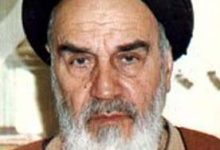
          of the Revolution, the office of Ayatollah Khomeini,' the Leader of the
          Revolution, announced that the Family Code stood repealed because its
          provisions were contradictory to Islamic regulations. The most important
          consequence of this order was that for women divorce was now only
          possible through a difficult and lengthy process. 2 A couple of days later,
          Ayatollah Khomeini personally announced that women were not allowed
          to enter government offices without Islamic hejcth, interpreted as covering
          the whole body except the face, the hands up to the wrist and the legs
          down to the ankle. In response, women active in political parties, unions
          and some minor independent women's groups organized the largest
          demonstrations by women in the history of Iran, lasting for a couple of
          days. ' Exposed to such massive action, the government withdrew from
          its stance on hejt1th, but the Revolutionary Court nevertheless began
          sentencing prostitutes to death and men and women to lashing and even
          death for sexual relationships out of wedlock.'
          The movement against the Shah of Iran was a diverse coalition only
          unified by opposition to the Pahlavi dynasty (192 5-1979). Although it had
          Q)
          a:
          women's
          rights
          Campaign
          I
          Sh'àdi 1
          included different women's groups, religious as well as secular, the lack of
          gender sensitivity amongst secular political parties who were part of this
          opposition—including the Conmumist Tudeh Party and other Marxists like
          the Iranian Mujahideen that were actively allied with Khomeini—meant the
          Islamists were able to repress women's numerous objections to Islamization.
          Thus, once again, women lost almost everything they had, just like a
          previous generation. In the late 19th and early 20th centuries, women had
          been active in political movements such as the Tobacco Protest and the
          Constitutional Revolution but had ultimately been denied the right to vote in
          the new Constitution.
          All these measures were happening even before any referendum had
          been held to officially establish an Islamic Republic and formalize
          the government (eventually held in April 1979) and while the newly
          established government did not yet have a Constitution (adopted later in
          October 1979). Consequently, even before the legitimization of the Islamic
          Republic, Islamization dominated women's lives. The main difference
          between “practicing Islam” and “Islamization” is the factor of domination.
          Islamization, according to the preamble of the 1979 Constitution, is building
          all “cultural, social, political and economic institutions of the Iranian society
          based on the Islamic legislation.” But this definition is incomplete because
          it ignores the fact that in the practice of the Islamic Republic, Islamization
          is imposed. Islamization arose in the bipolar Cold War context, where the
          political leadership sought to identify as “neither eastern nor western” and
          to confront the two dominating powers of the time as well as the Pahlavi
          dynasty. Rapid Islamization was the main strategy of the new government,
          used to gain legitimacy and define its identity. Like all fundamentalists,
          the new government based its identity on building boundaries between the
          “self” and “others,” especially recognizing that women and issues affecting
          women were the best tool for defining these boundaries. “If controlling the
          enemy within, the intimate other, is basic to the building of borders that is
          at the heart of fundamentalism, equally basic is the creation of the worthy
          enemy against whom borders are drawn and barriers built.”
          Only two months after the victory of the Revolution and in response to the
          massive demonstrations of March 8th against forced hejab, the dominant
          Islamic Republic Party announced the birthday of Fatemeh, daughter of the
          Prophet Muhammad, as the official women's day in the Islamic Republic,
          replacing March 8th. The official posters published for this day feature a
          woman completely covered in a black veil except for her face and hands, with
          a baby in one hand and a gun in the other. Government literature followed
          the same image. An “ideal woman” was a “Muslim revolutionary woman”
          who is completely covered in hejab and who “observes chastity” (avoiding
          any unnecessary contact with men who are strangers), while undertaking
          both her duties as a mother and her social responsibiities.'
          This imposed “ideal woman” was the new regime's replacement for the
          traditional woman who observed hejab and chastity, was a perfect mother
          and wife but who would never participate in the social arena, as well as a
          substitute for the “western” woman who never observed hejab and chastity
          and was not a perfect mother and wife but who was involved in social
          activities. This new ideal, which questioned the pattern of modern women
          that had emerged during the Pahlavi dynasty, found its way into society due
          to the anti-Shah sentiments that prevailed during this period.
          There were other factors that strengthened the focus on women's bodies.
          The eight-year Iran-Iraq War (1980-1988) created new links between the
          symbolic use of women's bodies and nationalism. While men fought to
          preserve the country's territory, women “fought a war” to preserve their
          bodies. Official slogans placed the value of women's hejab and chastity
          even higher than the blood of the war's martyrs; guarding women's bodies
          and sexual behaviour became the symbol of guarding the identity of the
          Islamic regime. Disobedience towards this ideal was accompanied by severe
          penalties.
          There are four ways the theocratic government has used control of sexuality
          to define the boundaries between self and other (meaning the existing
          political opposition as well as preceding regimes). These are: in the public
          arena, first, all women, even non-Muslims, were forced to observe strict
          rules concerning hejab and second, gender segregation was applied as far as
          possible in public spheres; in the private arena, third, all the rights granted
          through the previous Family Code were removed, and fourth, all sexual
          relationships out of wedlock were considered a crime. Women's lives were a
          crucial part of this control.
          ini er jious K Amenta lism
          Due to the absolute unity of the politics of the Islamic Republic's leaders
          and fundamentalist religion, a specific type of fundamentalism has
          been established in Iran that can be called “governmental religious
          fundamentalism,” which is to a great extent distinct from other types
          of religious fundamentalisms. In theory and in practice they followed
          Seyyed Hassan Modarres, a cleric opposing the Shah who said: “Our
          politics is the same as our religion and our religion is the as same our
          politics.” ‘ According to this definition, the final goal of governmental
          religious fundamentalism is the absolute unity of the two concepts
          such that it is impossible to distinguish one from the other. Within
          this structure, no political party has the right to operate except Islamic
          parties. In order to obtain a license to operate, political parties have to
          undertake to define the framework of their activities as the inevitable
          and unchanging unity of religion and government, while according to
          the Constitution, religion shall be the permanent political framework in
          2
          the Islamic Republic of Iran. The only factor that can change is the extent
          to which fundamentalists or reformists dominate within this framework.
          Thus, despite the fact that there has always been an ongoing power
          tussle within the government, which has sometimes opened a space to
          question gender and sexuality issues, “reformist” in Iran is a relative
          term and does not necessarily indicate a complete rejection of the unity
          between religion and government.
          From the experience of Iran, religious fundamentalism is a combination
          of traditional religion (specifically It /ma Ashari Shia Islam), political
          power, and the element of domination. “Traditional religion” in Iran's
          context is the religious rules or fiqhl2 formed through the “common
          fatwas” of Shia clerics, meaning those fat was (legal opinions/
          interpretations) on which there has been consensus over the years,
          regardless of whether or not the source is the Quran. In Shia Islam,
          although diverse fatwas exist regarding various matters and in many
          cases these fat was are conflicting, the ruling system in Iran recognizes
          only those that are the most common, and the fatwas of modern clerics,
          who are mostly a minority, are ignored. The fat was that legitimize
          gender discrimination are usually derived from common fat was.
          In all forms of religious fundamentalism, it can be seen that religion is
          oppressively used to gain power. Fundamentalism gains its authority
          through emphasizing religious traditions that have been legitimized
          through their prevalence in history and society. The power gained
          through harnessing this legitimacy is then used to impose these
          traditions on everyone and to forcibly make society homogenous. In
          a circular process, the power and legitimacy of traditional religion
          is thus reinforced and the power of the religious fundamentalists is
          also promoted. For instance, the government's control over women's
          bodies and daily lives is justified with reference to “public virtues” and
          religious beliefs concerning hejab and chastity. This justification is then
          used to implement government policies that universally and forcibly
          impose strict hejab, which in turn reinforces a public culture that values
          “traditional religion virtues” concerning women's hejab and chastity.
          The key ingredient is state force. While the regime has obtained its
          legitimacy through reference to religious traditions, it uses all possible
          tools of the state to impose such values on all people as the sole way of
          life, while using severe penalties to prohibit other lifestyles.
          A major feature of governmental religious fundamentalism is the total
          elimination of the private arena and its integration with the public arena,
          making it a space where the government has the right to intervene.
          Shia jurisprudence has rules and regulations covering all aspects of a
          human's life and all daily actions fall within three main categories: ha /al
          (permissible, lawful), haram (prohibited and therefore a sin), and mobah
          (neither prohibited nor specifically permissible; no particular provision
          is made in the Quran). The integration of religion and politics in Iran
          means that all these concepts including their application fall within the
          Islamic government's control. Consequently, all acts considered haram
          are a “crime” according to the government and punishable; instead of
          damnation for one's sins, the punishment is in this world, even if these
          acts are private or just involve a human being's relationship with God.
          In addition, certain broad acts are defined as sins (“beyond God's limits”
          or hodud) in the Quran. Iranian Shia jurisprudence has elaborated
          the precise nature of the acts that constitute hodud sins as well as
          the punishments that should apply. These acts include extra-marital
          sexual relations, sodomy, lesbianism, pimping, qadhf (slanderous or
          malicious accusation, especially the baseless accusation of adultery),
          consumption of alcohol, theft, and fasadh/niufsid fil-'ardh (engaging in
          spreading corruption on earth) and these carry the penalties of stoning,
          execution, lashing or amputation of the hand or foot, depending on
          the crime. Hodud crimes are usually categorized as hagg-ullah (“God's
          right”); in other words, punishment rests with God. However, despite
          massive criticism within Iran and the Islamic world regarding the
          implementation of hodud, the integration of religion and politics in Iran
          has meant that the Islamist government substitutes itself for God by
          adjudicating such crimes and applying penalties.
          Apart from the fundamentalist political parties that occupy the
          majority of seats in parliament, the main sector with the power to
          influence public policy, especially concerning women, is the howza
          (religious schools). The howza, whose main task is to train clerics, are
          those religious schools that, before the Revolution, were supported
          through religious taxes (khoms and zakat) considered obligatory for Shia
          Muslims. After the Revolution, the howza grew and developed, and also
          became independent from government funding.
          The howza are able to influence and enforce fundamentalist policies in
          several ways. First, according to the Constitution, the Supreme Leader
          and members of the most important government institutions must be
          religious clerics. Many judges are clerics as well. Second, the howza
          also hold immense influence among some sectors the population,
          particularly the “traditionalist” parts of society and are able to mobilize
          them effectively around various issues.' For instance, the howza have
          frequently reprimanded the government for avoiding the execution of
          hodud penalties such as stoning, lashing, and cutting off of hands and
          feet in public. Third, government officials request the howza provide
          legitimizing religious opinions (fatwa) that fit their political needs before
          they implement a particular policy In fact, many of the fundamentalist
          Shadi adr S
          4
          public lashing: the boy to 25 lashes and the girl to 100 lashes.'
          policies regarding women were first developed in the seminaries
          through government commission. Finally, the howza have served as
          a key barrier to changing discriminatory laws and policies that harm
          women. For instance, in the last few years the howza women's study
          centre, which previously succeeded in preventing Iran from signing the
          Convention on the Elimination of All Forms of Discrimination Against
          Women (CEDAW), issued a statement that demanded the government
          plan projects that would reduce employment among women, reduce the
          rate of divorces filed by women, increase control over men and women's
          sexual relations, and increase strict enforcement of hejab.
          Shia clerics have a hierarchical structure and only a few are considered
          rnuftis or religious authorities with the right to issue fat was and define
          what is religiously legitimate and what is not. In Iran, lower order clerics,
          students of religious studies and ordinary people are “followers” who
          cannot practice Islam based on their own perceptions but have to choose
          one leader out of the ten living leaders to follow, basing their lives on
          the fat was of that leader. Women, even if they are competent enough
          to reach the level of an authority, are not allowed to have followers
          and their fat was are only binding on themselves. Except for religious
          authorities and lower-level clerics, ordinary people are not supposed to
          involve themselves in religious affairs. Obviously such a hierarchy, along
          with the organic relationship between the howza and the government
          and the full incorporation of the clerical hierarchy into the government
          via the establishment of the Guardian Council, paves the way for the
          fundamentalists to offer one sole interpretation and repress all other
          possible interpretations of religion. The Constitution provides for the
          Guardian Council to review the resolutions of Parliament and their
          compliance with Shariah. The six clergy members of this institution
          are all appointed by the Supreme Leader and during the past thirty
          years they have always regarded the common fat was of the religious
          authorities as the main criteria for the legitimacy of parliamentary laws.
          V
          Immediately after the Revolution, Islamic Revolutionary Courts were
          established to adjudicate crimes committed against the country under
          the rule of Mohammad Reza Shah Pahiavi (1941-1979). The Revolutionary
          Courts were the manifestation of the Revolution's judicial power and
          their judgements in sexual crimes indicates the importance of these
          courts to the fundamentalists.
          Less than two months after the Revolution in Amlash, a small town
          in northern Iran, a boy and a girl were convicted of “immoral values”
          by the Revolutionary Court. They refused to accept the Revolutionary
          Committee's pressure on them to marry and the court sentenced them to
          Other aspects of Islamization in the area of sexuality and the limiting
          of sexual expression to the frame of the family included the execution
          of prostitutes or those in charge of running prostitution rings or
          brothels, and the stoning of women who had committed adultery. Since
          the Revolution, the penalty of stoning has been the harshest tool for
          controlling women's sexuality to the extent that even victims of rape, for
          fear of being unable to prove rape and therefore being exposed to the
          accusation of adultery and stoning, in most cases did not file a complaint
          against the perpetrator.' 5
          The first case of a woman being stoned to death was reported in July
          1980. The news was reported through government television, the only
          legal channel since the Revolution. According to the reports, two couples
          were convicted of adultery and were stoned in Kerman, one of the
          biggest cities in southeastern Iran. Azam Taleghani, a woman Member of
          Parliament who had been active in the Revolution, protested. In her view,
          stoning was against Islamic justice and dissemination of such news
          would weaken the newly established Islamic Republic and strengthen
          opposition propaganda against the Revolution. In her gendered critique
          of a regime that she was part of, she asked why such penalties should be
          applied against women while the Revolution's promises to women had
          not yet been realized and women were still being oppressed daily.16
          Diversity within the Iranian Government: Pragmatists and
          Fundamentalists
          In Iran, the government is the key agent of promoting religious
          fundamentalism. Nevertheless, because Iran works to maintain a
          somewhat “democratic” image (through elections, populist support for
          the Islamic Revolution, and so on), it must balance its fundamentalist
          vision with a pragmatic need for stability. As a result, the government
          structure and policies are still affected, albeit somewhat inconsistently,
          by pressure from opposition forces.
          Since the emergence of fundamentalism, resistance to such projects has
          existed at different levels: women resisted in their daily lives as well
          as managing to participate in various groups even under conditions of
          repression. But, following the large-scale repression of opposition forces
          in the early 1980s, which in effect pushed secular actors out of the
          formal political arena in Iran, one of the key levels of resistance has been
          the forces within the dominant political power structures. Alongside
          the discourse of fundamentalism runs another discourse which I call
          “pragmatism.” While the pragmatists are apparently supportive of
          the enforcement of Shariah and believe in Islamist governance, they
          6
          differentiate between governance and religion, and prioritize stable
          governance. Pragmatists can be modern reformists or conventional in
          their religious beliefs, but what unites them and segregates them from
          the fundamentalists is the fact that they accept the reinterpretation of
          Shariah in order to maintain their political power, especially those rules
          whose implementation has a high national and international political
          cost. They agree that in this modern era, the implementation of Shariah
          might contradict the needs and demands of the public and seek updated
          fat was in order to resolve these contradictions. The politicians who are
          today known as Iran's religious reformists and who were among the
          higher ranks of authority during the first decade of the Revolution, had
          generally been supporters of the strict application of Shariah but have
          gradually come to realize that in many cases it was not possible to rule
          society on the basis of Shariah. With the establishment of pragmatism
          during the first decade after the Revolution, and the reinforcement of
          pragmatism during the post Iran-Iraq War period and the emergence
          of the liberal governments of Ayatollah Au Akbar Hashemi Rafsanjani
          (president, 1989-1997) and Seyed Mohammad Khatami (president, 1997-
          2005), the political arena of Iran has constantly witnessed the conflict of
          two these political forces: the pragmatists and the fundamentalists.
          Their constant battle has led to some of the most important political
          and social changes since the Revolution. The key difference between
          fundamentalist and pragmatist policies has been the level of
          influence that social pressure and resistance has over them. While
          fundamentalists show minimum responsiveness to the social will,
          pragmatists are ready to negotiate their policies—and even occasionally
          to withdraw in the face of social resistance—in order to maintain
          political power and Islamist governance; for the pragmatists, any act that
          may bring hatred towards the Islamic Republic has to be stopped. Thus,
          the issue of stoning has always been a matter of dispute between the
          fundamentalists and the pragmatists.
          Even Ayatollah Khomeini, the architect of Islamization, could not avoid
          this conflict. On the one hand, Article 102 of the 1991 Iranian Penal
          Code provides that a woman or man accused of adultery and convicted
          to stoning is to be shrouded and then buried in a hole previously
          prepared; the woman up to her shoulders and the man up to the waist.
          Article 104 states: “... the stones should not be too large so that the
          person dies on being hit by one or two of them; nor should they be so
          small that they could not be defined as stones.” This is the country's law.
          On the other hand, when he was informed that a conference was to be
          held abroad which would highlight Islam as a cruel and violent religion
          and that the issue of stoning was to be discussed, Ayatollah Khomeini
          ordered all judges to stop passing verdicts of stoning and substitute
          them with alternative penalties. Sayyid offers a comprehensive analysis
          saying: “Khomeini had argued that only a strict application of Shariah
          was legitimate and activities not sanctioned by the Shariah could not be
          undertaken. However, once in power, Khomeini realized that such an
          adherence would be difficult to implement and he was willing to support
          the needs of the Islamic Republic above a strict adherence to traditional
          interpretations of the Shari'ah.”
          Although even an order from Ayatollah Khomeini could not prevent
          the application of the stoning provisions in the Penal Code, in order to
          reduce international pressure, the execution of stoning sentences was
          gradually moved away from public eyes and carried out inside prisons
          while the media were prohibited from covering stonings. Consequently,
          for 30 years censorship has been a barrier to establishing the exact
          number of stoning cases, but one estimate from Amnesty International
          states that in 2001 only two women were stoned.'
          At the end of talks with the European Union in December 2002,
          when pragmatists occupied the majority of seats in Iran's Parliament,
          international pressure regarding the inhuman and violent nature of
          the stoning penalty forced the Iranian authorities to announce that
          executions by stoning had been stopped.' But this was not the end of the
          story in Iran.
          The Rise of Hardline Islamists and the Start of the Stop
          Stoning Forever Campaign
          Individual and collective resistance to Islamization in Iranian
          society (and especially from women) brought many changes in the
          fundamentalists' regulations and policies, but the emergence of the
          fundamentalist government of President Mahmoud Ahmadinejad
          in 2005 started a new era of Islamization. This new wave of
          fundamentalism, claiming to fight economic corruption, promote
          equitable distribution of wealth, and revive the values of the Revolution,
          received the support of two groups: first, the poor who were suffering
          the pressures of inflation caused by the neoliberal policies of the
          reformist governments, and second, religious and conventional groups
          who believed that reformist policies meant a move away from Islamic
          values and a rapprochement with the West.
          This new wave of Islamization attacks the reforms started after the
          Iran-Iraq War during the presidencies of Rafsanjani and Khatami; its
          main goal regarding women is to return them to the home. Women's
          gains regarding Family Code reforms and the right to divorce (although
          limited) are vanishing, while the new government is seeking approval
          of new laws to make polygamy easier for men. Legislation based on the
          concept of “chastity” (efaaf) is aimed at introducing repressive rules
          8
          covering all aspects of women's lives, including their clothing, their
          behaviour in public and even their occupational relations or general
          interaction with men.
          In response, different women's groups reorganized their activities
          and, working through informal networks, launched various campaigns
          such as the One Million Signatures Campaign to change discriminatory
          regulations,20 the Stop Stoning Forever Campaign, and the campaign to
          defend women's right to attend football matches and sports events in
          public stadiums.21
          In 2006, a year after the fundamentalists reasserted themselves and
          four years after the suspension of stoning as a penalty, rumours spread
          among human rights activists that once again a man and a woman had
          been executed by stoning. Later research by feminist activists, including
          this author, proved that in 2006, Mahboubeh M. and Abbass H. had
          indeed been stoned to death secretly in the early hours of the morning
          in the cemetery of the religious city of Mashhad by the authorities and
          volunteer militia.22
          Mahboubeh, who had forcibly been married to her cruel, addict husband
          at the age of 16 and whose attempts to divorce had failed, collaborated
          with her lover to kill her husband. For some months, nobody dared to
          talk about Mahboubeh's stoning. Since speaking of stoning was taboo
          and printing news regarding stoning would put a newspaper in great
          danger, the press were not willing to print anything. Many thought this
          had been an exceptional case that would never be repeated.
          But in August 2006, Ashraf Kalhori called her attorney from Evin Prison
          in Tehran and said she was to be stoned in 15 days. Ashraf had often
          complained to the courts about being beaten by her husband but her
          divorce had been rejected for “lack of evidence.” She also denied having
          any relationship with her husband's friend who had killed him but the
          court rejected her defence. This was right at the time when women's
          activists were thinking of starting a new project against stoning,
          and wondering how to spread the news about Mahboubeh and Abass'
          stoning as well as how to raise the issue of stoning in the context of
          repression and censorship. In the breathtakingly short time of 15 days,
          this group which was denied any local media access for awareness-
          raising, spread the news at the international level and called upon
          women's organizations and human rights institutions to save Ashraf
          Kalhori. Amnesty International and
          (WLUML), which later supported the Campaign, issued a declaration.
          Equality Now sent a letter containing thousands of signatures to the
          Head of Judiciary in Iran while inside Iran almost 3,000 signatures
          were collected in this short period of time. The Judiciary and Ministry
          of Foreign Affairs of Iran were suddenly exposed to the international
          human rights community, and recognized the political cost of stoning
          an ordinary woman. The execution was ultimately called off, but this
          was not enough. So long as the penalty of stoning existed in the law
          books, Ashraf and many other women remained exposed to the threat
          of stoning. This led to the Stop Stoning Forever Campaign. Although the
          Campaign's main objective was to eliminate the penalty of stoning from
          the Penal Code, defending accused women and saving them from such
          sentences were also objectives.
          Discrimination: The Gender Component
          In collaboration with the Volunteer Lawyers' Network, the Campaign
          conducted research and identified 12 men and women facing such a
          verdict, though they were sure there were others. All of the women
          were victims of diverse forms of discrimination. Some had experienced
          forced marriage and constant violence, and others had been forced into
          prostitution by drug addicted husbands; none had had any legal means
          of escaping their harsh conditions. Some had applied for divorce and
          each time, due to lack of support from their families or rejection of the
          case by the judge, had been forced to return to their violent situations.
          Two of the women who were from very conservative tribes in southern
          Iran were sure that if they had raised the issue of divorce and taken
          any step in this regard, they would have been killed by their families.
          In some rare cases, accidentally or planned, they had helped men with
          whom they had some relationship to kill their husbands. The Campaign's
          feminist discourse was developed out of these women's life stories.
          Before this Campaign, only Iranian opposition groups and some
          international human rights groups had taken up the issue of stoning.
          The political opposition used stoning as a tool to demonstrate the cruel
          nature of the Islamic Republic while international human rights groups
          emphasized the anti-human rights aspect. But none had none had
          conducted any in-depth study or offered a gender discourse.
          Based on the studies of the Volunteer Lawyers' Network, for every 12
          women sentenced to stoning, only two men faced the same sentence.
          The Stop Stoning Forever Campaign asked why is it that despite similar
          penalties for adultery for men and women, stoning is a women's penalty.
          Under Iran's Penal Code and in judicial practice, crimes relating to
          extra-marital sexual behaviour range from “relations with strangers”
          to “adultery” (zina). The provisions for these “crimes” are supposedly
          gender-neutral (except homosexuality for which lesbian behaviour
          is punishable by lashing while the punishment for gay behaviour is
          the death penalty). But in practice married women are more at risk of
          haai 11
          10
          becoming the victims of Iran's harsh penal laws and being sentenced to
          stoning than married men.
          In Iran, men can legally have four permanent wives and an infinite
          number of temporary wives.2 This gives men the opportunity to have
          diverse sexual partners and turns a man accused of having a sexual
          relationship out of wedlock into someone who has simply made a small
          mistake of having an affair rather than categorizing him as a criminal;
          he can escape a penalty by claiming either that the relationship was
          a polygamous marriage which was not properly regularized or that a
          short-term marriage had taken place. But a married woman facing the
          same accusation of having had a sexual relationship with another man is
          regarded as having committed a major crime; she is not able to contract
          multiple concurrent marriages. She is regarded as not only having
          questioned the rules of patriarchy but also having destroyed the image
          of a “chaste” woman whose physical integrity and sexuality is expected
          to be under the control of one man. She has acted against the interests
          of her husband as well as transgressed one of the main boundaries in
          building fundamentalist identity and has therefore also acted against
          the government and must be sentenced to the most severe penalty. The
          sentencing to stoning of three women who were forced into prostitution
          by their husbands indicates that even forced prostitution cannot be an
          excuse for breaking these government-made moral rules.
          A review of the case files of women convicted to stoning shows that in
          addition to gender, women's social class, tribe or religion also play a role
          in discrimination and control of women's sexuality. Two of the convicts
          were women from the Bakhtiyari tribe and one a Kurd, all illiterate and
          from communities where access to education was limited. Hajiye, a
          Turkish-speaking woman who spent seven years in prison and was about
          to have her sentence carried out before finally being pardoned, has many
          times said: “When they convicted me of adultery, I didn't even know what
          it meant.”24 The lack of financial resources needed to employ an attorney
          has also prevented them from accessing justice. Most of the convicted
          women were from the poorer classes, and villages or marginal areas of
          the cities and all except one were unemployed.
          From the Stop Stoning Forever Campaign's point of view, patriarchy and
          discrimination based on gender, race and class as individual factors are not
          enough to lead to the stoning of women. The Campaign sees stoning as the
          result of a combination of patriarchy, other forms of discrimination (such
          as class and tribal structures), and religious fundamentalism (see Figure 1).
          In the context of Iran, governmental religious fundamentalism is the most
          important factor. In the 30 years since the Revolution, out of all the reported
          cases of stonings of women, only one case has been reported where a
          stoning was carried out by the woman's family.25
          Judicial attitudes are an important part of this governmental religious
          fundamentalism. The Qur'an spells out harsh penalties for adultery, but
          it also spells out a high standard of evidence (four witnesses or voluntary
          confession) required for these penalties. In Iran, the concept of “judicial
          discretion” is used in order to avoid this practical limitation to the
          application of hodud penalties. Using their discretion, judges have the
          right to convict someone of a sexual offence even if there are no witnesses
          and no voluntary confession. More than 80% of adultery cases where a
          sentence of stoning was passed were at the discretion of the judge. As
          already seen, this discretion is also applied in a very gendered manner.
          In other words, it is the way the fundamentalists use the rules that not
          only legitimizes their practice but also reinforces patriarchal customs
          relating to the control of sexuality such as honour killings. For this
          reason Vahdati characterizes stoning in Iran as honour killing that is
          conducted by the government, and that is why stoning is perceived as a
          “woman's penalty.”
          Shadi Sadr 13
          Figure 1: The Overlapping Factors behind Stoning
          Governmental
          Religious
          Fundamentalism
          Stoning
          Patriarchy
          Other Forms of
          Discrimination
          12
          This part of the case study discusses the key strategies of the campaign
          in detail. Some of the strategies were part of the Campaign from the
          beginning while some of them were adopted due to the challenges and
          necessities of the emerging conditions.
          The Stop Stoning Forever Campaign started its activities in circumstances
          where publication of any news regarding stoning was taboo. In some
          cases, newspapers only reported that a woman had been executed “due
          to adultery”; since the penalty for adultery was stoning, people would
          understand she had been stoned. Also, NGOs and women's rights activists
          faced restricted access to public spaces. So the Campaign initially
          decided to work on the issue indirectly and through international human
          rights organizations. Our job, inside the country, was to identify those
          sentenced to stoning, conduct research, defend their cases as volunteer
          attorneys and publish press releases about their status. At that time it
          was not possible to directly contact government authorities to convince
          them that stoning had to be omitted from the Penal Code. So the Stop
          Stoning Forever Campaign focused its activities on awareness-raising
          regarding stoning cases and their critical situation among activists in
          international human rights and feminist organizations. This was why,
          from the beginning, the Campaign invited experienced women activists
          from inside Iran who had transnational links as well as activists from
          the transnational women's movement outside Iran who had good links
          with activists inside Iran to be consultants and advisors. This meant
          the Campaign could not only disseminate its message to the public and
          government inside Iran but could also convince international institutions
          to impose pressure on the Iranian government. It was just like the Farsi
          idiom: it makes no difference whether you put the food directly in your
          mouth or take the mouthful the long way by stretching your arm around
          the back of your head; it still gets eaten! The international allies of the
          Campaign had a crucial role, especially Amnesty International, Women
          Living Under Muslim Laws, Equality Now and the other 70 organizations
          who signed the Campaign's petition during the 2007 Feminist Dialogue in
          Nairobi, Kenya.
          International pressure regarding the cases raised by the Stop Stoning
          Forever Campaign forced the Iranian authorities to offer a formal
          response. On November 21st 2007, a spokesman for the judiciary in
          Iran gave the first formal response to the Campaign, saying at a press
          conference: “It might be that a court passes a sentence of stoning
          but considering that it is really difficult to prove this crime, during
          review hearings the sentence has been cancelled and generally in
          practice stoning has never been executed.”27 The newspapers that had
          previously avoided using the term “stoning” in print now published the
          spokesman's words in bold headlines. Although the official response was
          to deny any practice of stoning in Iran, publication of this speech had a
          positive effect on the Campaign with the judicial authorities breaking
          the silence they had built around the issue. Gradually the media began to
          publish news, reports and analysis by the Campaign.
          I_)isur 111111 IdLI(..)i
          During sessions to plan the Campaign's public advocacy, especially when
          talking to people who were mostly unaware of the details of stoning due
          to 30 years of censorship, the members of the Campaign realized that
          stoning could be a unique starting point for raising the broader issue of
          discrimination against women.
          Most people in [ ran, when they learned how stoning is actually carried
          out—that a woman is buried up to her chest in the ground and stones
          are thrown at her until she dies—were against this punishment. This
          reaction opened the door to a longer discussion between activists and
          audiences and even between the Campaign and the government; not
          only about stoning but also regarding all measures to control women's
          sexuality which hampered the achievement of their rights. It was an
          entry point for a detailed analysis of how these women are the victims
          of forced and underage marriages, poverty, discrimination, continuous
          domestic violence and deprivation of basic rights such as divorce. Within
          traditional communities, this was a rare opportunity to raise issues
          of physical integrity and women's sexual rights. Although some young
          activists in the Campaign believed that emphasizing women's sexual
          rights should be one of our principle strategies, in practice the Campaign
          was unable to obtain support for sexual autonomy and there remained
          people who believed that a woman who “betrayed” her husband should
          be punished. But what was always effective was the Campaign's strategy
          of arguing that “If this woman had the right to divorce, she would never
          have betrayed her husband or wouldn't have killed him and ended up
          being sentenced to stoning. What has to be stoned are the rules and
          regulations that have exposed women to stones every day”
          Trying to raise this issue through abstract discussions about structural
          discrimination against women would not have been effective or attracted
          the audience's support for the Campaign. But talking about the horrible
          penalty awaiting illiterate, poor victims of violence, women who had
          simply fallen in love or were forced into prostitution by their husbands,
          brought greater empathy in society along with sympathy for the Campaign.
          Shadi Sadr 15
          14
          It was in this process that we also found an answer to our critics within
          the Campaign who believed that Iranian women were facing more
          important issues than stoning. Stoning allowed a discussion about all
          kinds of discrimination caused by patriarchy, governmental religious
          fundamentalism, discrimination in society and by the government,
          including against non-Farsi-speaking ethnic minorities. It also enabled
          us to raise the issue of “love” in relation to some of the women's cases,
          as well as issues of sexuality, consensual sexual relations outside
          of marriage and freedom of choice in the matter of sexual partners,
          although traditional attitudes and fundamentalist control of the media
          meant these discussions were not raised widely.28
          aria Vii tuai Spaces
          In 2006, a couple of days before International Women's Day, police
          arrested 33 women activists who had gathered outside the Revolutionary
          Court in Tehran to protest the case against five other activists. Four
          members of the Stop Stoning Forever Campaign were among those
          arrested. Although all 33 were released some 20 days later, a new phase
          of repression against the women's movement had started. Three NGOs
          whose managers were accused of violating national security were shut
          down and their bank accounts frozen. They included Raahi, which had
          established the Volunteer Lawyers' Network to defend women at risk
          and which had trained most of the attorneys following the cases of
          women sentenced to stoning, and the NGO Training Centre (NGOTC)
          which held trainings for the Campaign. The Campaign lost both its
          public space and internal support institutions. Although all the activists
          of the Campaign were volunteers and from the beginning it had been
          decided that they would only use donations from individual activists, the
          Campaign had nevertheless been using institutional support from Raahi,
          the NGOTC and other NGOs for mobilizing activists, training them and
          holding discussion sessions and other activities. Most of the Campaign's
          activists were busy with their own criminal cases, facing accusations
          of attempted violation of national security, and the opportunity to hold
          bigger sessions was rare. Clearly, new strategies were required if the
          Campaign was to continue.
          Then, on a Tuesday evening in the summer of 2007, the Campaign
          learned that a woman and a man were to be stoned on Thursday in
          Takestan, a small city 250 km outside the capital. A member of the
          Volunteer Lawyers' Network had accidentally learned that holes had
          been ordered to be dug for stoning two people in the public cemetery.
          It was the first time in 20 years that stoning was to take place in public
          and undoubtedly was an indicator of the increasing power of the
          fundamentalists within the government. The Campaign had less than
          48 hours to save Mokarrameh Ebrahimi and Jafar Kiani.29 We contacted
          every newspaper that we thought might agree to publish the news, but
          all refused. Only (the Campaign's official website,
          meaning “Women's Field”) and other Internet news sites were available.
          By the start of the working day on Wednesday, Meydaan-e-Zanan carried
          the telephone numbers of the city of Takestan's judicial authorities and
          other high-ranking members of the Islamic Republic's judiciary, urging
          all to contact them and object to the execution. By noon, thousands
          of contacts had been made, and while the Campaign's volunteers were
          preparing to travel to Takestan to stop the process, an official news
          agency announced that the stoning had been halted and the Head of the
          Judiciary had ordered the case transferred to Tehran.
          This short telephone campaign revealed a vast network which had
          previously been invisible even to the Campaign's activists. It included
          activists from the women's and human rights movements in the
          provinces and outside Iran as well as a large number of people who had
          been made aware of the issue by the Campaign.
          The lack of access to effective public spaces on the one hand and the
          visibility of this network on the other, opened up a new strategy. The
          Campaign had used the Internet as a tool for publishing news and
          reports on stoning before, but we had never thought about the Internet's
          capacity for facilitating mobilization and networking. This experience
          around the Mokarrameh and Jafar case showed that even a simple laptop
          connected to the Internet could fill the gap left by the closure of NGO
          offices and the spaces they had provided for meeting. The “backpack
          office” strategy meant that all the alternative spaces vital for achieving
          the goals of the campaign could be packed into a backpack, easily
          accessible and safe from being shut down by the authorities. In fact, the
          Meydaan-e-Zanan website became the Campaign's most effective tool
          over the next few years.
          neiur II IIbLb
          Three weeks after the success in rescuing Mokarrameh and Jafar,
          Jafar Kiani was secretly stoned to death in a desert outside the city of
          Takestan on the judge's orders and using local police. The publication of
          the horrible details about Jafar's death, including pictures of the stones
          still covered in blood, motivated others such as religious figures and
          religious elites to get involved in the question of stoning. They published
          articles trying to prove that stoning is not rooted in the Quran and
          should be stopped for religious reasons. One religious leader even issued
          a fatwa that stoning is prohibited in today's era.
          Shadi Sadr 17
          16
          Given that stoning has it roots in Shariah and was being practiced by a
          religious political regime, it was essential both from the point of view of
          discourse and strategy that the Campaign define its approach to religion.
          It seemed there were two options: one was to work within the framework
          of Shariah and through the study of religious literature prove that
          stoning is not rooted in the Quran and is just a penalty from a barbarian
          era that does not comply with contemporary needs; the other was to
          work outside the religious framework and instead base the Campaign on
          the lived experience of women.
          The Campaign's approach towards this question was clear from the
          beginning: after long discussions, the activists reached the conclusion
          that the Campaign's dominant discourse should always be secular but
          that it would encourage clerics and the religious elites to prove that
          stoning is not rooted in the Quran. You could say the Campaign preferred
          one option but did not exclude the other. This strategy was the result of
          years of experience of women's struggle in a fundamentalist context.
          For at least two decades, both religious women and secular activists
          had fought within the framework of Shariah to achieve reform. But this
          strategy had been ineffective because women were excluded from the
          Shia hierarchy and because of resistance from the Guardian Council
          which was responsible for approving all laws. The Islamic Republic
          regime has proved time and again that the only “religion” it cares about
          is its own; any other interpretation of Islam is deemed as “illegitimate,”
          “inauthentic” or “corrupted.” Although the religious interpretations
          and reasoning offered by a group of secular women lacked legitimacy,
          they nevertheless showed that secular activists could be effective: they
          could represent lower-income women as attorneys and be defenders
          of women's human rights; they had increased social pressure against
          stoning to the extent of forcing the government to stop stoning in order
          to prevent damage to the political system.
          Nevertheless, since the beginning the Campaign had sought the support
          of religious reformists. For example, to save Mokarrameh the campaign
          had collected fat was from three clerics (muftis), who all stated that since
          Mokarrameh believed she was officially married to Jafar, she had not
          committed adultery and their two children were legitimate. These three
          fat was, which were widely published in the newspapers, played a critical
          role in saving Mokarrameh after eight years of awaiting death by stoning.
          Looking at both the women's movement's strengths and the realities
          of the context, the strategy of the Campaign as regards religion was
          to remain secular while finding allies among the religious elites and
          pragmatists in the government structure to open up new religious angles
          on the issue. If we consider the movement's arena a football field, it was
          obvious that it was best for the activists to play the role they had the
          capacity for: to set up the opportunity to score but pass the ball to the
          religious reformists who could play forward and put the ball into the net.
          Only a team whose players were playing to their best capacities would
          be successful. Without secular feminists, the reformists would not have
          had the public support necessary for changing the law, and without the
          reformists' cooperation the Campaign would have never have been able
          to lobby the government.
          The stoning of Jafar Kiani significantly reinforced the unwritten
          coalition against fundamentalism between the secular activists and the
          religious reformists. For the first time clerics raised the need to repeal
          stoning and some confessed that Ayatollah Khomeini in a confidential
          circular had many years earlier ordered the courts to choose alternative
          penalties for stoning. ° Consequently, this brought new political pressure
          on the judiciary and legislative bodies to repeal stoning.
          Although the Campaign had some successes despite the continuing
          repression of civil society activists and constant threats and investigation
          by the intelligence services, the Campaign felt the need for a qualitatively
          different level of solidarity, specifically among activists in countries where
          women were being punished in “honour”-related matters. Our objective
          was to establish a coalition with activists in other countries against
          stoning and the use of cultural excuses for killing women so as to build
          an international mechanism that could force the Iranian government to
          stop honour-related penal provisions such as stoning.
          In 2007, in collaboration with WLUML, the
          was launched in Istanbul, Turkey. ' We hoped
          that the campaign would lead stoning to be considered a form of torture
          by international human rights mechanisms.
          LooKing Mnead: Success and i-resn . haIIenges
          Since its start in 2006, through its hard work the Stop Stoning Forever
          Campaign has rescued seven women and one man from stoning and
          secured their release from prison, while also getting the execution of
          one woman's sentence stayed; sentences for three additional cases we
          focused on have been altered to lashing or imprisonment. In response
          to a press conference by the attorneys of women sentenced to stoning,32
          a judiciary spokesman said, “The implementation of stoning has ceased
          in Iran”. However, from the Campaign's point of view such expressions
          were not to be trusted while stoning remained in the Penal Code; during
          .
          18
          the three years of the campaign, one woman and five men have been
          stoned in different parts of Iran.
          On the other hand, stoning as a punishment and the institutional
          discrimination suffered by convicted women have become public
          issues, with over 20,000 people signing our Petition to the Head of the
          Judiciary. Over the past year, we have seen major changes in the law
          regarding stoning as a result of pressure by the Campaign. In 2008,
          the new Islamic Penal Code Bill was introduced in Parliament by the
          pragmatists who at present dominate the judiciary. Under this bill,
          if a prosecutor believed the implementation of punishments such as
          stoning was likely to cause rnafsada (degradation and disgrace), he could
          request the Head of Judiciary to permit an alternative punishment
          such as lashing or execution by hanging. In Iran's law, mafsada has a
          broad meaning and includes various aspects of weakening the Islamic
          Republic of Iran, ranging from threatening the security of a small city
          to the threat that children will be orphaned if a woman is executed by
          stoning. However, the Campaign was critical of the proposed revisions:
          the penalty of stoning had not been omitted while the implementation
          of such sentences was left to the discretion of the local prosecutor. Then
          in May 2009, the Judicial Commission of the Iranian Parliament passed
          an amendment to the same bill that eliminated stoning altogether.
          With the international community carefully observing Iran's human
          rights situation following the June 2009 presidential election and the
          harsh repression of street protests, Parliament passed the new Penal
          Code which has omitted the sentence of stoning without any debate. At
          the time of writing the bill still awaits approval of the Parliament and
          Guardian Council in order to become law.
          In the bill, the punishment for adultery is not explicitly stated in
          the text of the law. However, according to Article 167 of the Iranian
          Constitution, a judge can decide a punishment by referring to fiqh
          (Islamic jurisprudence) based on the fatwas of the grand clerics (i ilama).
          Members of the Judiciary Commission have stated that the only fatwa
          acceptable for such rulings is the fatwa of the Supreme Leader, or
          Ayatollah Khamenei. As of writing, Ayatollah Khamenei has not yet
          issued any fatwa on stoning. If the bill is approved, the assumption
          by many analysts is that the judiciary will ask the Supreme Leader
          for a fatwa concerning stoning and it is unlikely he will give a fatwa
          approving stoning. The argument is that the image of Iran was damaged
          in the past by the stoning law. So the new law will most likely state
          that the punishment for adultery will be lashing and imprisonment, as
          specified in the Quran.
          If the bill is approved and the Campaign manages to secure the
          elimination of stoning from the Penal Code, the question remains: will
          the Stop Stoning Forever Campaign continue? This is currently a point of
          internal disagreement among Campaign activists. Personally, although
          we have to think about it, I'd probably say the Campaign should end
          because it has reached its goal. I believe we should announce the end
          of the Campaign because then it can be considered one of the biggest
          achievements of the secular feminist movement in Iran. On the other
          hand, Mahboubeh Abbasgholizadeh argues that the Campaign should
          continue in a different form. In a personal interview for this case study
          conducted by Rochelle Terman in May 2009, Mahboubeh stated: “I don't
          think we should say that the IStop Stoning] campaign is finished. It's
          not 100 per cent yet. It's still too soon for us to declare victory... I'm
          scared about a backlash. ... As for ending the campaign, we might
          end a campaign asking for a change in the law to eliminate stoning,
          but we might continue a similar campaign addressing other issues of
          discrimination that affect women.”
          The Iranian Revolution and the discourse it established have inevitably
          influenced the spread of religious fundamentalisms, at least in the
          Muslim world. Before the Revolution “political Islam” had never been
          as dominant in Iran as it is now and had never been supported by
          the majority of the people or high-ranking political leaders. But
          today, despite the opposition to fundamentalism, Islam is usually
          misinterpreted as synonymous with political Islam; Islam has been
          equated with fundamentalism.
          At the beginning of the Campaign, most of us, who had been children
          during the post-Revolution years and had not experienced the first
          wave of fundamentalism, did not have a clear understanding of
          fundamentalism and its effect on women's lives. But through the long
          and difficult struggle related to the Stop Stoning Forever Campaign, our
          understanding of fundamentalism grew, and we believe our experience
          can serve as an example for women in other countries fighting similar
          battles. Some of the learnings that we would like to share include the
          analysis that:
          1. In a context in which there is little possibility for negotiation
          with the government over issues surrounding violence and
          formal discrimination, women's activists can steer their efforts
          towards regional and international networks and alliances.
          2. Especially in countries such as Sudan, where there is
          fundamentalist repression and censorship, activists can
          utilize alternative tools and spaces for information sharing,
          21
          20
          organization and mobilization of forces, especially through
          virtual technology and the Internet.
          3. The strategies adopted by Stop Stoning Forever Campaign
          challenge the idea that the only way to fight against religious
          fundamentalism is using the language of “religion.” This
          experience proves that even under a religious fundamentalist
          government, there is a secular way of fighting by obtaining
          legitimacy through the voices of silenced women.
          In sum, the experience of the Stop Stoning Forever Campaign relates
          a message that is relevant to all activists who are engaged in these
          struggles: there is no one single strategy for fighting against religious
          fundamentalism; we have used several complementary strategies.
          Conclusion
          Today in Iran, we are facing a new wave of governmental religious
          fundamentalism that targets all aspects of women's lives through policy
          and legislation. The objective over the past four years has been to control
          women's physical integrity and psychological agency, to engineer a new
          social structure that forces women back into the home. Imposing severe
          penalties such as stoning for extra-marital sexual relations is part
          and parcel of a political structure that advocates for easier polygamy;
          more severe restrictions on hejab; increased gender segregation at
          universities, sporting events and public spaces; and restrictions on girls
          attending university and reductions in women's working hours. The
          key challenge for the Stop Stoning Forever Campaign is finding ways to
          combat all symbols of the new wave of fundamentalism. This requires
          a revision of existing strategies and the creation of active coalitions
          between the Campaign and other groups fighting the manifestations of
          fundamentalism both at the domestic and international levels.
          Ultimately what global women's movement activists can learn from the
          Stop Stoning Forever Campaign is that religious fundamentalism is not
          an issue that solely and uniquely concerns us. Religious fundamentalism
          is both widespread and belongs nowhere, and even though activists
          in other countries may not struggle with stoning per se, the rocks of
          fundamentalism are being aimed at women everywhere.
          1 Ayatollah Ruhollah Khomeini served as the first Supreme Leader of the Islamic
          Republic of Iran from 1979 until his death in 1989.
          2 Parvin Paidar, Women and the Political Process in Twentieth-Century Iran, Cambridge:
          Cambridge UP, 1995: 290.
          3 floma Hoodfar, “The women's Movement in Iran: women at the Crossroads of
          Secularization and Islamization,” wLUML, The women's Movement Series, No.1, 1999:
          24.
          4 Although at first the government backed down from its initial stance, hejab was in
          fact gradually enforced over the first three years after the Revolution.
          5 Paidar, op. cit.: 228.
          6 To read more, see: Janet Afary, The Iranian Constitutional Revolution, 1906-1911:
          Grassroots Democracy, Social Democracy, and the Origins of Feminism. New York:
          Columbia University Press, 1996.
          7 Parvin Paidar, “Cr :rary: I he I neonnH-'r hel//een I emin isni and
          ICE TThS111 iii (or n,' UNRISD Democracy Governance and Human
          Rights Programme Paper No. 6, Oct. 2001: 17.
          Freedman, “The Challenge of Fundamentalisms,” wLUML, Dossier 19, 1998, pp.
          96-120: 101.
          9 Freedman, op. cit.: 101
          ‘°Asadollah Badamchian, Feminism Siasi va Resa late Zan Mosalman (Political Feminism
          and the Duty of the Muslim Woman), Tehran: Andishe Naab, 2005: 20.
          Ma1ek Mohamadi and Hamide Reza, Modarres va Siasatgozari Omumi (Modarres and
          General Policymaking), Tehran: Markaz Asnad Fnghelab Fslami, 2004: 256.
          12 to Ziba Mir-Hosseini, “Towards Gender Equality: Muslim Family Laws
          and the Shari'ah” in W4NTFD: Fquality and Justice in the Muslim Family. Sisters in
          Islam, Kuala Lumpur, 2009: “The distinction between Shari'ah and fiqh: Shari'ah,
          which literally means ‘the path or the road leading to the water,' in Muslim belief is
          the totality of God's will as revealed to the Prophet Muhammad. Fiqh, which literally
          means ‘understanding,' denotes the process of human endeavour to discern and
          extract legal rules from the sacred sources of Islam: that is, the Quran and the
          Sunnah (the practice of the Prophet, as contained in Hadith, Traditions).” The common
          fatwa are part of fiqh.
          13 One example is the basij, a volunteer militia established by Ayatollah Khomeini
          in November 1979. The basij (officially titled Nirou-ye Moqavemat-e-Basij literally
          “Mobilization Resistance Force”) in theory receive their orders from the Iranian
          Revolutionary Guards and the current Supreme Leader Ayatollah Khamenei. However,
          they have also been described as “a loosely allied group of organizations” including
          “many groups controlled by local clerics.” Drawn from Wikipedia entry on “Busij”
          Shadi Sadr 23
          22
          ‘ 4 ”Dokhtar vu Pesar ra dar Malae Asm Shalagh Zadand (Flogging a Girl and a Boy in
          Public),” Kayhan (newspaper), 17 Mar. 1979: 2. Note that the penalty of lashing applies
          to an unmarried person engaging in sexual relations (classified as fornication)
          while stoning applies to a married person engaging in extramarital sexual relations
          (classified as adultery).
          15 In a lot of cases of self-defence, women argued that if they had not killed the rapist,
          they would have been executed by stoning. So, because of the fear of stoning, they
          committed murder. See for example the well-known self-defence case of Afsaneh
          Norouzi: “1 ru i i 1< ill or ni rupisi reprie/ e' I,” BBC, 27 July 2004.
          i6 “Eteraze Shadide Azam Taleghani be Sangsar Zanan dar Kerman (Azam Taleghani's
          Protest against the Stoning of Women in Public),” Kayhan, 19 July 1980: 3.
          S. Sayyid, A Fundamental Fear Eurocentrism and the Emergence of Islamism, London:
          Led Books, 2003 (2nd Ed.): 12.
          i 8 Amnesty International, Iran nd xecu lions by Stoning, 2008.
          ir about the Stop Stoning Forever
          ‘ p/node/3C9i.
          30 Cited in Mahboubeh Abbasgholizadeh, “Nazam-e ghazaryi dar tangena: Tahlili bar
          arayesh niruha-ye movafegh va mokhalef-e sangsar (The Judicial System in Crisis: An
          Analysis of the Formation of Pro- and Anti-Stoning Forces)”, Zanan, No. 86 (2007).
          3i For more information on the Global Campaign to Stop Killing and Stoning Women
          refer to the website of the campaign at wwwsi op-s Inning
          32 Tait and Noushin Hoseiny” vomen and a man fat s on ng in Iran for
          aduJter ,” The Guardian, 21 July 2008.
          “Iranians suspend :leath by stoning,” BBC, 5 Aug. 2008.
          34 Nikki R. Keddie, Religion and Politics in Iran: Shi'ism from Quietism to Revolution.
          New Haven: Yale University Press, 1983.
          i 9 Sadeq Saba, “Improve human righ s F urges Iran,” BBC, 4 Feb. 2003.
          20 The One Million Signatures Campaign to change discriminatory regulations was
          launched in September 2006; see the campaign website: www.we-change.org/english.
          2 iThe campaign regards restrictions on women's right to attend sports stadiums as a
          symbol of gender segregation in the public arena; see Meydaan-e-Zanan
          website: u u w mevd ann. no /(ngl I sh.
          22 Stop Stoning Forever Campaign, “Statemon t on Reneni Remarks b/ te Judiciary
          Spokesman,” Meydaan-e-Zanan website, 27 Nov. 2006.
          23 Some interpretations of Islamic law permit a marriage to be contracted for a
          specified period of time, even a few hours; under current Iranian law, temporary
          marriage (known as mut'ah or sigheh) requires few formalities.
          24 SoheilaVahdati, “II tel e rs Sm r n Stoning,” Iran Emrooz, 15 Nov.
          2006.
          25 “An Sangsare Khanenadeqi Gu i hi in 4 Sale! ( ni v Stoning 1 a 4-'1? ar Did Girl),”
          Radio Farda, 19 Feb. 2008.
          26”/ Rain ol Si n's: h Sai3alnterviewwith Snh i a/ hdati Bana,” Satya Magazine,
          Feb. 2007.
          27 Mehdi Khalaji, ‘ anqcir P .cht J)j t una I hi nki si ri h u ‘ eroi n i i s
          BBC Persian, 21 Nov. 2006; “ 1 r iFle: run: H
          website, (undated, 2007); Soheila Vahdati, “S
          the Issue,” Women's eNews, 4 Jan. 2007.
          23 Kayhan, “Khod Efshaei Havadare Teze Chand Shohari (Confession of a Fan of
          Multiple Husbands),” 25 ApL 2007: 2.
          Author Bios:
          Shadi Sadr is an Iranian lawyer, journalist and human rights activist. An expert on
          women's legal rights in Iran, she was the director of Raahi, a legal advice centre for
          women, before the government shut it down in 2008. She is one of the founders of
          Meydaan-e-Zanan (Women's Field), a group devoted to various women's campaigns
          and initiatives. Ms. Sadr was one of the 33 women arrested in March 2007 after
          gathering outside a Tehran courtroom to peacefully protest the trial of women's
          rights defenders, and was arrested again in July 2009 as part of a nationwide
          crackdown on civil society following the disputed June Presidential elections. Ms.
          Sadr is the recipient of the Ida B. Walls Award for Bravery in Journalism and the
          Human Rights Defenders Tulip Award.
          Campaign Bio:
          The Stop Stoning Forever Campaign is an Iranian initiative that advocates for
          repealing Iranian Penal Code provisions regarding stoning. The Campaign was
          formed in 2006 by women's rights activists in partnership with the Volunteer
          Lawyers' Network, a group of pro bono lawyers in Iran. Since its inception, the
          Campaign has appealed over 20 cases of stoning in Iran, and with the help of the
          Campaign, many of these defendants were acquitted of all charges and released or
          had their stoning sentences commuted. The Campaign also engages in international
          advocacy, raising awareness on stoning and other forms of religiously-justified
          violence against women, as well as discrimination more broadly
          // no nii'/ Dunn net /nnpl isli
          Shadi Sadr 25
          29 See the WLUML website for a short ill
          Campaign and Mokarrameh's case: w w
          S c
          n,' WLUML
          1 Cnn I n S i'
          24